
Beyond Fast Fashion: Why Uniqlo’s engineered basics are outpacing Zara and H&M in India
14April 2026, Mumbai
India’s global fashion retail market is entering a decisive strategic split. On one side are brands still optimised for rapid trend cycles, mall visibility and seasonal markdowns. On the other are retailers building demand around fabric engineering, product longevity and tighter inventory control. In FY25, that divide became impossible to ignore, with Uniqlo emerging as the clearest winner in a year otherwise defined by cautious urban discretionary spending and visible premiumisation fatigue.
The most striking signal is that India’s apparel consumer is beginning to shift from aesthetic novelty to functional utility. This is not merely a merchandising change; it reflects a deeper rethink in purchase logic. In a market where inflation has made every wardrobe decision more deliberate, categories promising durability, comfort and year-round use are increasingly outperforming trend-driven purchases.
When trend velocity hits a wall
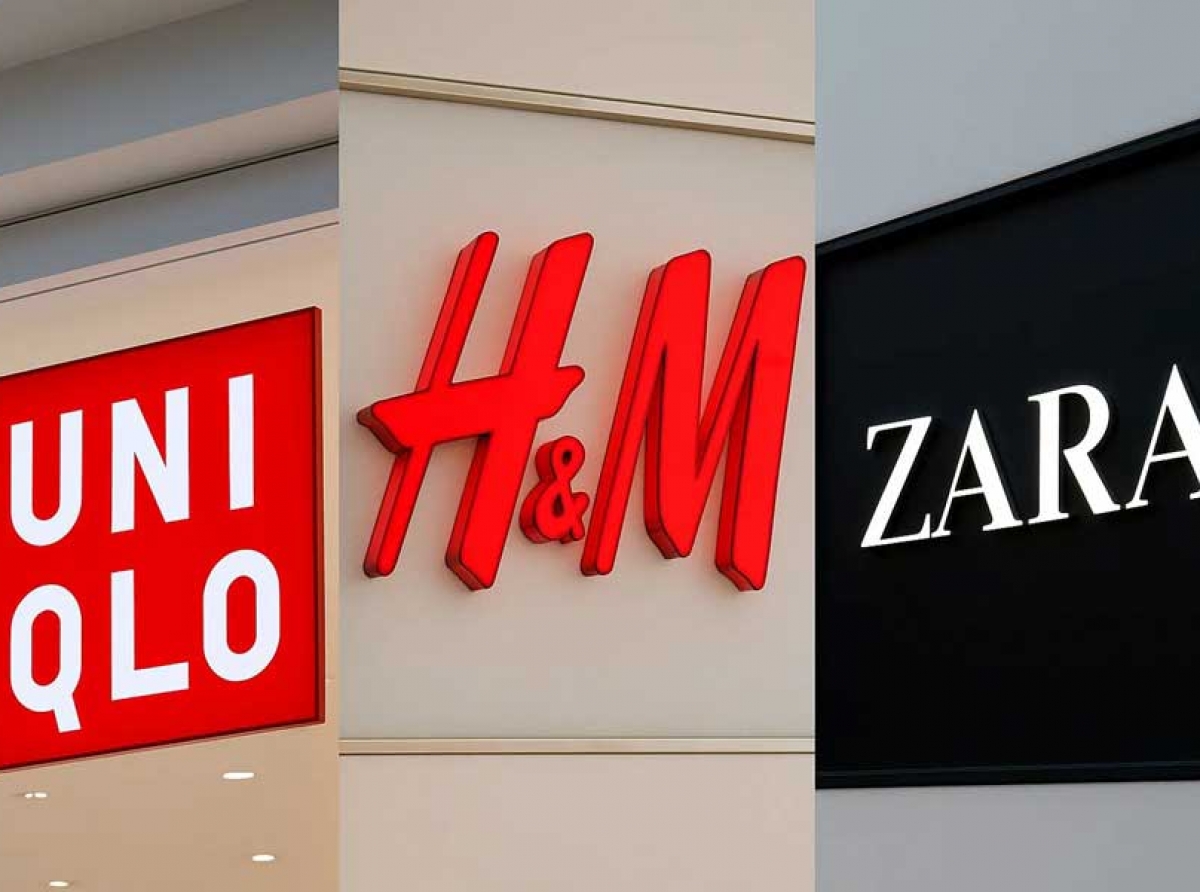
The difference among international retailers operating in India is now stark. H&M retained leadership on scale in FY25, helped by its broad-based store network and mass accessibility, but revenue growth remained modest. Zara, long the benchmark for aspirational fast fashion, effectively plateaued, while Marks & Spencer saw a sharp decline as legacy brand positioning struggled to align with the new demand for high-utility casualwear. By contrast, Uniqlo delivered the strongest growth among global peers, with revenue rising 44.2 per cent to Rs 1,175.5 crore and profit after tax more than doubling to Rs 178.4 crore.
The underlying market message is clear: consumers are showing signs of seasonal fatigue. The old fast-fashion model depended on repeated wardrobe refreshes, high SKU churn and markdown-led sell-through. This approach is beginning to lose efficiency in India’s premium urban markets, where shoppers increasingly want fewer but smarter purchases.
The comparative store network data explains why Uniqlo’s performance stands out even more sharply.
Table: Store productivity story behind the numbers
|
Retailer |
India store count (FY25) |
Revenue growth (FY25) |
Core strategy |
|
Uniqlo |
18 |
+44% |
Material Science & Exclusivity |
|
Decathlon |
129 |
+32% (est.) |
Experience-led & Value |
|
H&M |
64 |
+2% |
Omnichannel & Mass-Trend |
|
Zara |
23 |
+0.4% |
Luxury-lite & Fast-turnover |
|
Marks & Spencer |
95 |
-12% |
Heritage & Quality Basics |
The table reveals that scale alone is no longer the decisive advantage. H&M’s 64 stores and M&S’s 95-store network provide wider access, but neither translated that footprint into equivalent productivity gains. Uniqlo, in contrast, generated category-leading growth with the smallest network among the top five. That points to far stronger revenue per store, superior assortment productivity and significantly tighter sell-through efficiency.
The comparison with Decathlon is equally instructive. Both brands are winning on utility, but while Decathlon’s strength lies in large-format experience retailing, Uniqlo is proving that fabric-led everyday apparel can command similar consumer trust without the burden of excessive store sprawl.
Margins riding on evergreen inventory
What makes the Uniqlo model particularly disruptive is its unit economics. Unlike fast-fashion rivals that must constantly cycle through thousands of seasonal SKUs, Uniqlo concentrates demand around a narrower, technology-led product architecture built on core fabric platforms such as AIRism, HeatTech and linen.
This dramatically changes the markdown equation. Because these products are not trend-dependent, they avoid the classic end-of-season discounting trap that erodes both gross margins and brand equity. The company’s India business delivered a post-tax margin of about 15 per cent in FY25, a level management expects to sustain even as growth remains high.
This is where store-count comparison becomes important. The leaner the store network, the lower the fixed-cost burden. When that is combined with evergreen merchandise and a D2C-led digital model, every store effectively becomes a high-yield flagship rather than a volume-led replenishment node. That closed-loop inventory discipline is increasingly becoming the moat.
Supply chain moves from backend to brand strategy
The bigger disruption, however, lies behind the storefront. The battle for the Indian wardrobe is steadily moving from design studios to sourcing networks. Uniqlo currently sources roughly 15 per cent of its merchandise from India and aims to double that to 30 per cent over time, positioning the country not only as a growth market but as a future global sourcing hub. This local sourcing push matters for three reasons.
First, it reduces forex vulnerability at a time when currency volatility has pressured imported merchandise economics for rivals more dependent on overseas supply chains. Second, it reduces replenishment cycles, enabling faster in-season response without relying on excessive markdowns. Third, it aligns with the brand’s ‘honest pricing’ narrative, allowing price stability even when raw-material or freight costs fluctuate globally. In practical terms, this is how supply chain resilience becomes customer value.
From logo aspiration to performance logic
However, the risk for Uniqlo remains India’s long-standing logo bias, especially in premium malls where visible branding often doubles as social signalling. Yet that consumer behaviour is evolving, particularly among Gen Z professionals and younger urban families.
The rapid acceptance of utility-led categories, from performance innerwear to climate-responsive fabrics, suggests the market is moving from symbolic consumption to rational wardrobe investment. In that sense, the rise of Uniqlo and Decathlon reflects the same deeper trend: consumers increasingly reward what works better, not simply what looks newer.
That shift could have profound consequences for India’s broader fashion hierarchy. If the next growth cycle is defined by durability, material innovation and supply-chain-led pricing discipline, then retailers dependent on perpetual trend churn may find growth harder to defend. The winners of the next five years are unlikely to be the loudest brands. They may simply be the ones with the best laboratories.










 Get in Touch!
