
Hermès thrives, Gucci falters as India’s luxury market hits a K-shaped split
26 March 2026, Mumbai
The Indian luxury market is entering a phase of pronounced stratification. While the broader high-end apparel and retail sector is projected to reach $12.1 billion, FY25 data reveals a K-shaped model, separating heritage-driven ultra-luxury brands from trend-led global fashion houses. Indian UHNIs (Ultra-High-Net-Worth Individuals) are increasingly moving towards investment-grade luxury, creating a bifurcated growth landscape.
Savoir-Faire vs. streetwear sentiment
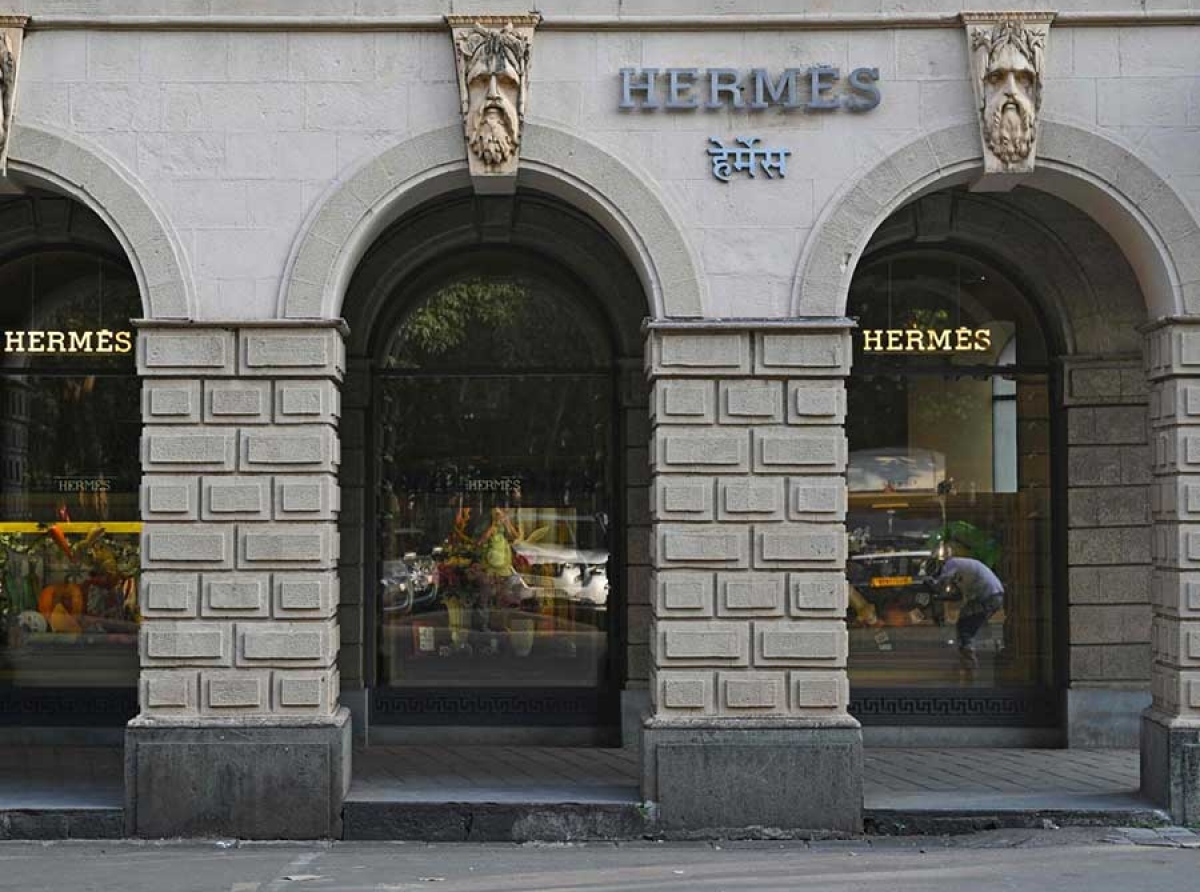
The contrast between Hermès and Gucci epitomizes this shift. Hermès India reported a revenue of Rs 428 crore in FY25, up 35.4 per cent year-on-year, cementing its position as the preeminent choice for high-net-worth buyers seeking enduring value. Gucci India, by contrast, saw a 17.3 per cent revenue decline to Rs 265.4 crore, reflecting both creative transitions and a broader global shift away from logo-heavy, streetwear-inspired aesthetics toward quiet luxury. The FY25 performance snapshot further illustrates this difference.
Table: Select luxury brand India growth
|
Brand |
FY25 revenue (Rs cr) |
YoY growth |
|
Hermès India |
428.0 |
+35.4% |
|
Gucci India |
265.4 |
-17.30% |
|
Christian Dior |
257.0 |
-3.20% |
|
Manish Malhotra |
308.3 |
+34.6% |
This table underscores a clear pattern: heritage labels like Hermès are outperforming both international trend-led houses and domestic designers with strong brand storytelling. Indian couturiers like Manish Malhotra are capitalizing on this shift, posting 34.6 per cent growth to Rs 308.3 crore, highlighting that domestic players with strong brand equity are closing in on global competitors.
Hard luxury and the ‘watch boom’
While apparel performance shows volatility, the hard luxury segment particularly Swiss watches remain resilient. The Indian luxury watch market is now valued at $1.7 billion, buoyed by gifting culture and the perception of timepieces as appreciating assets. Retailers such as Ethos Limited, which commands approximately 20 per cent market share, report record realizations as the average selling price of premium watches has more than doubled over the past five years. Timepieces have emerged not only as symbols of status but as financial instruments, reinforcing the long-term appeal of hard luxury.
Resilience in prime retail locations
Despite fluctuations in brand revenues, the infrastructure that supports luxury consumption continues to strengthen. Delhi and Mumbai maintain their roles as the epicenters of India’s luxury ecosystem. The ‘Golden Mile’ of luxury malls in these cities now commands rents of Rs 430-460 per sq. ft, reflecting an unprecedented willingness to invest in prime physical touchpoints. According to JLL Research, India’s retail sector recorded a 54 per cent year-on-year growth in gross leasing volume in 2025, highlighting confidence in brick-and-mortar retail even as digital channels gain traction globally.
The rise of the Indian couturier
A defining development in FY25 has been the expansion of domestic luxury houses into institutional-scale operations, exemplified by the Sabyasachi Effect. Sabyasachi Calcutta LLP reported revenues of almost Rs 500 crore, driven by a diversified portfolio including high-margin jewelry (over Rs 100 crore) and accessories (nearing Rs 60 crore). Institutional backing from Aditya Birla Fashion and Retail (ABFRL) has boosted this growth, enabling traditionally niche designers to evolve into full-fledged lifestyle brands capable of competing with international luxury labels.
Benchmarking enduring luxury
Hermès International, established in 1837 as a harness workshop in Paris, remains the global benchmark for ultra-luxury, epitomizing vertical integration and craftsmanship. In India, the brand targets the ultra-affluent through flagship stores in Delhi and Mumbai. With €16 billion in global revenue for 2025, Hermès’ strategy focuses on uncompromising quality and selective expansion into emerging Asian luxury hubs, ensuring that its Indian operations are aligned with long-term global brand equity rather than short-term trend cycles.
The Indian luxury sector is no longer a homogeneous growth story. Heritage-driven brands like Hermès are consolidating their dominance, while trend-led houses such as Gucci face headwinds amid evolving consumer preferences. Simultaneously, domestic couturiers are scaling rapidly, bridging the gap with international giants through strategic diversification and institutional support. Coupled with resilient hard luxury and high-value retail infrastructure, the market is evolving into a sophisticated, multi-tiered ecosystem where brand legacy, craftsmanship, and investment value dictate success.










 Get in Touch!
