All Stories

V2 Retail expands in NCR with opening of 286th store in Haryana

09 December 2025, Mumbai

A leader in India's value retailing sector since 2001, V2 Retail has significantly strengthened its presence in the high-potential Delhi-NCR region with the opening of its 286th store in Sector 14, Gurugram, Haryana.

KNOW MORE

This strategic expansion is designed to capture a larger share of the booming Indian fashion retail market, which is currently valued at an estimated $60.12 billion and projected to grow at a robust CAGR of 12.87 per cent over the next six years.

The company's aggressive growth trajectory is supported by strong financial results. V2 Retail reported a massive 58 per cent Y-o-Y rise in standalone revenue from operations for Q3 FY25 (ended December 2024), reaching Rs 591.03 crore.

Read our latest issue

This exceptional performance was fueled by a notable 25 per cent Same Store Sales Growth (SSG). Key operational metrics underline the success of its model: an Average Bill Value (ABV) of ₹924 and sales per square foot (PSF) of Rs 1,219 per month.

Strategically located at Anamika Enclave, the new Gurugram store reinforces V2 Retail’s focus on catering to the aspirational needs of India's large and expanding 'neo-middle class.'

Publications portfolio

The company has historically excelled at penetrating Tier II and Tier III cities. Now, with an enhanced presence in a major urban hub like Gurugram—one of the country's most dynamic retail centers - V2 Retail is employing a double-pronged strategy: deepening its hold on urban markets while simultaneously maintaining dominance in emerging geographies.

Visit for more

This localized, value-focused approach is crucial for conquering a market where consumers are increasingly value-conscious yet highly fashion-aware. The retailer's rapid expansion saw 45 new stores open in the first nine months of FY25, bringing the total store count to 160 by the end of Q3 FY25.

LATEST FASHION NEWS

V2Retail

Bhavitha Mandava becomes first Indian model to open a Chanel show

09 December 2025, Mumbai

Bhavitha Mandava has achieved a historic milestone by becoming the first Indian model to open a Chanel show, leading the prestigious Métiers d’Art runway in New York.

KNOW MORE

This landmark moment extends beyond the world of fashion; it strategically signals a profound acknowledgment by Chanel of the escalating influence and economic power of the Indian luxury consumer.

Chanel's decision to entrust the opening look to Mandava, a model from Hyderabad whose career began serendipitously after being scouted in a New York subway, is a powerful narrative of global inclusivity and a localized connection.

Read our latest issue

This aligns seamlessly with the French Haute Couture house's evolving strategy in India, a market where the luxury apparel segment reached $7.50 billion in 2024 and is forecast to grow to $10.70 billion by 2033, representing a CAGR of 3.60 per cent.

The emotional video of Mandava’s parents reacting to her achievement went viral, highlighting the significant cultural resonance such global recognition holds for the aspirational Indian middle class.

Publications portfolio

Historically known for its strict boutique-only exclusivity, particularly for ready-to-wear and leather goods, Chanel recently made a definitive pivot toward the Indian digital consumer.

In 2024, the brand launched its official e-commerce platform in India, offering nationwide delivery for beauty, fragrance, and eyewear across more than 27,000 pin codes.

Visit for more

This strategic move, alongside partnerships with luxury curators like Nykaa, is explicitly designed to cultivate the next generation of high-end consumers in a market where the wealthy consumer base is projected to hit 100 million by 2027. Mandava's historic opening further amplifies the brand's visibility and cultural capital, reinforcing Chanel's commitment to a market that is rapidly becoming a core pillar of the global luxury landscape.

LATEST FASHION NEWS

Chanel

V2 Retail opens new value fashion store in Assam

08 December 2025, Mumbai

V2 Retail has announced the opening of its newest value fashion store in Golaghat, Assam, as part of its aggressive growth strategy focused on India’s core markets and Tier-II/III cities. This expansion marks another step toward penetrating the high-potential Northeast region, where increasing disposable incomes and a young population are driving a surge in demand for organized retail.

Situated on the Hospital Road, the new Golaghat store increases V2 Retail's national footprint, which already exceeds 285 stores. This move aligns with a broader trend of value retailers capitalizing on the economic boom in the Northeast, a region where the Gross State Domestic Product (GSDP) grew at an impressive CAGR of 8.17 per cent from FY 2015 to FY 2022.

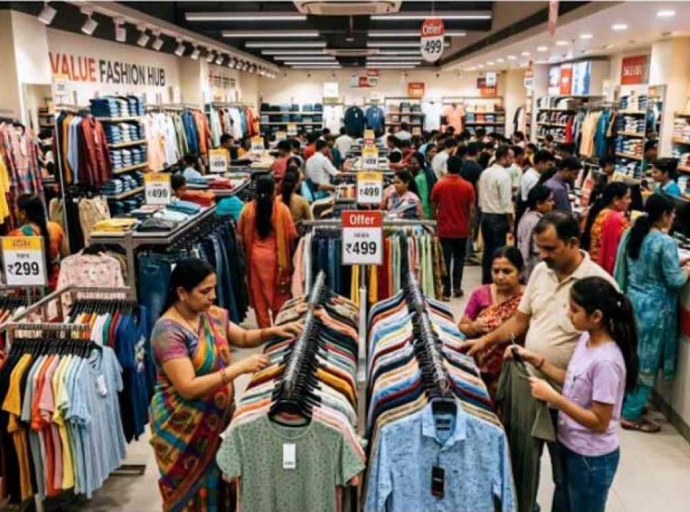
Focused on ‘Value & Variety, the brand's model with items starting from Rs 99, is strategically positioned to capture the growing aspiration of the ‘neo middle class’ for affordable, branded, and trendy clothing.

The store launch follows a period of strong financial performance. V2 Retail reported a significant 58 per cent Y-o-Y increase in standalone revenue from operations, totaling Rs 591.03 crore in Q3 FY25, alongside a massive 117 per cent increase in Profit After Tax (PAT) to Rs 51.2 crore for the same quarter.

Key operational metrics like Same Store Sales Growth (SSG) stood at approximately 25 per cent for Q3 FY25, indicating strong customer approval for their product mix, which heavily features Men's (40 per cent), Ladies' (26 per cent), and Kids' (26 per cent) wear.

The company has been aggressively opening new stores, adding 21 outlets in Q3 FY25 alone, demonstrating its operational flexibility and confidence in its expansion pipeline. The target is to sustain a 40-50 per cent annual revenue growth, consolidating its leadership in the affordable fashion segment.

LATEST FASHION NEWS

V2 Retail opens new value fashion store in Assam

AB Lifestyle Brands appoints new CEO to lead 'Emerging Business’ push

09 December 2025, Mumbai

Aditya Birla Lifestyle Brands (ABLBL) has strategically appointed Jacob John as the CEO of its newly created Emerging Business division. This move follows the recent vertical demerger of the lifestyle brands division from its parent company, Aditya Birla Fashion and Retail (ABFRL), signaling a sharp focus on scaling high-growth categories.

KNOW MORE

John's primary mandate is to accelerate the growth of ABLBL's newer and premium lifestyle offerings, which include Van Heusen Innerwear, the sportswear brand Reebok, and the youth denim brand American Eagle.

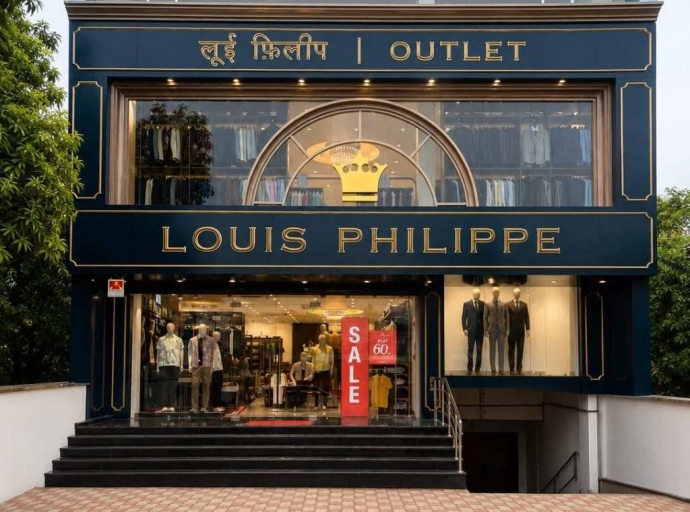
This shift is crucial for ABLBL, as it aims to move beyond its stable, formal wear portfolio - which features legacy power brands like Louis Philippe, Van Heusen, Allen Solly, and Peter England (all generating over Rs 1,000 crore in annual sales)—to capture high-velocity segments of the Indian apparel market.

Read our latest issue

The company is already seeing success in these emerging categories; for instance, Reebok's revenue has doubled since its acquisition.

ABLBL plans to significantly invest in this growth, with a target of adding 250 stores (net) annually across its formats, heavily backed by a planned Rs 300 crore annual investment in retail network expansion and technology.

Publications portfolio

Having reported a revenue of Rs 7,830 crore in FY25 and operating over 3,250 stores, ABLBL is targeting a double-digit revenue CAGR and a three-fold jump in profitability in the medium term.

John's extensive experience, including his previous role as President of Premium Brands at ABFRL and leadership in the innerwear/athleisure space, is viewed as essential for transitioning these emerging brands into major profit drivers.

Visit for more

The overall strategy is to leverage the company's asset-light, franchisee-led model and digital presence (online sales accounted for 12 per cent of total sales in FY24) to maintain momentum against competitive market pressures.

LATEST FASHION NEWS

ABFRL

Popees Baby Care forays into Tamil Nadu with 101th EBO in Hosur

08 December 2025, Mumbai

Foraying into the southern state of Tamil Nadu, leading name baby apparel and care brand, Popees Baby Care inaugurated its 101st Exclusive Brand Outlet (EBO) in Hosur.

This move is a deliberate acceleration of its retail footprint, reinforcing its identity as a serious contender in the national baby fashion and retail segment. Offering a full range of baby-safe clothing up to six years old, the brand aims to mitigate high inventory costs and geographical concentration risks by prioritizing direct retail expansion.

Apparel remains a significant revenue driver for the Kerala-founded company, highlighting a shift in the Indian market where discerning parents are increasingly prioritizing branded, high-quality, organic cotton clothing over cheaper, unbranded alternatives.

K Jayanand, CEO emphasizes on the brand’s commitment to ‘quality, comfort, and trust,’ a strategy rooted in Popees' inception in 2003 by Shaju Thomas, who aimed to fill a gap for safe, branded infant wear.

This retail initiative is supported by a strong growth plan to add 42 more stores by FY26, bringing the total store count to 143, and simultaneously entering international markets like the UAE. This aggressive omnichannel model, a shift away from a distribution-heavy structure, aims for a top-line revenue of Rs 250 crore by 2025, solidifying Popees' goal to become a leading national baby and childcare brand.

LATEST FASHION NEWS

Popees Baby Care forays into Tamil Nadu with 101th EBO in Hosur

GST 2.0 rewrites fashion economics, premium labels struggle as mass market grows

08 December 2025, Mumbai

Three months after the implementation of revised Goods and Services Tax (GST), or GST 2.0, the Indian apparel industry is facing a split reality. While mass and mid-premium segments are seeing a boost due to their affordability, the premium apparel category (items priced above Rs 2,500) is struggling under the sharp GST increase from a 12 per cent to an 18 per cent.

This 6-percentage-point hike translates to a 5.36 per cent jump in the final consumer price for a typical item, a price shock that is silently eroding the profits of organized retail.

KNOW MORE

Where has it impacted the premium category

Data analysis and early industry observations reveal the impact is concentrated across three critical areas.

1. Price-sensitive squeeze zone

The segment most severely affected is the aspirational middle-class buyer shopping in the Rs 2,500-3,500 price bracket. This is the ‘squeeze zone’ where consumers are proving highly price-sensitive and are actively trading down to sub-Rs 2,500 products to remain in the 5 per cent GST slab.

Read our latest issue-

Retailer dilemma: Brands with a high share of premium products face a stark choice: pass on the 6 per cent cost and risk losing the consumer to the lower-tax slab, or absorb the cost and suffer a significant hit to their profit margins.

The price shock: For an item with a base price of Rs 5,000, the tax jump adds Rs 300, raising the final price from Rs 5,600 to Rs 5,900. This Rs 300 difference is proving to be a critical trigger for immediate buyer resistance.

Publications portfolio

2. Financial gravity

Although premium products (above Rs 2,500) account for only 10 per cent of total units sold, they generate a disproportionate 35 per cent of organized apparel revenue.

This segment, often the profit engine for retailers, is now the direct target of the 18 per cent GST. The slowdown here is particularly damaging to the financial health of the organized retail sector, impacting categories like high-value ethnic wear, branded winterwear, and wedding wear.

Visit for more

3. GST absorption index

Preliminary reports suggest that many retailers, particularly those gearing up for the crucial festive and wedding season, absorbed a significant portion of the GST hike to sustain consumer demand. This unquantified but widespread margin absorption is an attempt to tackle the ‘sales migration ratio’ that is the rate at which consumers shift to lower price points. For instance, one foreign brand executive stated they are absorbing the impact for items above Rs 2,500, which make up 20 per cent of their portfolio, to offer more value to consumers. Another retailer observed, they absorbing part of the hike in premium categories like lehengas to ensure continued customer value.

Table: The financial weight of the premium segment

Segment

Avg. price

Volume share

Revenue rhare

Mass

Rs 600

65%

36%

Mid-Premium

Rs 1,600

25%

29%

Premium (>Rs 2,500)

Rs 4,800

10%

35%

The table captures the post-GST revision shifts in India’s apparel market, measured three months after new tax slabs altered effective retail pricing. The metrics reveal how consumer value perception is changing and why the premium segment now carries disproportionate financial influence.

Fashion Guru

Mass segment — high footfall, low revenue power

The mass segment still accounts for 65 per cent of total unit sales, showing that a majority of Indian consumers remain price-sensitive and continue to shop in the value-driven tier. However, despite this huge volume, it contributes only 36 per cent to total revenue.

This imbalance highlights the low ticket size of products in this category: brands sell a lot, but margins remain thin.

SUSTAINABILITY

Mid-premium segment — squeezed in the middle

This tier accounts for 25 per cent of sales volume and 29 per cent of revenue, which indicates a more balanced ratio of units to earnings. Yet the mid-premium category is under structural pressure. GST has pushed many brands’ price points upward, blurring the difference between mid-premium and premium. As shoppers trade up for perceived value or branded quality during discount-heavy periods, the mid-tier’s traditional role as the aspirational segment is shrinking.

 Join our group

Premium segment — smallest volume, largest revenue

The most dramatic shift appears in the premium category. Although premium products make up only 10 per cent of the total units sold, they contribute 35 per cent of overall revenue, nearly equalling the much larger mass segment. This clearly shows two underlying behavioral trends.

Post-GST price rationalization has not deterred premium buyers, who are less price-sensitive and prioritize quality, design, and brand equity. And there is a visible shift of urban middle-class consumers towards premium labels, aided by EMI-based payments, ‘Buy Now Pay Later’ options, and premiumisation-led marketing.

Join our community

Brands re-engineering price points

Facing the threat of consumer down-trading, some brands are adopting counter-measures to stay competitive, highlighting the industry's agility.

Product re-engineering or Rs 2,499 strategy: To retain the aspirational middle-class buyer, select brands have successfully re-engineered their products to fall just below the Rs 2,500 threshold. This involves subtle adjustments in material choice, trims, or packaging to bring the SKU price point to Rs 2,499.

VIEW

This enables the garment to be taxed at the much lower 5 per cent GST slab, effectively offering comparable style and quality at a lower final consumer price, helping to counter the sales migration.

Digital-first platforms, like Virgio, are prioritizing the Rs 1,500-Rs 2,499 range, focusing on cost-per-wear value and versatility to align with smarter buying decisions from price-sensitive consumers.

Meanwhile brands focusing on the mid-premium segment (up to Rs 2,500) are witnessing strong traction. The extension of the 5 per cent GST slab up to Rs 2,500 (from the earlier Rs 1,000) is acting as a strong demand stimulant.

DFU Profile

This sweet spot is attracting consumers who still desire affordable premium fashion without incurring the 18 per cent tax burden.

This profit shock on premium apparel remains a major concern for the industry, prompting a fundamental re-evaluation of pricing, inventory, and product positioning strategies three months into the new regime.

Thus the the GST revision has not uniformly impacted the market; instead, it has increased the polarisation of Indian apparel consumption.

Should refer

The mass segment remains dominant in volume but stagnant in value creation, while the premium segment though small has emerged as the financial engine of the industry.

This redistribution of revenue share signals a long-term shift: India’s apparel market is moving from being volume-led to value-led, powered by premiumisation and brand-conscious urban consumers.

LATEST FASHION NEWS

GSTRateCut

New Era opens new store in Bengaluru

08 December 2025, Mumbai

Globally recognized headwear and apparel brand with a history dating back to 1920, New Era has opened a new store at the Phoenix Mall of Asia, Bengaluru. Executed under an exclusive distribution partnership with Metro Brands, this strategic launch is a major step in the brand’s aggressive plan to capture India’s rapidly growing, youth-centric fashion market. The Indian headwear market alone is projected to reach $4.2 billion by 2030 with ‘Hats and Caps’ being the most profitable segment.

The Bengaluru store is designed to be a premier destination for streetwear enthusiasts, featuring exclusive MLB and NBA collections alongside premium lifestyle apparel, reinforcing New Era’s status as a cultural icon. The partnership leverages Metro Brands' deep retail expertise and extensive network (over 900 stores), with the goal of creating a robust, multi-channel presence that includes exclusive stores, multi-brand formats, and a strong online footprint.

New Era’s premium pricing strategy, with iconic caps ranging from Rs 2,250 to over Rs 4,400, targets the increasingly affluent Gen Z and millennial consumers who prioritize authentic sports heritage and global style expression.

Metro Brands believes this collaboration will revolutionize the cap market, positioning headwear as the next statement accessory. The opening highlights the broader trend of premium international brands entering the Indian streetwear market, which is expected to grow at a 7.58 per cent CAGR through 2033.

By integrating the brand into the physical retail landscape, New Era aims to overcome the ‘try-on’ challenge common in the accessories segment, building loyalty through elevated brand zoning and curated visual experiences.

LATEST FASHION NEWS

New Era opens new store in Bengaluru

Big Hello opens men’s and women’wear plus life store in Raipur

08 December 2025, Mumbai

Having positioned itself ‘India's first destination brand for plus-size fashion,’ Big Hello has amplified its national retail strategy with the grand opening of its Premium Men's & Women's Wear Plus Life Store at Zora Mall, Raipur.

KNOW MORE

This move is a strategic entry into the rapidly expanding Tier-II market of Chhattisgarh, capitalizing on a significant demographic shift in consumer demand.

The opening reflects Big Hello's confidence in the burgeoning Indian plus-size clothing market, which is projected to grow from $10.075 billion in 2023 to over $18.286 billion by 2032 (a CAGR of 6.84 per cent).

Read our latest issue

This growth is fueled by increasing body positivity awareness and rising disposable incomes. Founded in 2023, the brand is tackling the historical struggle of plus-size consumers to find stylish, well-fitted apparel by offering sizes up to 7XL across casual, formal, and ethnic wear.

The Raipur 'Life Store' format emphasizes not just fashion but also a curated selection of everyday essentials, positioning the brand as a holistic lifestyle provider. This strategy is crucial in regions where physical retail options for extended sizes are limited.

Visit for more

Big Hello differentiates itself with its Made-to-Fit (MTF) service, allowing customization from over 350 premium fabrics - a key feature addressing the fit issues often plaguing the plus-size segment.acin

With an aggressive expansion roadmap of 50 new stores within a year, the brand's rapid growth from its initial 17 stores (as reported in late 2024) is a testament to its omnichannel model and focus on a historically underserved, but increasingly vocal, consumer base.

The brand aims to empower individuals and redefine fashion standards across India.

LATEST FASHION NEWS

BigHello

India’s retail market to grow to $1 trillion by 2030: Report

08 December 2025, Mumbai

Fueled by increasing disposable incomes, quick digital adoption, and a massive surge in consumer aspirations across urban and non-urban ares, India’s retail market is projected to skyrocket to $1 trillion by 2030.

KNOW MORE

As per a report by Fireside Ventures and Redseer Strategy Consultants, branded retail is expected to double in size, reaching $730 billion by 2030 and accounting for nearly half of the entire retail market.

This impressive growth underscores a rising preference for quality, consistency, and trust—factors increasingly influencing purchasing decisions, especially among younger consumers.

Read our latest issue

At the forefront of this transformation, new-age brands are growing at a pace two to three times faster than traditional players, according to the report.

The rise of e-commerce, quick commerce, and direct-to-consumer (D2C) platforms has leveled the playing field, allowing emerging brands to build strong customer relationships, scale rapidly, and meet evolving expectations around convenience, speed, and personalization.

Publications portfolio

This digital disruption is profoundly reshaping the distribution landscape. While traditional general trade dominated 91 per cent of India’s retail market in 2014, its share is expected to fall significantly to 70 per cent by 2030, making room for the expansion of modern trade and digital channels.

Notably, D2C and quick commerce are projected to capture around 5 per cent of the overall market, highlighting their growing importance in India's consumption story.

Visit for more

The ongoing digital revolution provides further momentum. With an expected 1.1 billion internet users and 400 million online shoppers by 2030, India is quickly becoming one of the world’s largest and most dynamic digital consumer economies.

Smartphone penetration is likely to reach 70 per cent, enabling unprecedented access to information, products, and services.

Fashion Guru

Social media is also playing a transformative role by narrowing the awareness gap between major metros and smaller towns.

This expanding consumption landscape is closely tied to India’s broader economic growth trajectory. Private consumption is set to add $300 billion every year to the country’s GDP, strengthening India’s path toward becoming the world’s third-largest economy by the end of the decade.

SUSTAINABILITY

The report identifies 13 key shifts that will define the next decade, from the growing influence of women as primary household decision-makers to the rapid premiumization of categories, the rise of branded consumption in Tier II and III markets, and the emergence of AI-driven personalization.

As Fireside Ventures and Redseer emphasize, the next decade belongs to bold and disruptive brands.

LATEST FASHION NEWS

D2CFashion

Latest Publications

Image

Join Our Group

Join Our Group