All Stories

The 2026 Offline Retail Format Disruption: From ‘Points of Sale’ to ‘Points of Experience’

30 December 2025, Mumbai

As the industry navigates the final quarter of the current fiscal year, this feature serves as the cornerstone of our "Wrap Up 2025, Outlook 2026" series.

We look back at a year where the Indian apparel sector moved beyond post-pandemic recovery into a phase of aggressive structural transformation.

Know More

The 2025 cycle has been a period of reckoning for brand-to-retail connectivity, characterized by a decisive pivot toward large-scale experiential formats and the high-velocity expansion of value-driven models into the heartland.

As we project into 2026, the industry is preparing for a cycle where the very definition of a "store" is undergoing a radical redefining. The bridge between brand and consumer is no longer just about proximity; it is about the intelligence of the physical format.

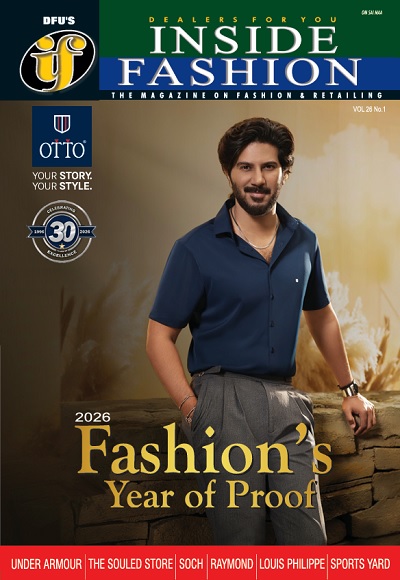
Read our latest issue

Benchmarking the Shift: Operational excellence in 2026

To understand the depth of this transformation, we must look at the operational metrics that are redefining the bottom line.

The transition from 2025 to 2026 is not merely aesthetic; it is a fundamental overhaul of how a store functions as a commercial unit.

Table 1: Comparison of Offline Operational Benchmarks (2025 vs. 2026)

Operational Pillar

2025 Standard Practice

2026 Redefined Strategy

B2B Impact

Inventory Flow

Manual/Push-based

Auto-Replenishment (ARS)

30% Reduction in OOS (Out of Stock)

Store Layout

Product Density Focus

Experience & UGC Zones

1.8x Increase in Brand Recall

Expansion Model

COCO (Company Owned)

FOFO (Franchise Owned)

Accelerated ROCE (Return on Capital)

Staff Training

Transactional

Tech-Enabled Styling

15% Higher Average Transaction Value

The Anchor Evolution: From inventory hubs to experience centers

In 2025, the offline landscape witnessed a "Bigger, Better, Bolder" movement. Malls transformed as compact 2,000-square-foot boutiques were consolidated into massive 10,000-square-foot anchor stores.

Publications portfolio

This was not a simple real estate land grab; it was a strategic transformation to make physical stores indispensable. Large Format Retail (LFR) successfully transitioned from being inventory-heavy anchors to becoming "Experience Hubs."

The 2026 outlook intensifies this into the "Sensory Flagship." The upcoming year marks the end of the passive window display.

DFU Profile

In its place, phygital integration—AR mirrors that overlay seasonal collections and smart trial rooms that suggest the perfect accessory for a selected blazer—is becoming the baseline expectation for the premium consumer.

This retail format disruption is forcing a shift in mall economics: forward-thinking developers are now restructuring rent models to favor "Experiential Metrics" over traditional sales-per-square-foot.

Table 1: The "Dwell-to-Dollar" Shift in LFR (2025 vs. 2026 Projected)

Performance Metric

2025 Benchmark (Standard LFR)

2026 Outlook (Sensory Hub)

Strategic Outcome

Average Dwell Time

25-30 Minutes

45-55 Minutes

40% higher cross-sell probability

Conversion Rate

18.50%

27.20%

Optimized staff-to-customer ROI

UGC Hits per Sq. Ft.

Minimal

4-6 Posts/Day

Organic, zero-cost brand advocacy

Rent Structure

Fixed + Revenue Share

Revenue Share + Footfall Quality

Alignment of Developer-Brand goals

The Franchise War: Reclaiming Bharat via FOFO efficiency

While metros experimented with high-tech flagships, 2025 saw a territorial gold rush in Tier II and III cities. Exclusive Brand Outlets (EBOs) surged by 30% in these regions as brands sought territory protection. However, the 2026 outlook suggests an "MBO Renaissance." As the cost of maintaining stand-alone stores rises, Multi-Brand Outlets (MBOs) are regaining status as "discovery engines."

Fashion Guru

The operational vehicle of choice for 2026 expansion is the FOFO (Franchise Owned, Franchise Operated) model. By offloading operational friction to local partners who understand regional nuances, national brands are scaling at a velocity previously unseen. This strategy is redefining the "Bharat" expansion playbook: use MBOs for wide-net reach and EBOs for "Brand Advocacy" and premium storytelling.

Table 2: Offline Expansion Strategy Matrix for 2026

Format

2025 Status

2026 Strategic Mandate

Target Geography

EBO (Exclusive)

Brand Visibility Points

Hyper-local Community Hubs

Tier I & II High Streets

MBO (Multi-Brand)

Distribution Nodes

Discovery & Recruitment Engines

Tier III & IV Catchments

LFR (Anchor)

Stock-heavy Warehouses

Sensory "Theaters"

Grade A+ Malls

High Street

Convenience-led

Lifestyle Destination

Established Urban Corridors

The Value Science: Efficiency redefining the discount format

Perhaps the most disruptive force of 2025 was the democratization of trend-led fashion through the "Value Segment."

The explosive growth of formats like Zudio, Yousta, and Style-Up has forced a complete redefining of the backend. If 2025 was about the front-end price, 2026 will be about the back-end margin.

 Join our group

The "Value Science" of 2026 relies on "Lean Supply Chains" and "Auto-Replenishment Systems" (ARS).

The winners will not be those who can design a ₹199 t-shirt, but those whose algorithms ensure that the t-shirt is never out of stock while maintaining zero dead inventory.

Data from 2025 indicates that top-tier value retailers are achieving 12-15 inventory turns a year, nearly double the industry average of 6-7 turns.

Sustainability

Table 3: Value Retail Productivity - 2025 Benchmarks

Segment

Sales per Sq. Ft. (Monthly)

Inventory Turnover

Core Price Band

Ultra-Value (Zudio/V2)

₹1,000 - ₹1,200

12x - 15x

₹199 - ₹999

Mid-Market Value (Max/Pantaloons)

₹750 - ₹950

7x - 9x

₹499 - ₹1,499

Premium Lifestyle

₹1,200 - ₹1,800

4x - 6x

₹1,999+

Leadership Outlook: C-Suite and strategic redefinition

For the leadership at the helm of India’s fashion houses, the mantra for 2026 is "Agility over Legacy." The C-suite is no longer looking at five-year plans; they are looking at weekly store-level performance and catchment dynamics.

"The greatest risk in 2026 is being too big to move," says a leading CEO of a major retail conglomerate. "We are seeing a shift where our physical stores must act as media channels first and fulfillment centers second.

Visit for more

This retail format disruption is not a threat; it's an opportunity to own the consumer's time. Our 2026 strategy for redefining the store experience is built on 'Micro-Market Intelligence'—knowing exactly what a consumer in Indore wants versus a consumer in Lucknow, and having it on the rack before they even ask."

Leadership is also prioritizing "Asset-Light" expansion through the FOFO model, aiming for a 20% improvement in Return on Capital Employed (ROCE) by transferring the real estate risk to regional partners while maintaining centralized control over merchandising and technology.

Technology

Editor’s Conclusion: The year of the "Intelligent Node"

As we conclude this segment of our 2025 analysis, it is clear that the "New Normal" in offline retail is anything but static.

The apparel industry has successfully navigated the post-pandemic surge and subsequent inflationary pressures. Looking toward 2026, the theme is undoubtedly "Structural Transformation."

Also read

The retail format disruption we are witnessing is not the death of the store, but its reincarnation as an "Intelligent Node."

Whether it is a 15,000-square-foot flagship in a Mumbai mall or an 8,000-square-foot value store in a Tier III high street, every square foot must now justify its existence through data or delight.

WindUp 2025

The brands that thrive will be those that treat their physical footprint as a high-performance engine, not just a static billboard.

The wardrobe of 2026 will be chosen in an environment where the boundary between the brand and the buyer is seamlessly erased by superior design and operational excellence.

Disruption...Disruption...Disruption!

LATEST FASHION NEWS

IndianRetailIndustry

Banana Club expands Hyderabad footprint with 17th store at Gateway Mall

29 December 2025, Mumbai

Banana Club has officially inaugurated its 17th exclusive brand outlet at Gateway Mall, Hyderabad, marking a significant milestone in its rapid ‘Pan-India’ expansion.

The launch comes at a time when Hyderabad, alongside Bengaluru, has emerged as a primary engine for Indian retail, with the two cities collectively accounting for 60 per cent of the country’s total retail leasing activity in 2025.

Know More

By securing a strategic position on the Lower Ground Floor of Gateway Mall, the brand is tapping into the city’s robust demand for ‘masstige’ fashion - a segment where domestic labels now represent over 85 per cent of new space take-ups.

This move solidifies Banana Club’s presence in a market where fashion and apparel continue to dominate the leasing landscape, currently holding a 31 per cent share of the organized retail pie.

Read our latest issue

Scaling the omnichannel vision after record-breaking funding

This expansion is fueled by the brand’s recent landmark achievement on the ‘Pitch To Get Rich’ platform, where it raised Rs 12.25 crore at a Rs 245 crore valuation - the highest in the show's history.

Unlike traditional retailers, Banana Club utilizes a vertically integrated model, leveraging in-house manufacturing to maintain gross profit margins between 50 per cent and 58 per cent.

Publications Portfolio

"Our journey is about more than just numbers; it’s about redefining the modern Indian man’s wardrobe with speed and precision," says Neel Bafna, Co-founder highlighting the brand’s ability to pivot styles based on real-time data.

By bridging the gap between digital-native agility and physical retail experience, the company is successfully navigating the challenges of rising high-street rentals while targeting a bold roadmap to surpass 100 stores by 2027.

Fashion Guru

Founded in 2011 and headquartered in Bengaluru, Banana Club is a premier menswear label specializing in high-street western wear and smart casuals.

Targeting young professionals across India’s Tier-I and Tier-II cities, the brand combines in-house R&D with an aggressive omnichannel strategy. Following its recent record-breaking funding, the company aims for a Rs 500 crore revenue milestone while championing sustainable, ‘Made in India’ manufacturing.

LATEST FASHION NEWS

BananaClub

Jockey India redefines female-centric retail with first women exclusive EBO in Chennai

29 December 2025, Mumbai

Jockey India is executing a sophisticated shift in its retail strategy, moving beyond its traditional unisex distribution model to launch its first women exclusive Brand Outlet (EBO) in Chennai.

Know More

This move addresses the burgeoning premium lingerie market in India, which is projected to grow from $1.9 billion in 2025 to $4.3 billion by 2034, clocking a CAGR of 9.5 per cent.

In partnership with design firm Aludecor, the store utilizes a palette-driven experiential layout that prioritizes privacy and body-positive inclusivity - a decisive departure from the functional aisles of general trade.

Read our latest issue

Modernizing the ‘Jockey Woman’ experience

The Chennai flagship is a response to evolving consumption patterns where female consumers increasingly prioritize high-quality fabrics and ergonomic designs.

In the fiscal year ending March 2025, parent company Page Industries reported a robust 28.1 per cent annual growth in PAT, reaching Rs 7,291 million, underpinned by a surge in its women’s and athleisure segments.

Publications Portfolio

Our focus on consumer experience across all touchpoints is a primary driver of our financial resilience, stated VS Ganesh, Managing Director, Page Industries.

By integrating specific product lines like Jockey Woman into dedicated spaces, the brand is successfully converting passive shoppers into high-value repeat customers.

DFU Profile

Navigating premiumization in Tier-1 markets

The launch comes as organized retail expansion becomes a competitive necessity to counter digital-first D2C brands.

While modern retail and e-commerce contributions have scaled to nearly 15 per cent of total sales, physical exclusive outlets remain the ‘trust anchor’ for the intimate wear category.

Fashion Guru

The Chennai outlet serves as a pilot for a broader national rollout, as the brand aims to strengthen its 1,489-store EBS network.

As the industry shifts toward sustainable materials like organic cotton and modal - which now represent over 45 per cent of the innerwear market- specialized boutiques allow Jockey to better showcase these premium innovations directly to their core demographic.

 Join our group

The exclusive licensee of Jockey International (USA) since 1994, Page Industries manufactures and distributes premium innerwear across India and the Middle East.

With a manufacturing capacity of 250 million pieces and a retail network spanning 1.1 lakh outlets, the company targets Rs 2,500 crore in projected revenue as it expands into high-growth women's athleisure.

LATEST FASHION NEWS
JockeyBra

North India retailers pivot to trans-seasonal apparel as warm winter triggers 25% sales slump

27 December 2025, Mumbai

Apparel retailers in North India are navigating a turbulent 2025-26 fiscal end as an unseasonably mild winter disrupts the sector's most profitable quarter.

Know More

Despite an early arrival of the season, daytime temperatures in Delhi and surrounding regions have remained 2–5°C above normal, according to recent IMD data.

This thermal anomaly has caused a staggering 20-25 per cent decline in winter-wear sales, leaving major chains like V-Mart and Lifestyle grappling with a surplus of heavy outerwear.

Read our latest issue

Strategic shifts in product portfolios

The crisis is forcing a ‘margin-led’ recalibration. Retailers are now pivoting toward ‘trans-seasonal’ clothing - lightweight layers and versatile athleisure - to offset the lack of demand for heavy jackets.

‘Winter typically contributes up to 40 per cent of our annual revenue, but with the persistent 'indoor chill' rather than a true cold wave, we are seeing a clear consumer shift toward functional, lighter fabrics,’ notes a senior executive from a leading value-retail chain.

Publications Portfolio

Impact on 2026 fiscal outlook

While the India thermal and winter wear market is valued at approximately $13.5 billion, the current inventory pile-up could lead to aggressive early markdowns, potentially squeezing Q4 margins by 150-200 basis points.

However, the sector remains optimistic for 2026, betting on AI-driven demand forecasting and a "Bharat surge" in Tier II cities to stabilize long-term growth.

DFU Profile

V-Mart Retail: The value-fashion powerhouse

India's leading value-retailer, V-Mart operates over 530 stores primarily in Tier II and III cities. Specializing in affordable family fashion, it serves the ‘aspirational middle class’ with a focus on high-volume apparel.

Despite seasonal headwinds, V-Mart reported a 22 per cent Y-o-Y revenue growth in Q2 FY26.

LATEST FASHION NEWS

North India retailers pivot to trans-seasonal apparel as warm winter triggers 25% sales slump

New Era crowns Mumbai’s streetwear growth with premium Phoenix Palladium debut

29 December 2025, Mumbai

Century-old global arbiter of sports culture, New Era has inaugurated its latest flagship at Mumbai’s Phoenix Palladium, signaling a decisive shift in India’s premium fashion landscape. In a long-term exclusive licensing partnership with Metro Brands (MBL), the brand is spearheading an aggressive strategy to transition headwear from functional sun-protection to a high-fashion ‘hypebeast’ essential.

The new Lower Parel outlet introduces New Era’s signature global aesthetic, characterized by a clean, premium visual setup designed to attract Mumbai’s elite fashion-conscious demographic.

Know More

We are confident that caps are going to be the next statement accessory, notes Nissan Joseph, CEO, Metro Brands, emphasizing this launch is a tactical bridge toward MBL’s broader goal of dominating the Indian athleisure sector, which currently sees a 15–20 per cent annual growth in premium segments.

Read our latest issue

Capitalizing on India’s $210 billion streetwear evolution

The store opening is timed with a massive growth in India’s headwear sector, which is projected to grow at a 7.5 per cent CAGR through 2031. T

his growth is mirrored by the global streetwear market, valued at $210 billion in 2025, where Gen Z consumers now prioritize authenticity and brand heritage.

Publications Portfolio

By securing a footprint in Phoenix Palladium - one of India’s highest-trading density malls- New Era effectively navigates the challenge of unorganized retail competition.

This ‘premiumization’ strategy is already yielding results; early data from similar MBL-backed launches in Bengaluru indicates high conversion rates among sports fans and streetwear enthusiasts.

Visit for more

With official licenses for the MLB, NBA, and NFL, New Era is uniquely positioned to capture the rising demand for authentic Western lifestyle brands, setting a new benchmark for ‘Instagrammable’ retail experiences in urban India.

Fashion Guru

Global heritage meets Indian retail power

Founded in 1920 in Buffalo, New York, New Era Cap Co is the official headwear provider for the world’s major sports leagues.

Partnered with Metro Brands - which operates 929+ stores - the brand is scaling rapidly in India. Targeting the premium accessory market, New Era combines athletic legacy with modern streetwear innovation.

LATEST FASHION NEWS

NewEra

Monte Carlo strengthens ‘Bharat’ foothold with Arambagh launch as profits double

29 December 2025, Mumbai

Monte Carlo Fashions has officially extended its retail footprint into Arambagh, Hooghly, marking a strategic entry into West Bengal’s high-potential Tier-III markets.

This new exclusive brand outlet (EBO) is a cornerstone of the company’s ambitious roadmap to scale its national presence to over 400 stores by the end of the FY25-26.

Know More

The launch in Arambagh aligns with a broader industry shift where nearly 45 per cent of premium fashion demand is now originating from non-metro cities.

By establishing a physical presence in the Hooghly district, Monte Carlo is positioning itself to capture the ‘premiumization’ wave, where semi-urban consumers are increasingly swapping unbranded apparel for heritage-backed labels that offer a blend of quality and contemporary style.

Read our latest issue

Sustaining high-octane growth through diversification

The Arambagh expansion comes on the heels of a stellar financial performance, with the company reporting a 15.3 per cent Y-o-Y revenue growth to Rs 248.7 crore in the latest quarter. More impressively, Monte Carlo’s net profit doubled to Rs 16.17 crore, fueled by a successful transition from a winter-wear specialist to an all-season lifestyle brand.

Publications Portfolio

Our expansion into markets like Arambagh is vital for maintaining our 15-20 per cent revenue growth guidance as we diversify into athleisure and home textiles, notes Sandeep Jain, Executive Director.

This strategy effectively mitigates seasonal risks, with new categories like the 'Rockit' sportswear line and premium denims now contributing significantly to the bottom line, ensuring that the brand remains a year-round retail powerhouse.

Fashion Guru

Founded in 1984 in Ludhiana, Monte Carlo Fashions is a premier Indian apparel brand that has evolved from a knitwear pioneer into a comprehensive lifestyle player.

With a presence in 2,500+ MBOs and a growing EBO network, the company targets a Rs 1,200 crore turnover by 2026 through aggressive geographic expansion.

LATEST FASHION NEWS
Monte Carlo strengthens ‘Bharat’ foothold with Arambagh launch as profits double

Latest Publications

Image

Join Our Group

Join Our Group