
Inside Raymond’s full-stack strategy to win India’s Rs 10 trillion textile market
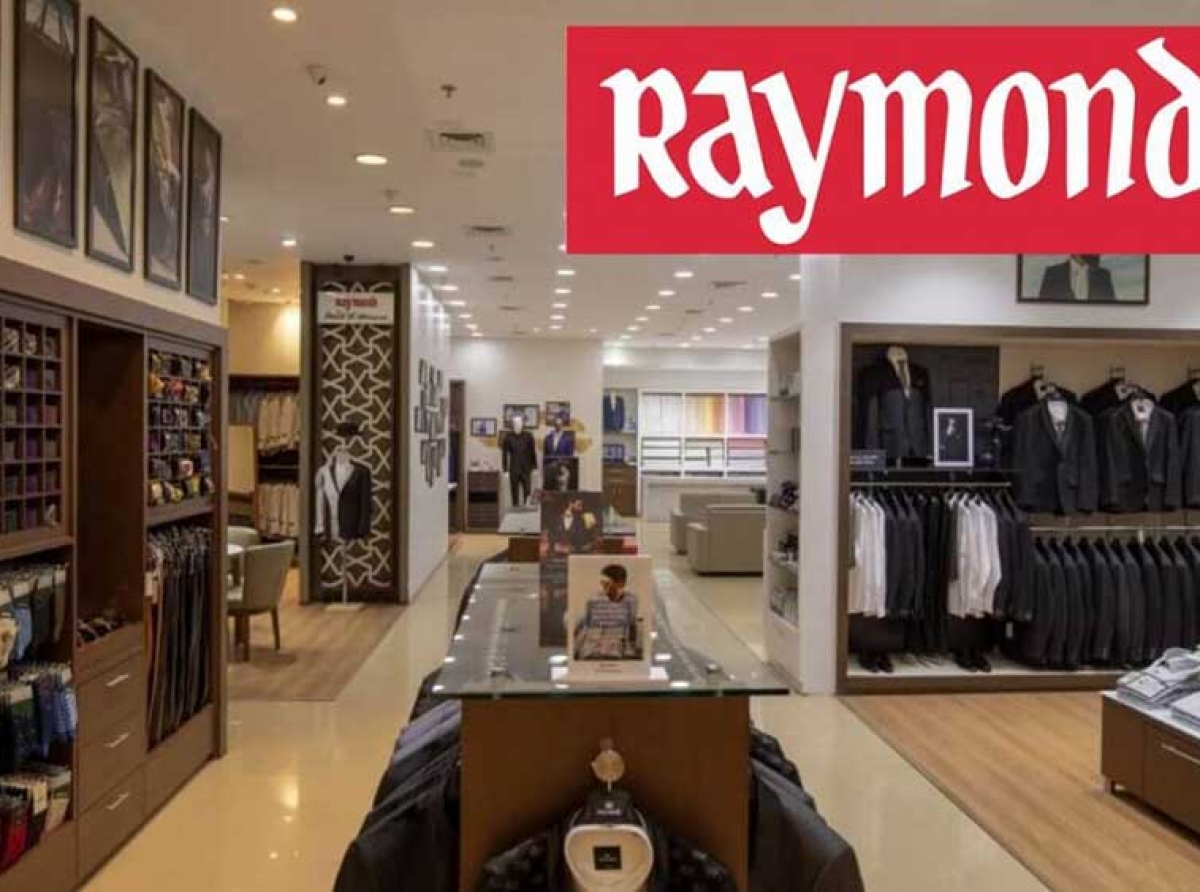
29 April 2026, Mumbai
India’s textile and apparel ecosystem is increasingly shifting from fragmented production networks to integrated value-chain models, and few companies exemplify that shift more sharply than Raymond. In a market moving toward Rs 10 trillion in scale, the company’s strategy suggests that competitive advantage in modern retail is no longer built purely through brand equity or store expansion, but through control over sourcing, manufacturing, distribution and category diversification.
Crossing the Rs 5,000 crore revenue milestone and restructuring through demergers, Raymond has repositioned itself from a legacy textile player into a multi-engine manufacturing and retail business. At a time when nearly 79 per cent of non-food retail still remains unorganized, its model signals how formal players are using operational depth as a moat.
Integration as the new margin engine
At the core of Raymond’s growth strategy is vertical integration, a model increasingly gaining relevance as raw material volatility and supply chain disruptions reshape sourcing economics. Unlike conventional fabric businesses dependent on fragmented procurement networks, Raymond internalized the value chain, from fiber selection and spinning to fabric processing and branded retail. That has translated into resilience in a year marked by inflationary pressure and uneven demand.
The impact was visible in FY26 numbers. Raymond posted 10 per cent revenue growth in Q2 FY26 with income reaching Rs 1,832.4 crore, while textiles emerged as the principal growth driver, recording 27 per cent year-on-year growth in Q1. The segment performance table shows why textiles continue to anchor the portfolio.
Table: Raymond’s segment-wise financial overview
|
Segment (Q1 FY26) |
Revenue (Rs cr) |
YoY growth |
EBITDA margin |
|
Branded Textiles |
716 |
27% |
14.30% |
|
Branded Apparel |
370 |
22% |
5.00% |
|
High Value Cotton |
215 |
18% |
12.80% |
The table reveals a difference in profits. While branded apparel delivered healthy top-line growth, textiles generated materially stronger EBITDA margins, reinforcing why Raymond continues to position fabric as a high-return engine rather than a legacy business. High-value cotton, too, has emerged as a margin-supportive category, indicating the company’s focus on premiumization within traditional segments. Together, these numbers point to a broader shift where vertically integrated players are monetizing both manufacturing efficiency and branded positioning.
Why the tailor economy still matters
Even as organized retail grows, Raymond’s longstanding hold over India’s tailoring ecosystem remains one of its most understated assets. In a market where non-luxury segments account for an overwhelming majority of purchases, the neighborhood tailor continues to shape fabric decisions for a large swathe of consumers. Raymond’s network of over 1,500 EBOs and extensive dealer relationships has ensured consistent access to defect-free fabric, reducing wastage and strengthening loyalty among tailoring partners.
What emerged from this model was not merely distribution scale, but institutional trust, a harder asset to replicate than retail square footage. This has allowed Raymond to push up fabric from a commodity sale into a branded proposition, while simultaneously pushing regional and informal competitors toward formalization.
Demergers as a growth multiplier
As diversified conglomerates face increasing investor pressure for sharper valuation discovery, Raymond’s demerger strategy has become central to its growth thesis. The separation of ‘Lifestyle and Real Estate’ businesses created focused growth vehicles, allowing capital allocation and market positioning to be tailored to each vertical. For Raymond Lifestyle, this creates room to ride India’s projected 10.5 per cent apparel market growth while scaling branded fashion more aggressively. Yet the bigger signal may lie beyond apparel.
Through J.K. Meini Global Aerospace, the group’s Rs 510 crore investment in Andhra Pradesh marks a calculated expansion into precision manufacturing. For a textile-led company, aerospace may appear unconventional, but strategically it extends the same manufacturing DNA into higher-value industrial categories. This shift suggests Raymond is evolving from a textile conglomerate into a broader advanced manufacturing platform.
Wedding wear, a growth booster
While export-oriented apparel businesses grappled with tariff uncertainties and slowing external demand, Raymond found resilience in India’s domestic ceremonial wear economy. Its Ethnix and ceremonial portfolios gained traction through the 2025-26 wedding cycle, expanding the Ethnix network to 140 stores. More importantly, Raymond aligned manufacturing cycles to India’s seasonal and lunar wedding calendar, keeping asset utilization elevated during softer demand periods.
That operating discipline shows a larger retail lesson: cultural demand cycles can be as powerful as economic cycles in driving inventory productivity. In an era of cautious discretionary spending, occasion-led categories are increasingly functioning as stability engines for fashion retailers.
Raymond’s growth path showcases a broader movement underway across Indian apparel retail, the rise of organized value retail built around premiumization. With India’s apparel market projected to touch $109.5 billion in 2025, branded players are using integrated models to capture consumers trading up from unorganized markets. Raymond’s growth has also created spillover effects, encouraging regional labels to expand nationally and invest in stronger supply chains.
Yet risks remain. Low-cost imports, margin pressure and global trade disruptions continue to test the sector. Estimates of 40 to 70 per cent export declines in some product categories highlight the fragility of external demand.
Against that backdrop, Raymond’s balancing act between heritage textiles, premium apparel and aerospace diversification could become a test case for how Indian manufacturing-led retailers scale in the next decade.
Founded in 1925, Raymond has spent a century building scale in worsted suiting and branded apparel. But its current transition may be more consequential than any previous chapter. With over 1,675 retail touchpoints, strong textile-led growth momentum and new investments beyond fashion, the company is increasingly positioning itself not simply as a retailer or manufacturer, but as an industrial platform where supply chain control, category adjacency and capital restructuring work in tandem. In an industry often driven by brand narratives, Raymond’s playbook suggests the next frontier of retail power may lie deeper in the supply chain than on the shop floor.










 Get in Touch!
