
Ethnic apparel boosts India’s $15 billion festive retail growth in 2026
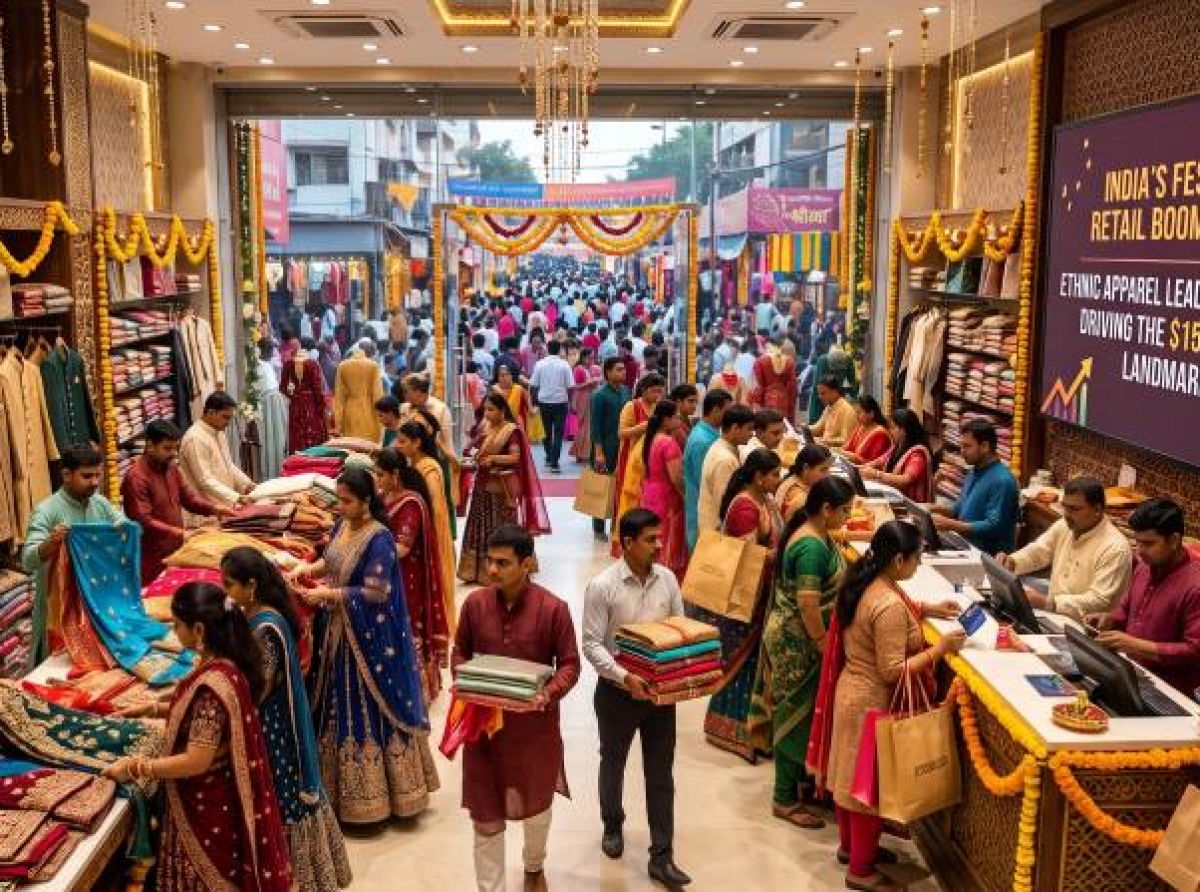
While big-ticket electronics lagged during India’s 2026 festive cycle, traditional apparel emerged as a primary volume driver across digital storefronts. According to Datum Intelligence’s Festive Barometer 2026, total online gross merchandise value increased by 17 per cent Y-o-Y to Rs 1.41 lakh crore (approximately $15 billion) across a 34-day window ending November 9. However, average card transaction values declined by 13 per cent to Rs 5,970, signaling that Indian consumers prioritized frequent, mid-priced wardrobe purchases over high-value gadgets.
Direct brand portals and rapid delivery outpace marketplaces
Ethnic wear recorded double-digit expansion even as broader discretionary apparel saw uneven demand. Notably, direct-to-consumer brand websites grew by 27 per cent to 30 per cent, significantly outperforming traditional e-commerce marketplaces at 8 per cent. Quick commerce platforms also captured 16 per cent of seasonal volume, with orders rising by 75 per cent. For instance, omnichannel label Libas utilized rapid-delivery networks for Rs 1,000–Rs 1,200 festive orders, slashing return rates by up to 70 per cent compared to standard e-commerce. A late Diwali compressed final purchasing into the closing eleven days, rewarding brands with agile regional inventory, noted Meera Krishnan, Retail Analyst, Apparel retailers now plan to expand regional fulfillment hubs to sustain momentum into the winter wedding season.
Quick commerce partnerships to capture maximum growth
Valued at roughly Rs 2.4 lakh crore, India’s organized ethnic wear market spans women’s occasion wear, menswear, and bridal collections. Historically dominated by unorganized local weavers, the sector has rapidly formalized since 2020. Leading brands are expanding Tier-II store networks and quick-commerce partnerships are expected to capture projected 15–20 per cent annual category growth.










 Get in Touch!

