
From budget buys to luxury labels, the shift driving India’s fashion boom
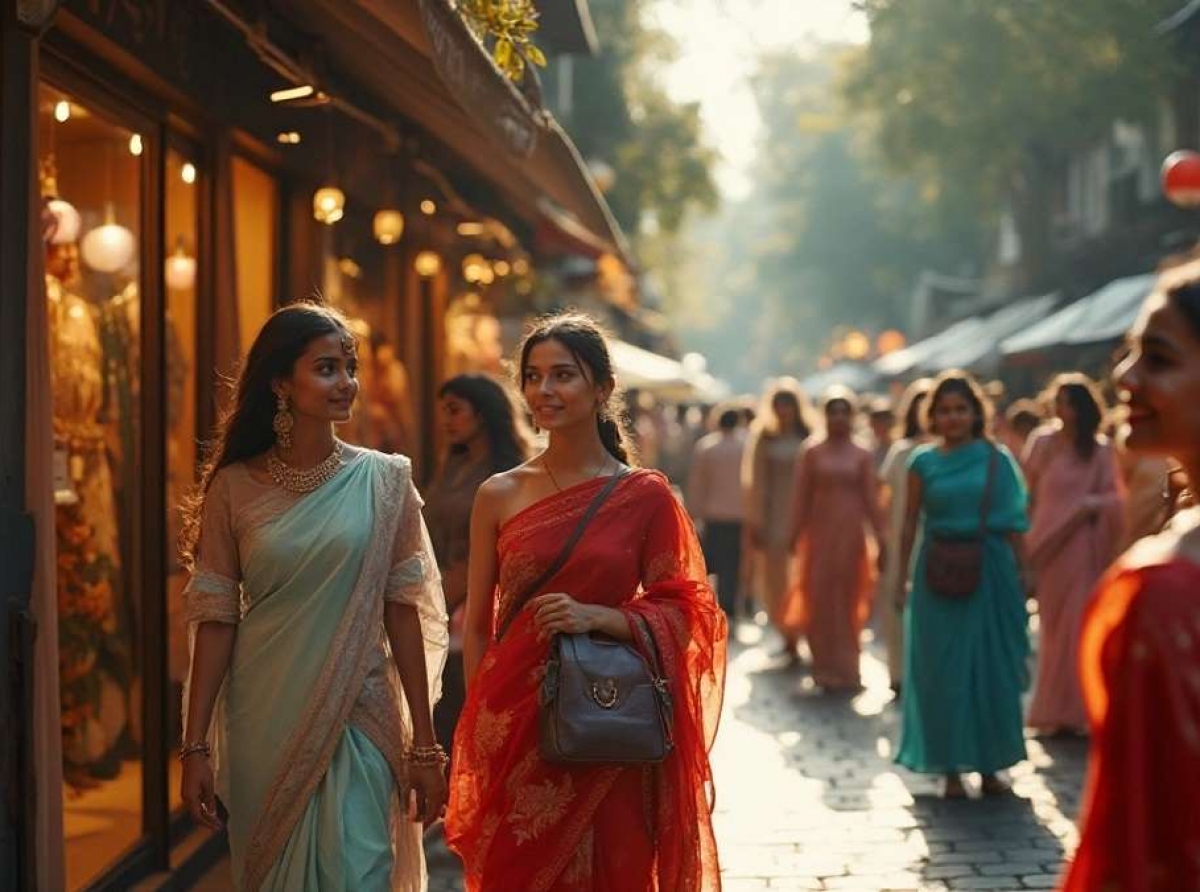
India’s apparel and fashion industry has crossed a major milestone, with the domestic market now valued at more than $115 billion. The growth story, however, is no longer being defined merely by rising consumption volumes. Instead, it is being powered by a shift in consumer behavior, as millions of shoppers steadily move across price segments, from unbranded apparel to organized value retail, global fast-fashion brands, premium labels, and eventually luxury products.
This pattern reflects broader economic and demographic changes unfolding across the country. Rising disposable incomes, increasing urbanization, deeper digital penetration, and growing exposure to international fashion trends have transformed apparel from a necessity-driven purchase into a lifestyle and identity statement.
Mapping India’s consumer upgrade journey
The Indian fashion market today can be viewed as a six-stage consumer progression, with each tier representing a distinct spending mindset and retail pattern.
Table: Six-tier consumer migration pattern
|
Stage |
Customer mindset |
Target price range (Rs) |
Market drivers |
Dominant retail channels |
Market flagbearers |
|
1. Need-Based Shopper |
Buys out of absolute necessity within strict budget |
Under Rs 500 |
Absolute Affordability |
Local Weekly Markets, Standalone Unorganized Stores |
Unbranded local apparel |
|
2. Value Seeker |
Demands reliable quality at standardized entry prices |
Rs 499- 1,499 |
Value for Money, Quality Assurance |
Organized Value Retail Stores, E-commerce Platforms |
Zudio (Trent Limited) |
|
3. Aspiring Upgrader |
Prioritizes global styling, aesthetics, and look |
Rs 1,500-4,999 |
Trend Relevance, Speed-to-Market Style |
High-Street Malls, Brand Webstores, Social Commerce |
H&M, Zara |
|
4. Premium Explorer |
Seeks international pedigree and premium fabric quality |
Rs 5,000-15,000 |
Heritage Brand Equity, Premium Construction |
Premium Malls, Dedicated Brand Boutiques |
Lacoste |
|
5. Luxury Adopter |
Invests in status, visible exclusivity, and self-expression |
Rs 15,000 -1,000,000 |
Status Symbolism, Curated Identity |
Luxury Annexes, Select International Airport Lounges |
Coach, Michael Kors, Tommy Hilfiger |
|
6. Luxury Loyalist |
Values absolute exclusivity, deep heritage, and timelessness |
Above Rs 100,000 |
Scarcity, Historic Legacy, Generational Status |
Haute Couture Boutiques, Private Appointment Salons |
Louis Vuitton, Gucci, Christian Dior Couture |
The progression shows how organized retail is benefiting from consumers moving up the value chain. While the largest volumes remain concentrated in the entry-level segment, the strongest revenue growth is emerging from shoppers upgrading into higher-priced categories.
Income growth creates new demand
Experts say more and more value-conscious consumers are shifting away from unorganized retail toward branded offerings that provide consistency, quality assurance, and a stronger shopping experience. The value segment, typically priced between Rs 499 and Rs 1,499, has become one of the most important gateways into organized retail. Retailers operating in this bracket have successfully attracted shoppers who previously relied on local markets and unbranded products.
As household incomes continue to rise, consumers are progressing further into the Rs 1,500-4,999 range, where purchasing decisions are influenced less by affordability and more by fashion relevance, brand image, and product aesthetics. This category has emerged as one of the most attractive growth opportunities for apparel brands because it serves as the bridge between value retail and premium consumption.
Retail analysts point out the most significant opportunity in Indian fashion today lies not in acquiring new customers but in retaining consumers as they move through progressively higher spending brackets. The result is a retail sector where long-term growth depends on a brand’s ability to accompany consumers throughout their purchasing journey.
Premiumization gains momentum
Beyond the mid-market segment, India’s premium and luxury categories are witnessing higher expansion. As per estimates the domestic luxury market is on course to reach $18 billion valuation, positioning India among Asia’s fastest-growing luxury destinations. The premium segment, where products typically range between Rs 5,000 and Rs 15,000, has benefited from growing demand for international labels, superior craftsmanship, and heritage-driven branding. Consumers in this category are often looking for quality upgrades rather than overt status symbols.
At the luxury end of the spectrum, purchasing motivations are becoming more nuanced. First-generation affluent consumers often gravitate toward recognizable luxury logos that communicate social status, while established wealth segments increasingly favor understated products associated with the global quiet luxury movement.
This has encouraged brands to diversify their offerings, balancing highly visible luxury products with timeless collections focused on craftsmanship, heritage, and exclusivity. Retail developers are responding by expanding luxury-focused shopping destinations, premium airport retail formats, and personalized shopping environments designed to cater to high-net-worth consumers.
Retailers build for every price tier
The changing consumer scenario is prompting retailers to rethink their expansion strategies. For example, value-fashion retailers have shown that scale, supply-chain efficiency, and disciplined pricing can generate substantial growth. By maintaining affordable price points while offering standardized quality, these retailers are successfully converting consumers from unorganized markets into branded retail environments. A major portion of this growth is coming from Tier-II and III cities, where rising incomes and increasing brand awareness are creating new demand centers.
Global fast-fashion brands have positioned themselves as the natural next step for consumers graduating from value retail. Their ability to quickly adapt global trends into affordable products has resonated strongly with younger consumers seeking fashionable yet accessible apparel. By operating agile supply chains and shortening product development cycles, these retailers continue to capitalize on India’s growing aspirational middle class. The result is a continuous pipeline of consumers moving upward through the retail hierarchy, creating sustained growth opportunities across multiple segments.
Challenges beneath the opportunity
Despite the favorable long-term outlook, retailers face several operational challenges. Prime commercial real estate remains expensive, particularly in major metropolitan markets. Supply-chain management across diverse geographies continues to require significant investment, while competition for consumer attention has intensified across both physical and digital channels.
Moreover, the rapid growth of buy-now-pay-later (BNPL) platforms and consumer financing options has helped boost discretionary spending. However, brands cannot rely solely on easy credit to sustain growth and must focus on building stronger customer loyalty and differentiated product offerings. Experts say the next phase of growth will belong to companies capable of creating multi-tier brand portfolios that evolve alongside consumers’ rising purchasing power.
Among the companies benefiting from this shift is Tata’s retail arm Trent, which has emerged as a key player in India’s organized fashion market. Established in 1998 as part of the Tata Group, the retailer has grown rapidly through value-fashion and lifestyle concepts that target consumers entering branded retail for the first time.
By combining localized sourcing, rapid inventory turnover, and expansion into emerging regional markets, the company has positioned itself at the center of India’s consumer upgrade cycle.
As India’s fashion industry enters its next phase of growth, the defining competitive advantage may not simply be brand recognition. Instead, success will depend on a retailer’s ability to capture consumers at one stage of their journey and retain them as they climb the country’s increasingly influential fashion ladder.









 Get in Touch!
