All Stories

Phoenix Mills targets 18 million sq ft ootprint by 2030

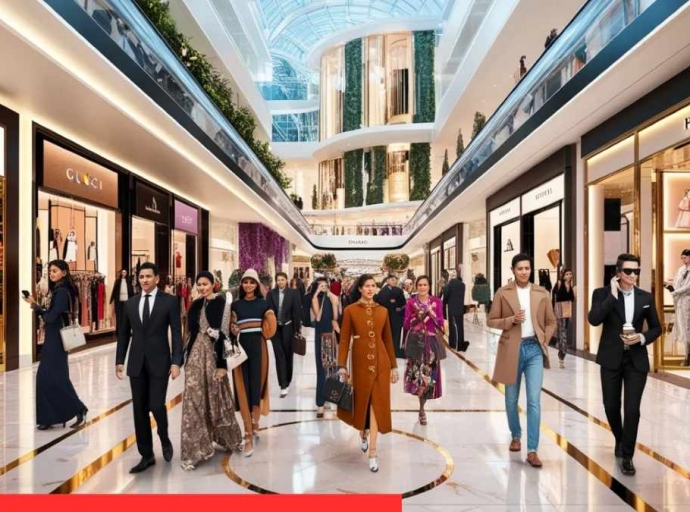
The Phoenix Mills is aggressively accelerating its commercial expansion, targeting a retail portfolio exceeding 18 million square feet by 2030. The strategic roadmap scales up from the company's current operating footprint of approximately 11.5 million sq ft, driven by sustained consumer spending across premier metropolitan and tier-two markets.

Capitalizing on broad-based retail momentum

The expansion blueprint follows a stellar financial performance, with the developer registering over 30 per cent Y-o-Y consumption growth in Q1, FY27, surpassing Rs 4,700 crore in total tenant sales. Management notes, this upward trajectory marks the third consecutive quarter of exceeding 25 per cent consumption growth, spanning apparel, luxury retail, and experiential dining formats across all operational malls.

The company is scaling their development pipeline aggressively to match structural shifts in urban consumer spending, notes Rashmi Sen, CEO-Malls, Phoenix Mills. Their immediate execution focus centers on upcoming landmark projects in Kolkata and Surat, alongside major expansion wings at Palladium Mumbai and our Bengaluru properties.

Repositioning legacy assets for experiential retail

Beyond greenfield developments in cities like Thane, Coimbatore, and Chandigarh, the company is actively executing physical makeovers across its mature assets. Over 300,000 sq ft of retail floor space has recently been churned at both Pune and Bengaluru properties to introduce international flagship fashion brands and curate immersive entertainment zones. In Mumbai, the store count at Palladium is projected to nearly double from 300 to 600 brands, reinforcing the shift toward premium lifestyle experiences.

Pioneering organized retail density across India

The Phoenix Mills is India's premier retail-led mixed-use developer and operator, specializing in large-scale shopping destinations, commercial offices, hospitality, and residential assets across major gateway cities. Backed by robust balance sheet strength and consistent double-digit consumption gains, the firm maintains an exceptionally strong financial outlook as it pioneers organized retail density across India.

Phoenix Mills targets 18 million sq ft ootprint by 2030

Estilocus accelerates retail network across South and West India

Bengaluru-based menswear label Estilocus is accelerating its physical retail network across South and Western India to capture market share within the $102.8 billion Indian apparel sector. Targeting urban consumers aged 25 to 45 who seek minimal, durable wardrobe staples, the brand addresses an under-served segment between unorganized mass-market options and costly high-end labels. The rollout includes dedicated doors across Kerala, Telangana, and Tamil Nadu, alongside strategic expansions into high-footfall high streets and Tier I and II malls in Maharashtra and Goa.

Capitalizing on omnichannel scale

Driven by an 83 per cent Y-o-Y revenue growth between FY25 and FY26, the retailer leverages a balanced hybrid model combining digital-first customer acquisition with physical touchpoints. By deploying localized inventory strategies and AI-driven online fitting tools, Estilocus enhances conversion metrics across its physical and digital storefronts.

The expansion is driven by a combination of market alignment and internal readiness, entering regions showing strong demand for minimal, everyday menswear, states Ladeesh PC, Director and Co-Founder, Estilocus.

Market restructuring impact

As consumer preference shifts toward utility-driven minimalist fashion over fast-turnaround trends, mid-premium specialists are eroding traditional brand monopolies. Estilocus's measured physical scaling provides a lean retail case study, demonstrating how structured offline execution and tight working capital management can secure long-term profitability in India's fragmented menswear market.

Strengthening retail network across malls

Founded in 2019 in Bengaluru, Estilocus is an unfunded mid-premium D2C menswear label providing minimal, functional shirts, bottomwear, and elevated essentials. Focusing on South India before expanding nationally, the brand targets strong double-digit growth by deepening its retail network across high-street and mall locations.

Estilocus accelerates retail network across South and West India

Tata’s retail powerhouse strengthens mass-market fashion dominance

Trent Limited reported a 19 per cent Y-o-Y increase in Q1 FY27 standalone operational revenue to ₹5,666 crore, driven primarily by the footprint expansion of its value-fashion division, Zudio.By June 2026, Zudio expanded its network to 982 outlets spanning 330 cities, successfully capturing price-conscious demographics across Tier-II and Tier-III hubs where discretionary spending remains steady.The retailer added 22 new Zudio stores during the quarter, consolidating its position within India’s expanding affordable apparel segment.

Scaling high-velocity inventory in value retail

Zudio’s commercial momentum reflects an execution model focused on delivering high-velocity fast fashion at accessible price points while keeping operating costs lean, noted a senior retail strategy executive. Utilizing an asset-light franchisee-cum-ownership structure, Zudio maintains inventory turnover cycles under 15 days, minimizing markdowns. While rising real estate costs in secondary markets and store density saturation present potential margin headwinds, Trent’s consolidated quarterly net profit rose 22 per cent Y-o-Y to Rs 532 crore, demonstrating strong operational resilience compared to traditional multi-brand department chains.

Value-retail engine of the Tata portfolio

Incorporated in 1998, Trent Limited operates flagship retail chains Westside, Zudio, and Star Bazaar across India and international markets, including the UAE. Focused on fast fashion, lifestyle, and home goods, the retail enterprise maintains a long-term target of scaling Zudio toward 5,000 locations, supported by FY26 revenues surpassing Rs 20,000 crore.

Tata’s retail powerhouse strengthens mass-market fashion dominance

Discretionary spending fuels inventory turnover for fashion retailers

Major fashion and apparel retailers wrapped up a robust end-of-season sales cycle, propelled by strong consumer appetite for both discounted inventory and early-arrival fresh collections. Industry data reveals a 14 per cent Y-o-Y increase in overall mall footfalls, reflecting resilient discretionary spending despite macroeconomic headwinds. Retail executives highlight that consumer preferences have shifted toward versatile wardrobe essentials and premium casualwear, enabling brands to clear legacy stock without resorting to aggressive margin-diluting markdowns.

Omnichannel integration maximizes revenue efficiency

Prominent apparel chains are leveraging advanced omnichannel fulfillment models to capture cross-channel demand, successfully mitigating supply chain volatility and rising operational expenditures. The convergence of seamless digital browsing with physical touchpoints has fundamentally transformed our inventory efficiency and customer retention metrics, notes Vikram Sharma, Chief Retail Officer, Metro Fashion Retailers. For instance, mid-tier lifestyle brand UrbanTrend deployed localized inventory tracking across seventy brick-and-mortar outlets, resulting in a 22 per cent reduction in end-of-season stock carryover and record quarterly revenues.

Heritage brand scaling modern retail

Raymond Lifestyle operates as a premier integrated manufacturer and retailer specializing in men's worsted suitings, fabrics, and ready-made fashion brands like Park Avenue. Targeting aggressive domestic retail expansion alongside high-value global B2B contracting, the enterprise maintains robust financial stability and a century-old legacy of industrial excellence.

Discretionary spending fuels inventory turnover for fashion retailers

Flipkart and Meta partner to drive apparel sales via creator commerce

Flipkart Group, alongside its dedicated fashion marketplace Myntra, has partnered with Meta India to scale affiliate-based social shopping across Facebook and Instagram. Under the integration, content creators can directly tag apparel and lifestyle products within posts and Reels, routing consumers seamlessly to checkout on Myntra or Flipkart. The initiative targets GenZ consumers, who account for 40 per cent to 45 per cent of India’s e-retail shoppers and drive nearly half of incremental fashion orders, according to the Flipkart and Bain & Company 2026 report. Discovery has shifted from search bars to social feeds, making creators the new storefront, noted Ravi Iyer, Chief Financial Officer, Flipkart Group.

Monetization models shift power to micro-influencers and apparel brands

By allowing participating sellers to set custom commission structures, the partnership opens direct monetization avenues for micro and nano creators while giving fashion labels lower customer acquisition costs. In an early implementation, direct product tagging on short-form video content yielded higher conversion rates for mid-tier ethnic wear and western apparel brands compared to traditional digital ad placements. However, managing return-rate overheads inherent to social impulse purchases remains an operational hurdle. "Bringing together Meta's discovery platforms and Flipkart's infrastructure creates a direct path from inspiration to income," stated Arun Srinivas, Managing Director, Meta India.

E-commerce infrastructure and retail footprint

Founded in 2007 as an online bookstore, Walmart-owned Flipkart Group operates leading Indian e-commerce platforms, including Myntra, across apparel, electronics, and consumer goods. The company targets double-digit growth by expanding creator infrastructure like Creatorhood. Backed by solid GMV growth, Flipkart maintains market dominance in fashion and retail.

Flipkart and Meta partner to drive apparel sales via creator commerce

Myntra scales global portfolio with new brand launch

The Indian fashion and e-commerce landscape is recording a structural shift toward design-led international apparel as major digital platforms expand strategic foreign brand partnerships. Capitalizing on a growing consumer appetite for expressive global styles, homegrown e-commerce major Myntra has introduced Barcelona-based fashion label Desigual's apparel collection. This rollout follows the successful initial entry of the Spanish brand's accessories and backpacks last year, bringing an initial curation of 90 distinct styles spanning dresses, signature denim, and statement outerwear to the domestic market.

Capturing Gen Z and millennial demand

Positioned within the accessible luxury segment, Desigual aims to bridge the gap between mass-market retail and ultra-premium designer labels by appealing directly to Gen Z and millennial shoppers. The collaboration leverages Myntra's massive digital footprint of over 75 million monthly active users to bypass traditional brick-and-mortar retail entry barriers. The encouraging response to Desigual's accessories demonstrates the Indian consumer's growing appetite for design-led international fashion, and we are uniquely positioned to enable iconic global brands to scale their presence, notes Venu Nair, Chief-Strategic Partnerships and Omnichannel, Myntra.

Industry analysts project, continuous seasonal drops and digital-first merchandising will dictate the long-term success of foreign avant-garde labels entering South Asia's accelerating retail ecosystem.

Focusing on creative self-expression

Founded in Barcelona in 1984, Desigual designs colorful, artistic, and patchwork-infused apparel. Operating globally across 100-plus countries, the brand focuses on creative self-expression. Backed by steady international revenue performance, its growth strategy centers on expanding digital distribution and high-impact e-commerce partnerships in emerging luxury markets.

Myntra scales global portfolio with new brand launch

Retail majors double down on stores as offline expansion gains momentum

India's leading retailers are making their strongest commitment to physical retail in years, signalling that brick-and-mortar has once again become central to long-term growth strategies. After several years of optimizing store portfolios and strengthening balance sheets, companies are now raising fresh capital and increasing capital expenditure to accelerate expansion across metros as well as Tier-II and Tier-III markets.

The country's largest listed retailers including Reliance Retail, Avenue Supermarts (DMart), Trent, Shoppers Stop and Arvind Fashions collectively added 2,182 net stores in FY26, a 25 per cent increase over the 1,745 outlets added in FY25. The expansion has pushed their combined network beyond 31,000 stores, reflecting renewed confidence in India's consumption story.

Table: Capital deployment & expansion strategies

Company

Capital deployment

Expansion strategy

Trent

Up to Rs 2,500 crore fundraising approved

100 new Westside stores annually + rapid Zudio expansion

Reliance Retail

Rs 22,521 crore non-current borrowings

Expansion of physical stores and 700+ dark store network

Avenue Supermarts (DMart)

Rs 1,000 crore NCD issuance

Multi-state store expansion

More Retail

Rs 500 crore via HSBC-backed NCDs

Omnichannel and hypermarket expansion

Shoppers Stop

Rs 114 crore FY26 capex

Added 27 stores including INTUNE brand expansion

Arvind Fashions

Internal accruals

150,000 sq. ft. of net retail area planned in FY27

Economics shift in favour of stores

The latest expansion cycle reflects a change in retail economics rather than a reversal of digital strategies. Customer acquisition through online channels has become expensive, prompting retailers to view stores as both sales destinations and long-term customer acquisition assets. A well-located outlet not only drives footfalls but also improves brand visibility and lowers regional customer acquisition costs.

At the same time, India's retail infrastructure has matured significantly. Premium malls and organized high streets are rapidly emerging beyond the largest metros, particularly in cities such as Jaipur, Lucknow, Indore and Visakhapatnam. The availability of Grade-A retail space has enabled domestic brands to enter markets that previously lacked modern retail spaces.

Demand has also improved. Higher disposable incomes, tax relief measures and resilient consumer spending have encouraged discretionary purchases, particularly in apparel, lifestyle and beauty categories. Consumers in smaller cities increasingly prefer immediate product availability and in-store experiences alongside digital convenience. Industry leasing data underscores this trend, with Grade-A retail leasing crossing 8.9 million sq ft, led by fashion, personal care and food service brands.

Value retail drives expansion

Much of the investment is concentrated in value fashion formats, where affordability and rapid inventory turnover offer attractive economics. Trent continues to scale both Westside and Zudio, targeting around 100 Westside store additions annually while rapidly expanding its value-fashion business. The company's standardized store formats, merchandising and operating processes have reduced rollout timelines and improved capital efficiency. In Q1 FY27, Trent reported standalone revenue of Rs 5,666 crore, up 19 per cent year-on-year, largely due to new store additions.

Shoppers Stop is pursuing a dual-format strategy. While investing in premium department stores, it is simultaneously expanding its value-fashion chain INTUNE, which recorded 46 per cent revenue growth during FY26. The retailer added 27 stores during the year, including 14 INTUNE outlets, while generating Rs 301 crore in operating cash flows and reducing debt, allowing it to fund expansion without materially stretching its balance sheet. Arvind Fashions is also maintaining its expansion momentum, targeting 150,000 sq. ft. of net retail additions in FY27, exceeding the 140,000 sq. ft. added in FY26 across its portfolio of premium international brands.

Meanwhile, value retailer V-Mart Retail reported a 22.8 per cent increase in quarterly profit, supported by improving footfalls across Tier-II and Tier-III markets, reinforcing the industry's growing confidence in regional consumption.

Stores become fulfilment hubs

Rather than competing with e-commerce, physical stores are now becoming integral components of omnichannel retail. Retailers are redesigning store networks to function as localized fulfilment centres that support faster deliveries, better inventory utilization and lower logistics costs.

Reliance Retail exemplifies this hybrid approach. The company increased non-current borrowings to Rs 22,521 crore in FY26 from Rs 14,809 crore a year earlier while continuing to increase both its physical store network and its portfolio of more than 700 dark stores that support hyperlocal delivery. Similarly, More Retail secured over Rs 500 crore through privately placed non-convertible debentures to strengthen both store expansion and omnichannel fulfilment capabilities.

The mixing of physical retail and digital commerce is allowing retailers to place inventory closer to consumers, shorten delivery timelines and improve inventory productivity while maintaining a unified customer experience.

Expansion enters a new phase

The current investment cycle differs markedly from the post-pandemic years, when retailers focused on cost optimization and portfolio rationalization. Today, healthier balance sheets, improved cash generation and greater access to capital are enabling companies to pursue expansion from a position of financial strength rather than necessity.

More importantly, retailers are no longer evaluating stores solely on direct sales. Physical outlets are increasingly expected to support customer acquisition, brand building, fulfilment and omnichannel engagement simultaneously.

As organized retail penetrates deeper into India's smaller cities and modern retail infrastructure continues to grow, the latest wave of store openings suggests that physical retail is entering a new growth cycle one where stores are becoming strategic assets that complement, rather than compete with, digital commerce.

Retail majors double down on stores as offline expansion gains momentum

Integrated digital platforms bridge physical and online apparel sourcing

High-street fashion retailers across urban India are increasingly deploying proprietary mobile applications to eliminate conversion friction between e-commerce browsing and brick-and-mortar storefronts. Vero Moda India launched its native mobile application across iOS and Android, introducing features like live barcode scanning and real-time local store stock checking. In-app tools allow shoppers to verify item availability across 56 exclusive brand outlets and 312 shop-in-shops nationwide prior to store visits, or order out-of-stock sizes directly from physical aisles. Industry tracking shows integrated retail applications boost store visit conversion rates by 15% while reducing fit-related returns, helping brands monetize digital engagement across physical store networks.

Digital loyalty strategies target Tier-1 metro footfalls

To drive early user adoption and secure direct-to-consumer data assets, retail brands are tying app deployment with targeted promotional incentives and localized inventory mapping. Connecting digital discovery directly with physical store inventory creates an efficient, unified shopping route for time-sensitive urban consumers, observes Vineet Gautam, Country Head, Bestseller India. The app roll-out addresses rising customer acquisition costs on third-party marketplace platforms while reinforcing customer retention across Tier-1 and Tier-2 apparel hubs.

 European high-street fashion retail expansion

Launched in 1987 as Bestseller’s flagship womenswear label, Vero Moda entered India in 2010, offering western wear collections. Operating 56 standalone outlets and over 312 shop-in-shops, the brand targets double-digit retail growth by scaling its digital ecosystem alongside physical store expansion across key metropolitan markets.

Integrated digital platforms bridge physical and online apparel sourcing

Desigual explores e-commerce route to expand operations in India

Global fashion brands are increasingly bypassing traditional capital-intensive physical store rollouts by leveraging established digital marketplaces to test consumer demand in emerging retail corridors. Barcelona-headquartered brand Desigual has expanded its strategic alliance with Indian e-commerce platform Myntra to introduce a comprehensive apparel collection comprising ninety distinct styles across dresses, denim, and outerwear. Following the successful initial rollout of accessories and handbags, this digital integration enables the European label to tap into a vast consumer base without incurring immediate brick-and-mortar leasing overheads, effectively mitigating complex import tariffs and localized inventory distribution hurdles.

Capturing aspirational demand across emerging urban markets

With India’s digital fashion commerce expanding rapidly, online platforms offer foreign labels immediate access to millions of active shoppers, where emerging urban centers account for a substantial share of cross-border brand consumption. Navigating diverse regional sizing preferences, managing cross-border supply chain lead times, and maintaining strict pricing integrity remain core operational considerations for international entrants. The encouraging response to Desigual's initial accessories range on the platform demonstrates the Indian consumer's growing appetite for design-led international fashion, notes Venu Nair, Chief - Strategic Partnerships and Omnichannel, Myntra. The collaboration illustrates how digital distribution infrastructure allows European apparel houses to establish scalable market traction and capture rising discretionary spending.

Designing vibrant and artistic apparel

Founded in Barcelona in 1984, Desigual designs vibrant, artistic apparel and accessories marketed across nearly ninety countries. Focusing on accessible luxury for younger demographics, the brand targets international expansion through digital platforms and selective partnerships, maintaining steady commercial performance by leveraging agile inventory management and global e-commerce channels.

Desigual explores e-commerce route to expand operations  in India

Latest Publications

Image

Join Our Group

Join Our Group