
Physical stores reclaim Indian fashion as high-street footfall beats screen swiping
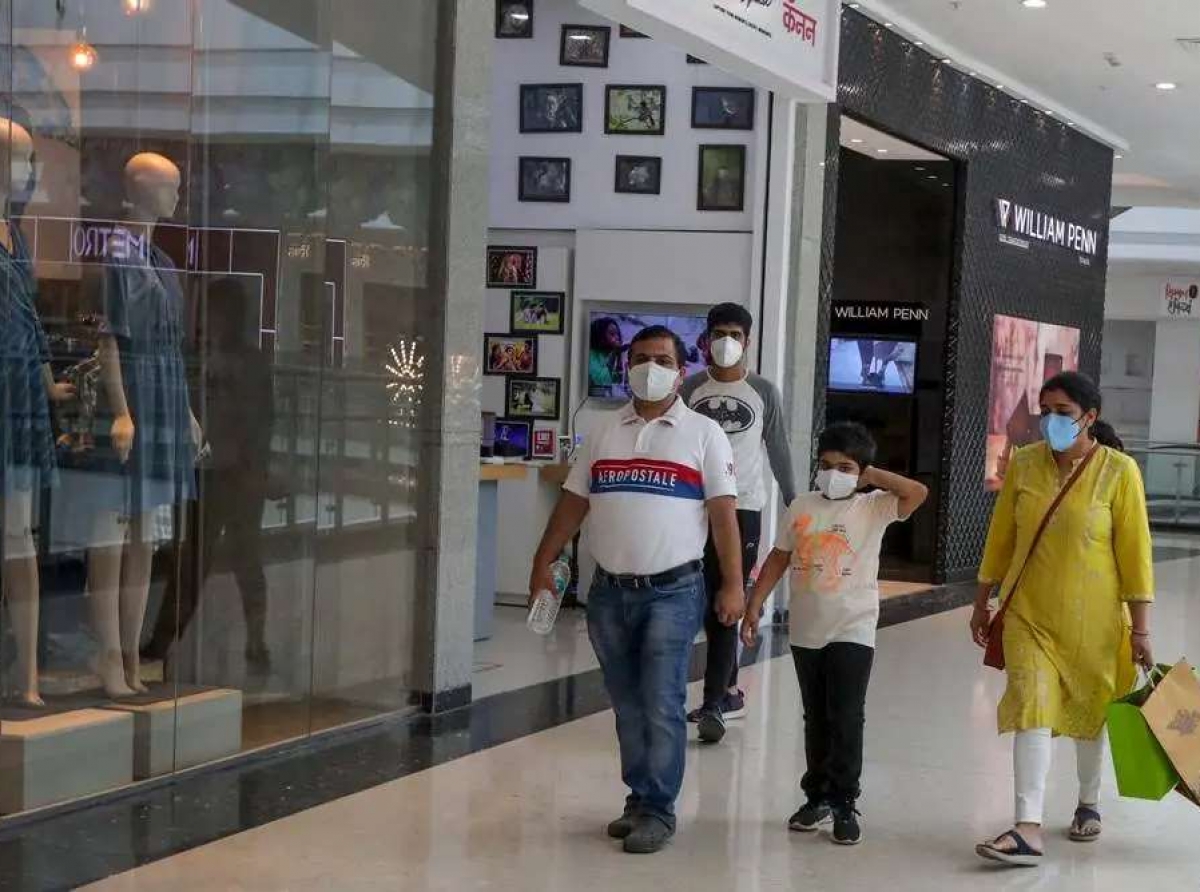
India’s fashion retail market is entering a where physical stores are regaining strategic importance after years of e-commerce-led disruption. Online platforms have conditioned consumers to expect instant price discovery, extensive assortments and doorstep delivery. Yet rising digital customer-acquisition costs, high cash-on-delivery (COD) return-to-origin rates and expensive reverse logistics are forcing brands to reassess the economics of being online-first.
The result is not a retreat from digital commerce, but a shift towards integrated physical and digital networks. For fashion retailers, stores are becoming more than sales outlets: they are experience centres, inventory hubs, fulfilment points and customer-acquisition assets. Studies show physical retail still generates nearly 80 per cent of India's overall retail revenue, underlining the continuing commercial relevance of high-street and mall-based shopping.
Stores win on unit economics
Fashion remains particularly vulnerable to online returns because fit, fabric, colour and drape are difficult to assess through a screen. Apparel return rates in online channels can reach 25-35 per cent, compared with 5-8 per cent in physical stores. COD compounds the problem, with return-to-origin rates frequently reaching 20-40 per cent.
Table: Indian retail channel dynamics & margins
|
Operational Metric |
E-Commerce / D2C Channels |
Brick-&-Mortar Outlets |
|
Avg. Apparel Return Rate |
25-35% |
5-8% |
|
COD Return-to-Origin |
20-40% |
Negligible (0%) |
|
Primary Return Drivers |
Fit mismatch, sizing diff |
Immediate fabric proof |
|
Secondary Purchase Lift |
10-15% |
35-40% (BORIS) |
The commercial advantage becomes clearer when category-level economics are considered. Western apparel and fast fashion have some of the highest online return rates, while ethnic and festive wear carry an especially high tactile dependency. Footwear benefits from immediate sizing checks, while bags and accessories gain from impulse purchases and cross-selling at the store counter.
|
Category |
Online return rate (India) |
In-store return Rate |
Primary commercial impact |
|
Western Apparel & Fast Fashion |
25-35% |
5-8% |
Eliminates fit mismatch and "bracketing" habits |
|
Ethnic Wear & Festive Apparel |
20-30% |
4.0-6% |
High tactile dependency; fabric weight validation |
|
Footwear & Athletic Shoes |
18-28% |
5-7% |
Immediate sizing verification avoids return shipping |
|
Bags & Fashion Accessories |
12-18% |
3-5% |
High impulse cross-selling at physical counters |
For retailers, the store therefore becomes part of the supply chain. Regional outlets can hold inventory closer to customers, facilitate returns and exchanges, and convert return visits into new purchases. Integrated store networks can reduce reverse-logistics expenses by more than 30 per cent compared with pure-play e-commerce models, according to the benchmarks cited.
Phygital stores change the equation
The new offline strategy is not about recreating traditional stores. Retailers are integrating digital technology into physical environments to make shopping faster and more personalised. Smart RFID-enabled fitting rooms can provide real-time inventory information, styling recommendations and mobile checkout options. Garment-level digital interfaces can allow customers to access information on fabric origin, artisan sourcing and care instructions.
This creates a phygital model where digital technology removes friction while the physical store provides the sensory experience that online commerce cannot fully replicate.
The economics extend beyond the individual transaction. Omnichannel shoppers can spend up to 30 per cent more per transaction and demonstrate higher lifetime value than single-channel online customers. More than half of urban online shoppers also use physical stores to return purchases, creating an opportunity for retailers to turn BORIS ‘Buy Online, Return In-Store’ into a fresh sales occasion.
Retailers can reportedly convert as much as 40 per cent of such return visits into secondary purchases, turning a potentially loss-making reverse-logistics event into a revenue opportunity.
Trent shows the scale advantage
Tata’s Trent gives one of India's clearest examples of the physical-store growth model. Its Westside and Zudio businesses have grown to more than 1,250 large-format stores across 321 cities. Trent's rapid design-to-shelf model, tightly controlled merchandise cycles and differentiated store environments have helped it build substantial sales density. The company reported operational revenue of Rs 19,701.41 crore in FY26.
The significance of the model extends beyond store count. A large physical network allows retailers to place inventory closer to consumers while creating multiple touchpoints for discovery, purchase, exchange and fulfilment.
Digital-first brands are following the same pattern. Men's fashion label Snitch, which began as an online-focused business, has grown to 100 stores across 38 cities. Its strategy highlights the broader D2C transition: use online data to understand demand, then deploy stores selectively in markets where physical presence can improve inventory velocity and reduce dependence on expensive digital acquisition.
The expansion challenge
The offline revival, however, is not without risk. Prime high-street locations and shopping malls in Mumbai, Delhi-NCR, Bengaluru and Hyderabad command higher rents. Store fit-outs, technology infrastructure, unified POS systems and inventory integration add substantial upfront costs. The operating challenge is equally significant. Retailers need trained staff capable of managing omnichannel orders, digital interfaces, returns and unified inventory systems. Technology investment can also become counterproductive if retailers prioritise flashy installations over merchandise availability, efficient checkout and service quality. The right store strategy is therefore about productivity rather than simply footprint.
Tier-II markets widen the opportunity
The next phase of India’s physical retail expansion is unlikely to be restricted to the largest metros. Rising incomes, greater brand awareness and improving retail infrastructure are pushing organised fashion into smaller cities.
|
Regional retail segment |
Current growth drivers |
Focus areas |
|
Tier-I metros (Mumbai, Delhi-NCR, Bengaluru) |
Premiumization, high-street flagships, lifestyle malls |
Interactive fitting rooms, boutique lounges, express fulfillment |
|
Tier-II Growth Hubs (Jaipur, Lucknow, Ahmedabad) |
Rapid urbanization, aspiring middle-class demand |
Large-format value apparel stores, local omnichannel pickup hubs |
|
Tier-III & Emerging Markets |
Rising disposable income, brand awareness |
Accessible fashion, efficient inventory replenishment systems |
For Tier-II,III markets, the physical store can also serve as a local fulfilment and pickup hub, improving delivery economics while building brand familiarity.
Stores become the new retail infrastructure
India's fashion retail battle is no longer a simple contest between online and offline channels. The emerging winner is the retailer capable of integrating both. For brands, the physical store now performs four jobs simultaneously: it sells merchandise, acquires customers, manages inventory and reinforces brand identity. Digital channels, meanwhile, drive discovery, demand intelligence and convenience.
The shift is therefore from online versus offline to online plus offline. As customer-acquisition costs rise and returns continue to challenge fashion e-commerce profitability, physical stores are emerging as a critical mechanism for protecting margins while deepening customer relationships.
The next generation of Indian fashion retail will not be defined by the retailer with the largest digital catalogue or the biggest store network. It will be defined by the one that can make every physical and digital touchpoint work as a single commercial ecosystem.










 Get in Touch!
