
Beyond metros, India’s next apparel brands build scale from the hinterland
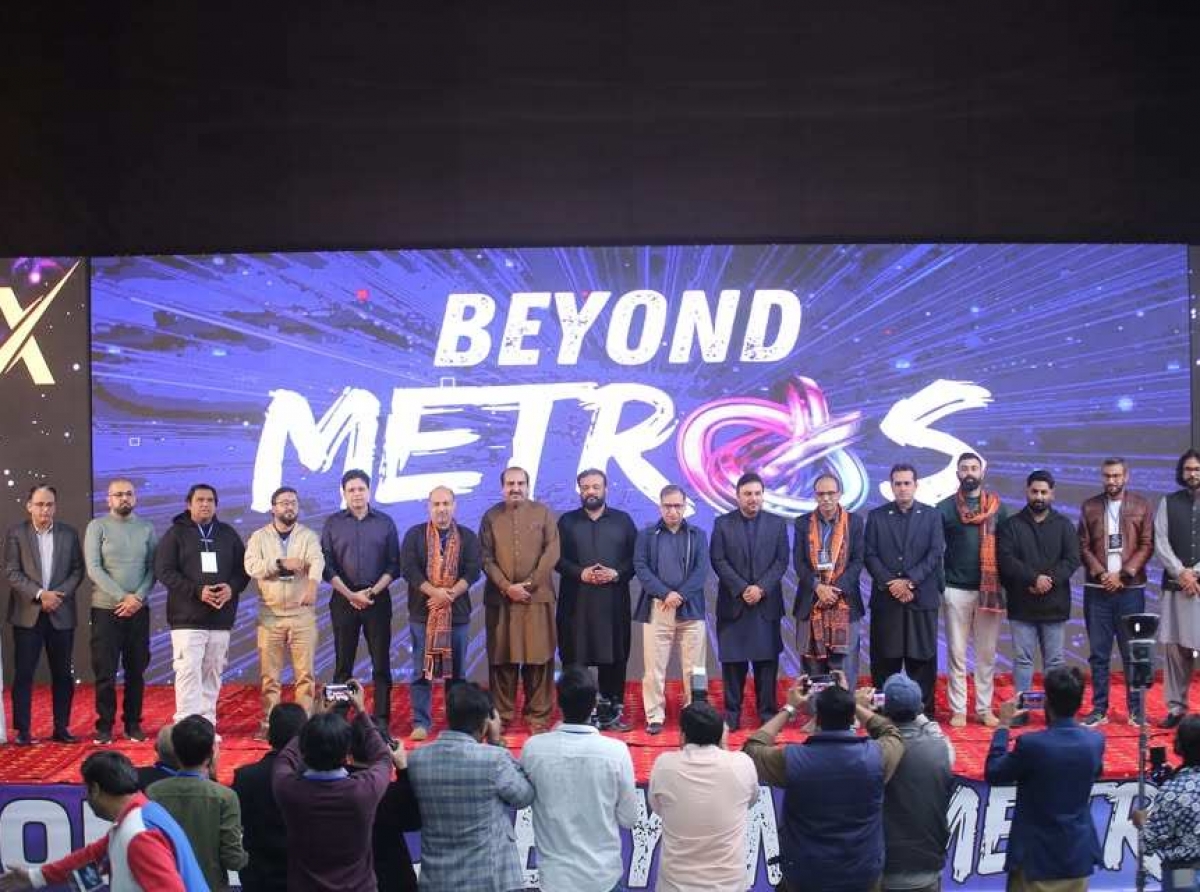
India’s fashion retail growth is beginning to challenge one of the industry's longest-held assumptions: that successful consumer brands need a metro headquarters, deep-pocketed investors and expensive customer acquisition to achieve scale. A new generation of bootstrapped apparel and lifestyle entrepreneurs is showcasing a different model. Their competitive advantage is less about proximity to venture capital and more about proximity to manufacturing clusters, artisans, consumers and cash flows.
From Kolkata and regional textile hubs to manufacturing centres such as Tirupur, Surat and Jaipur, these founders are using supply-chain integration, D2C distribution and community-led marketing to build brands with significantly lower dependence on external capital.
The shift is particularly important as India's next wave of consumption increasingly comes from outside the traditional metropolitan markets.
Non-metro demand rush
The numbers underline the change. According to Unicommerce's FY26 D2C annual report, Tier II and Tier III cities accounted for 66 per cent of new D2C order volumes and contributed 60 per cent of incremental GMV. Overall D2C order volumes rose 33 per cent year-on-year, while GMV grew 32 per cent. The broader D2C market, estimated at $10 billion-$12 billion, is projected to reach $60 billion by 2030. Apparel remains one of its largest categories, accounting for 25.2 per cent of the market.
|
Market |
FY25 baseline |
FY26 performance |
2030 projection |
|
Overall D2C Market Size |
$8.5-10 bn |
$10-12 bn |
$60 bn |
|
Tier 2/3 Share of New Orders |
58.00% |
66.00% |
Projected > 75.0% |
|
Tier 2/3 Incremental GMV Contribution |
52.00% |
60.00% |
Projected > 70.0% |
|
Apparel Category Share in D2C |
24.10% |
25.20% |
Projected ~28.0% |
|
Average Logistics RTO Rate (Post-Festive) |
39.00% |
21.00% |
Target < 15.0% |
This demand growth is becoming commercially more viable as logistics infrastructure improves. Shipway data indicates that RTO rates, once a significant cost burden for brands dependent on cash-on-delivery in smaller towns, fell to about 21 per cent in early 2026 from nearly 39 per cent during earlier festive peaks.
Better address validation, AI-based order verification and regional fulfilment nodes are reducing failed deliveries and inventory lock-ups. For independent brands, this matters because every percentage point improvement in RTO can translate into better working-capital efficiency.
Supply chains become the base
For non-metro founders, geography can actually be an advantage.
A brand located close to its production units can eliminate layers of intermediaries and shorten product development cycles. Surat provides access to synthetic textiles, Tirupur to knitted garments, Jaipur to craft and block-printing ecosystems, while other regional manufacturing centres offer established networks of cutters, processors and garment units. The result is a business model built around speed and gross margin rather than capital intensity.
Regional brands can potentially achieve gross margins of more than 60-65 per cent while keeping marketing expenditure in the 18-22 per cent range through community-building, micro-influencers, regional events and organic social media. This contrasts sharply with consumer businesses that depend heavily on paid digital acquisition.
The advantage is particularly pronounced when design and manufacturing are geographically close. Shorter design-to-shelf cycles reduce inventory risk and allow brands to respond to emerging trends without committing to large production runs months in advance.
Suta's capital-light playbook
Suta exemplifies how this model can work in India's artisanal apparel segment. Founded in 2016 by sisters Sujata and Taniya Biswas, the Kolkata-origin brand was established with an initial capital outlay of about Rs 6 lakh. It has since built a network of more than 17,000 weavers and artisans and is targeting approximately Rs 85-90 crore in FY26 revenue without institutional equity funding. Its distribution model is deliberately diversified.
Table: Suta's revenue breakdown by sales channel
|
Channel |
Approx. revenue share |
|
D2C Website & App |
45% |
|
Exclusive Brand Outlets |
35% |
|
Marketplace Partners |
15% |
|
Pop-ups & International |
5% |
The model combines digital reach with physical discovery. Suta has expanded its exclusive store network across Tier-II, II markets while using pop-ups to test local demand before committing to permanent real estate.
That approach is significant because it treats physical retail not simply as a branding expense but as a market-testing mechanism.
The company's capital discipline also changes the way growth decisions are made. Without institutional investors subsidising losses, stores, product categories and marketing campaigns have to demonstrate their own economic viability.
From regional culture to global appeal
The opportunity extends well beyond traditional Indian textiles.
SIX5SIX, founded by Avni and Ambar Aneja, has combined sportswear manufacturing capabilities with India's growing streetwear culture. Partnerships involving Indian football helped establish visibility before the brand expanded into lifestyle and limited-drop e-commerce.
Biskit, meanwhile, operates at the intersection of industrial design, art and utilitarian fashion, using limited production runs and a gender-neutral positioning to reach customers in Western Europe and North America.
Their pattern point to an important evolution in Indian apparel: regional manufacturing no longer necessarily means regional consumption. A brand can remain deeply embedded in India's manufacturing while building a global customer base through digital commerce.
The constraints remain
The model is not without its share of challenges. COD remains a working-capital challenge in smaller markets. Lower average order values can also make customer acquisition economics difficult, while rapid offline expansion introduces rent, staffing and inventory-distribution costs.
There is another emerging challenge: as successful regional brands scale, they risk reproducing the same cost structures they initially avoided. Expanding across multiple stores and fulfilment locations can fragment inventory and erode the benefits of a tightly integrated supply chain.
That is why category expansion is becoming important. Apparel brands are moving towards higher-margin adjacencies such as accessories, menswear and occasion wear while exploring overseas markets, particularly those with established Indian diaspora demand.
The new retail equation
The larger significance of these businesses lies beyond individual brands. India's apparel market is moving from a metro-centric, capital-led growth model to a distributed, supply-chain-led model. Manufacturing clusters are becoming entrepreneurial, not merely production bases. Regional founders can access skilled labour, specialised suppliers and lower operating costs while selling nationally and internationally through digital channels.
The implication for investors and established retailers is equally important. The next generation of scalable apparel businesses may not emerge from the conventional startup hubs. They could come from founders who understand fabrics, manufacturing, regional consumers and inventory economics before they understand venture capital.
India's retail engine is therefore becoming more geographically dispersed and potentially more financially disciplined. The winners of the next apparel cycle may not be the brands that spend the most to acquire customers. They may be those that produce faster, waste less, retain healthier margins and convert regional supply-chain advantages into national and global demand.











 Get in Touch!
