All Stories

RBL hosts immersive showcase for Boss with actor Ishaan Khatter

22 January 2026, Mumbai

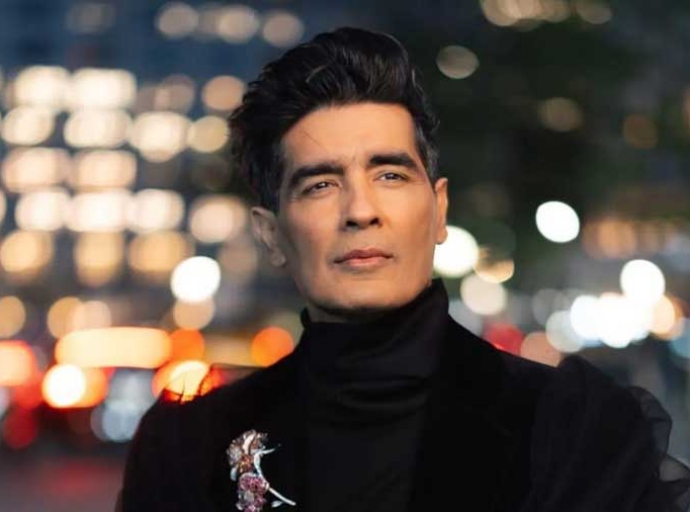
The Indian luxury landscape is undergoing a structural transformation, evolving from a high-potential frontier into a core global growth pillar. Reliance Brands (RBL) recently reinforced this trajectory by hosting an immersive showcase for Boss in Mumbai, featuring actor Ishaan Khatter. This event signals a broader strategic move by RBL to transition from traditional retail distribution to experiential brand stewardship, as India’s luxury market is projected to cross $15 billion by late 2026.

High-margin experiential retail strategies

Luxury consumption in India is no longer confined to product ownership but is increasingly driven by cultural capital and ‘memories over materialism.’ By positioning the Boss Fall/Winter 2025 campaign through cinematic storytelling and sculptural installations, RBL is tapping into the growing ‘Henry’ (High Earner, Not Rich Yet) and Dink segments. These demographics are pushing demand for lifestyle-led luxury, contributing to an expected 21.4 per cent annual growth in experiential luxury services across major Indian metros.

Navigating global headwinds and portfolio integration

While the global parent, Hugo Boss, has signaled 2026 as a year of ‘consolidation and realignment’ due to subdued demand in China and the US, the Indian market remains a rare high-scale opportunity. RBL’s recent internal merger with Reliance Retail Ventures aims to eliminate operational redundancies and leverage a massive network of nearly 20,000 outlets.

This integration allows premium brands to scale more efficiently despite volatile global freight costs and shifting trade policies.

Future-proofing through premium diversification

RBL continues to aggressively expand its portfolio, recently securing a master franchise for Italy’s Max & Co and acquiring global rights for prestige beauty brands. India is now firmly positioned among the top three fastest-growing luxury markets globally, notes a recent sector report. By integrating star-led engagement with aggressive physical expansion, Reliance is constructing a sustainable ecosystem that bridges global fashion standards with the nuances of the domestic affluent consumer.

Strategic market leadership

Reliance Brands Limited (RBL) operates as the luxury and premium arm of India’s largest retailer. Since 2007, it has brought over 85 international icons—including Burberry and Bottega Veneta—to the Indian consumer. Currently managing 1,590+ stores, RBL is a key driver in Reliance’s goal to achieve a 20% CAGR in retail revenues through 2028.

LATEST FASHION NEWS

RBL hosts immersive showcase for Boss with actor Ishaan Khatter

Fast fashion loses momentum as India’s shoppers demand value and longevity

21 January 2026, Mumbai

India’s fashion retail industry is no longer moving in one direction. It is splitting cleanly and decisively into two distinct lanes. On one side are brands built on performance, utility, and longevity.

On the other are legacy fast-fashion and trend-driven labels struggling to hold consumer attention in a more cautious, value-conscious market.

Financial filings for FY25 reveal that this difference is no longer anecdotal, it is structural.

Know More

While brands such as Uniqlo and Nike are posting double-digit revenue growth and improving profitability, several established Western labels, including Zara, Marks & Spencer, and Benetton, are either stagnating or contracting.

The data suggests that Indian consumers, particularly urban Gen Z and millennials, are quietly rewriting the rules of fashion consumption placing function ahead of fleeting trends.

This shift marks the end of the post-pandemic “revenge shopping” cycle and the beginning of a more rational, utility-driven phase in Indian retail.

DFU Profile

From seasonal trends to everyday performance

The strongest signal from FY25 numbers is the growing preference for apparel that delivers measurable value, comfort, durability, fabric innovation, and versatility. Consumers are increasingly asking not what’s new, but what works. Uniqlo India has emerged as the clearest beneficiary of this recalibration.

The Japanese retailer reported a 44 per cent jump in revenue, crossing Rs 1,100 crore, while more than doubling its profit after tax. The brand’s ‘LifeWear’ philosophy anchored in functional fabrics such as Heattech, Airism, and UV-cut materials has resonated with consumers navigating hybrid work, active urban lifestyles, and rising living costs.

Fashion Guru

In contrast, Zara’s India business recorded barely 1 per cent growth, underscoring how rapidly trend saturation and frequent style churn are losing their appeal.

Marks & Spencer’s Reliance Retail joint venture saw revenues fall by 12 per cent, while Benetton slipped into negative territory. Industry executives point out that this is not a rejection of fashion but a demand for justification. Apparel now has to earn its place in the wardrobe. The economics behind a more careful consumer

Macroeconomic pressures have played a crucial role in accelerating this transition. Inflation in housing, food, education, and healthcare has tightened discretionary budgets, even among the urban middle class. At the same time, job market uncertainty especially in tech and startups has dampened impulse spending.

Join our group 

Although total trade turnover during the 2025 festive season rose by an estimated 25 per cent year-on-year, the benefits were unevenly distributed. Shoppers spent but selectively. Brands that offered a clear value proposition captured growth, while those relying on brand legacy or logo appeal struggled to convert footfalls into meaningful sales.

Nike India’s 14 per cent growth in FY25 reflects this. Riding the athleisure and fitness wave, the brand has aligned itself with a broader cultural shift toward wellness, performance, and everyday athletic wear. R

etail consultants note that sneakers, performance tees, and training wear are now viewed as multi-purpose investments rather than discretionary indulgences.

Join our community

India’s apparel market at an inflection point

India’s apparel market is projected to reach $130-150 billion by 2030, pushed up by a young population, increasing urbanization, and rising brand penetration. Crucially, organized and branded retail is gaining share from the unorganized sector, particularly in metros and tier-one cities.

Functional and performance-led brands are leveraging this transition more effectively. Uniqlo, which entered India in 2019, has focused on deepening its metro presence rather than aggressive store expansion, while tightly integrating offline and digital channels.

Nike, operating through a renewed distribution strategy, has concentrated on brand-led storytelling and community-driven fitness culture. Fast-fashion players are not exiting the market but their dominance is no longer assured.

Read our latest issue

The financial scorecard tells the story

The clearest evidence of this bifurcation comes from FY25 revenue data disclosed in Registrar of Companies (RoC) filings:

Brand FY24 revenue (Rs cr) FY25 revenue (Rs cr) Growth (%) Uniqlo 815 1,176 45% Nike 1,180 1,344 14% Zara 2,769 2,782 1% Benetton 773 746 -3% M&S Reliance 1,742 1,537 -12% The table highlights a widening performance gap. Uniqlo’s growth stands out not just in percentage terms but also in scale, indicating strong repeat purchases and expanding basket sizes.

Nike’s steady growth reflects resilience in the premium activewear segment. In contrast, Zara’s flat performance suggests market saturation, while Benetton and M&S signal deeper structural challenges rather than temporary slowdowns.

Publications Portfolio

Uniqlo’s India playbook

Uniqlo’s India success offers a case study in how functional retail can outperform trend-led models. The brand’s disciplined SKU strategy fewer styles, longer shelf lives, and minimal discounting has allowed it to maintain a 15 per cent profit margin in FY25, an exception in a sector notorious for margin erosion.

By emphasizing cost-per-wear rather than entry price, Uniqlo has aligned itself with sustainability-conscious Gen Z consumers who prefer fewer, better-quality garments. Its avoidance of micro-trends has insulated it from fashion volatility while enabling better inventory planning and supply-chain efficiency.

In a market where deep discounting often masks weak demand, Uniqlo’s full-price sell-through has become a competitive advantage.

Technology

A structural reset, not a passing phase

Retail veterans argue that the struggles of brands like Zara and M&S are not cyclical. As an analyst points out, Indian consumers are consciously moving toward functionality as incomes stagnate and living costs rise. This has led to a hollowing out of the middle.

Consumers are either trading down to ultra-value brands such as Zudio or trading up to high-utility premium labels like Nike and Uniqlo. Trend-led mid-premium brands are being squeezed from both ends.

This reset forces legacy Western brands to rethink their India strategies either by integrating performance-driven design or by repositioning sharply on value. What comes next for Indian fashion retail.

Sustainability

The Rs 5.4 trillion festive trade in late 2025 provided short-term liquidity relief, but it did not reverse underlying consumer behavior.

The next growth phase in Indian fashion will likely be defined by masstige positioning where quality, comfort, and versatility are the primary differentiators.

Brands that successfully blend technical innovation with everyday wearability stand to gain disproportionate market share. Those that continue to rely on fast cycles, heavy markdowns, and aesthetic churn risk being sidelined.

LATEST FASHION NEWS

FastFashion

Monte Carlo expands high-street presence with new Jaipur flagship

20 January 2026, Mumbai

Monte Carlo Fashions has significantly bolstered its retail footprint in Northern India with the inauguration of its latest EBO at Triton Mall, Jaipur. This expansion aligns with the brand’s reported strategy to surpass 450 EBOs nationwide by the end of the current fiscal year.

By securing high-visibility real estate in Jaipur, a key hub for Rajasthan’s growing $2.5 billion organized retail market, Monte Carlo is positioning itself to capture rising discretionary spend in high-growth urban clusters. The move follows a robust Q2 performance where the company recorded a 13 per cent Y-o-Y revenue increase to Rs 248.70 crore, underpinned by a surge in demand for its premium and mid-premium segments.

 Know More

Product diversification and operational resilience

The Triton Mall facility showcases the brand’s complete ‘all-season’ portfolio, featuring its core woolen lines alongside fast-growing cotton-wear and athleisure categories, which now contribute over 55 per cent to total sales.

This diversification is a direct response to the ‘seasonal risk’ typically associated with the winter-wear market.

Read our latest issue

Sandeep Jain, Executive Director recently emphasized a focus on ‘premiumization and financial efficiency,’ targeting a 10 per cent reduction in working capital days to optimize cash flow.

As the Indian apparel sector faces margin pressures from rising logistics costs, Monte Carlo’s vertically integrated manufacturing unit in Ludhiana provides a critical competitive edge, allowing the brand to maintain price stability while refreshing 500+ designs per season to cater to evolving consumer preferences.

Publications Portfolio

Launched in 1984 by Oswal Woollen Mills, Monte Carlo is a powerhouse in the Indian fashion landscape, holding over 50 per cent market share in the organized winter-wear segment.

Headquartered in Ludhiana, the public-listed entity (NSE: MONTECARLO) has evolved into an all-season lifestyle brand across men’s, women’s, and kids' categories. With an annual revenue exceeding Rs 1,100 crore, the company is aggressively scaling its omnichannel presence to reach 500 stores by 2027.

LATEST FASHION NEWS

MonteCarlo

Shoppers Stop reports 69 % Y-o-Y decline in consolidated net profit for Q3, FY26

22 January 2026, Mumbai

Shoppers Stop reported a consolidated net profit of Rs 16.12 crore for the quarter ended December 31, 2025, representing a 69 per cent Y-o-Y decline despite a 3 per cent uptick in revenue to Rs 1,416 crore. The fiscal results highlight a significant divergence between volume growth and bottom-line stability. While broader discretionary demand remained uneven due to festive calendar shifts and regional environmental factors in North India, the retailer’s deliberate transition toward a high-margin portfolio has gained momentum.

Premium brands now account for 69 per cent of total sales, registering a 6 per cent like-for-like growth - a figure that suggests affluent consumer segments remain resilient even as mass-market consumption moderates.

 Know More

Operational headwinds and structural adjustments

The profitability decline was largely intensified by a Rs 17.5 crore exceptional charge related to the implementation of the New Labor Codes, which necessitated higher employee benefit provisions. Despite these statutory pressures, the beauty vertical emerged as a primary growth engine, with sales rising 14 per cent to Rs 395 crore, driven by high-performance fragrances and the expansion of the SS Beauty format. We are maintaining our strategic focus on experiential retail and high-value categories to offset operational cost escalations, states Kavindra Mishra, Managing Director and CEO. The company also recorded a 7 per cent increase in both Average Transaction Value (ATV) and Average Selling Price (ASP), indicating a qualitative shift in customer acquisition through its 13.3-million-strong First Citizen loyalty program.

DFU Profile

Future scaling and market positioning

Looking toward FY27, management has issued guidance for mid-teen revenue growth, supported by the national rollout of the ‘Intune’ value-fashion format and a calibrated expansion of premium ‘HomeStop’ stores.

While the apparel segment faces intense competition from digital-first disruptors, Shoppers Stop is leveraging its omnichannel infrastructure and refurbished experiential flagship stores, such as the Juhu location, to secure long-term market relevance.

READ OUR LATEST ISSUE

Operating since 1991, Shoppers Stop is India’s leading premier department store chain with 110 locations and a 4.4 million sq. ft. footprint.

The brand specializes in premium apparel, luxury beauty, and home lifestyle categories.

With a focus on omnichannel integration, the company targets mid-teen revenue growth in FY27, backed by a high-value loyalty base and specialized beauty distribution.

LATEST FASHION NEWS

ShoppersStop

Newme hits 20-store milestone with high-street expansion in Jaipur and Surat

20 January 2026, Mumbai

In a decisive push to capture India’s $50 billion wedding and occasion-led fashion market, Gen-Z powerhouse Newme inaugurated its 19th and 20th stores on Makar Sankranti, marking its entry into Jaipur and deepening its footprint in Surat.

This rapid offline scaling - part of a roadmap to hit 50 stores by the end of FY26 - capitalizes on a significant shift where nearly 45 per cent of aspirational apparel demand now originates from non-metro urban clusters.

 Know More

Unlike traditional expansion models, Newme’s high-street presence functions as a ‘phygital’ hub. Its first two-floor, 3,000 sq ft flagship in Jaipur’s Vaishali Circle features dedicated content creation zones, specifically designed to bridge the gap between digital discovery and tactile engagement.

Read our latest issue

Supply chain agility and financial outlook

The brand is leveraging its recent $12 million Series B funding to scale its ‘Newme Zip’ 24x7 delivery service, with offline stores serving as hyperlocal fulfillment centers to ensure 60-90 minute delivery windows. Operating on an inventory-light model, Newme maintains single-digit wastage - an industry benchmark - by utilizing AI-led manufacturing to refresh 500-1,000 designs weekly.

Publications Portfolio

Sumit Jasoria, CEO noted, physical stores currently contribute 22 per cent of overall business, with a target to reach a 60:40 online-to-offline revenue split by year-end.

As the brand eyes an annual run rate of Rs 400 crore, its aggressive capture of Tier-II markets like Surat and Jaipur reflects a broader sector trend of brands prioritizing localized, ‘Pinterest-worthy’ experiential retail to foster community-driven loyalty.

DFU Profile

Founded in 2022, NEWME is a technology-driven fashion brand specializing in trend-led western wear for Gen-Z women. Primarily serving Tier-I and II Indian markets, the Bengaluru-based company uses a data-first manufacturing model to challenge global incumbents.

With over 7 million app downloads, Newme is on a high-growth trajectory, targeting Rs 5,000 crore in revenue by 2030 through rapid omnichannel scaling and upcoming expansion into the North-East.

LATEST FASHION NEWS

NewME

Global luxury maisons align with Indian heritage as Valentino redefines couture boundaries

22 January 2026, Mumbai

The recent passing of legendary couturier Valentino Garavani at 93 has reignited industry focus on the ‘one-of-a-kind’ gold-and-ivory lehenga designed for Isha Ambani’s 2018 wedding reception. This singular creation remains the only traditional Indian silhouette ever executed by the Roman fashion house, marking a significant milestone in cultural cross-pollination. The ensemble, featuring a 24-karat gold-embroidered zari dupatta and intricate floral motifs, successfully integrated European high-couture standards with indigenous bridal aesthetics. This historic collaboration serves as a precursor to the current trend of global luxury houses- including Dior and Chanel - actively localizing their narratives to capture India's burgeoning ultra-high-net-worth segment.

Strategic expansion into the Indian luxury node

Beyond bespoke bridal wear, Maison Valentino has institutionalized its presence in the Indian market through a long-term distribution agreement with Reliance Brands (RBL). Under the creative leadership of Alessandro Michele, the brand is transitioning towards a retail-centric model, with flagship stores in Delhi’s DLF Emporio and Mumbai designed to deliver ‘bespoke client journeys.’ This expansion aligns with a broader sector shift where India is no longer viewed as a satellite market but as a primary luxury hub. Current market data indicates that Indian luxury consumption is being driven by affluent millennials who prioritize cultural identity alongside global brand prestige, prompting international houses to explore more ‘India-exclusive’ product categories.

The future of Indo-global collaborative fashion

The success of the Ambani lehenga, which was recently displayed at the Nita Mukesh Ambani Cultural Centre (NMACC), underscores a lucrative opportunity for high-fashion houses to diversify into ethnic categories. With India’s luxury sector projected to grow at a double-digit CAGR through 2026, the challenge for global brands lies in balancing their heritage codes with localized craftsmanship. Industry analysts suggest that future growth will depend on ‘transformational consumption,’ where brands leverage local talent and craft clusters to create globally relevant but culturally anchored collections.

Founded in 1960, Maison Valentino entered a strategic partnership with Reliance Brands (RBL) in 2022 to scale its Indian footprint. The collaboration focuses on premiumizing the retail experience across 212 global boutiques and key Indian metropolitan hubs. With a target of mid-teen growth, the brand is integrating digital innovation with high-couture values to capture India's emerging elite.

LATEST FASHION NEWS

Global luxury maisons align with Indian heritage as Valentino redefines couture boundaries

Jatin Malik Couture optimizes retail expansion with new Chhatarpur flagship

20 January 2026, Mumbai

The high-end ethnic wear market is witnessing a calculated move away from vanity-driven expansion, as evidenced by Jatin Malik Couture’s latest flagship launch in Chhatarpur.

By prioritizing ‘client flow, cash logic, and control’ over the traditional prestige of sprawling square footage, the brand signals a maturation in the premium retail sector.

 Know More

This lean, efficiency-first approach reflects a broader industry trend where independent designers are abandoning aggressive footprint growth in favor of high-conversion spaces.

Malik’s strategy acknowledges that while a first store acts as a survival test, the second and subsequent locations must function as calibrated machines for scalability, ensuring that overhead costs do not outpace the lifetime value of the luxury consumer.

Read our latest issue

The Chhatarpur luxury corridor and operational control

Situating the new space within New Delhi’s Chhatarpur district allows the brand to tap into an established luxury bridal ecosystem while maintaining strict operational command.

The founder’s focus on ‘cash logic’ suggests a shift towards better inventory turnover and reduced debt-to-equity ratios - critical metrics as the Indian wedding market, valued at over $50 billion, becomes increasingly fragmented.

Publications Portfolio

Malik emphasizes, this new stage of his founder journey is defined by data rather than ego, a necessary evolution as designer-led brands face rising competition from corporate-backed retail giants.

By focusing on the ‘client flow,’ the brand is optimizing the physical layout to enhance the bespoke consultation process, ensuring that every square foot contributes directly to the bottom line.

DFU Profile

Jatin Malik Couture specializes in hand-crafted luxury menswear, blending traditional Indian craftsmanship with contemporary silhouettes. From its early days in South Delhi to a multi-city presence, the brand has grown through a focus on intricate hand embroidery and premium fabrics.

With the luxury apparel segment in India projected to grow at a CAGR of 6 per cent, the brand is positioning itself for sustainable expansion by strengthening its flagship presence in key wedding hubs. Future growth plans center on refining the direct-to-consumer experience and scaling production capabilities to meet the rising demand for premium groomswear across domestic and international markets.

LATEST FASHION NEWS

JatinMalik

Latest Publications

Image

Join Our Group

Join Our Group