
Artificial intelligence (AI) has moved from a backend technology to a frontline commerce interface in India’s festive shopping season. At the same time, rising transaction values are giving retailers a larger pool of discretionary spending to capture. As per InMobi’s festive survey, 80 per cent of Indian consumers intend to use AI-powered shopping assistants to research or execute holiday purchases. JioStar’s latest Festive Sentiment Survey, meanwhile, projects the average festive transaction size at Rs 24,020 in 2026, up 46 per cent from Rs 16,500 in the previous season.
The combination is significant for fashion and lifestyle retailers. Consumers are not simply spending more; they are using digital tools to decide what to buy, how products should be combined and where to purchase them. Apparel and footwear lead planned purchases at 50 per cent, while fine jewellery accounts for 40 per cent. The opportunity is therefore shifting from discount-led conversion to technology-enabled basket building.
Table: India festive retail overview 2026
|
Festive retail indicator |
Transactions 2025 |
Transaction projection 2026 |
Commercial driver |
|
Average Ticket Size |
Rs 16,500 |
Rs 24,020 (+46%) |
Premiumisation and multi-category festive bundling |
|
AI Assistant Adoption |
Experimental / Niche |
80% consumer intent |
Conversational search, visual styling and virtual try-ons |
|
Leading Product Demand |
Apparel & Footwear (44%) |
Apparel (50%), Jewellery (40%) |
Occasion-wear, festive gifting and accessorised ensembles |
|
Device Demographics |
iOS dominated high-ticket |
Android matches iOS at Rs 50,000+ |
Wider access to premium fashion discovery |
Big baskets move beyond metros
One of the more consequential changes is the growing spread of premium consumption. The traditional association between high-value online purchases, metro consumers and premium devices is weakening. Android users are showing comparable confidence in big-ticket shopping, including purchases above Rs 50,000. Among planned spends of Rs 25,000-50,000, 22 per cent of Android users are represented against 15 per cent of iOS users. That shift matters because it expands the addressable market for premium fashion beyond conventional affluent urban cohorts.
Tier-II, III markets including Jaipur, Lucknow, Surat and Coimbatore are participating in higher-value festive consumption. AI-assisted discovery can narrow the gap between these markets and metropolitan retail by allowing shoppers to search for products using natural-language descriptions rather than navigating conventional catalogues. For fashion companies with limited physical presence outside major cities, this creates a digital route to premium demand.
AI is the digital store associate
The commercial significance of generative AI is less in answering questions than in reducing the journey from inspiration to transaction. Platforms including Flipkart and Myntra are embedding conversational and generative tools into discovery and merchandising. Systems such as Myntra’s MyFashionGPT and conversational shopping assistant Maya can translate open-ended requests into coordinated product recommendations.
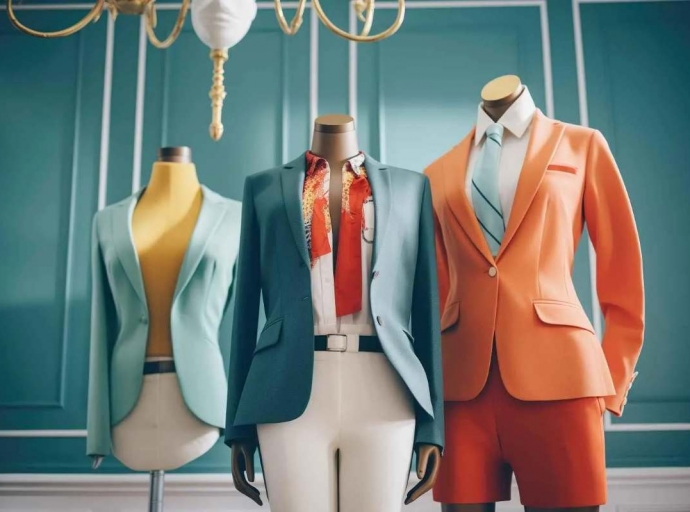
A shopper looking for contemporary pastel fusion wear for a daytime Diwali event, for example, can increasingly receive a combination of apparel, footwear and accessories rather than a list of disconnected SKUs.
That changes the business of digital fashion. Instead of leaving consumers to look through millions of products, AI can function as a virtual stylist, narrowing choice and simultaneously creating opportunities for cross-category sales. For marketplaces, the objective is straightforward: reduce the distance between search and checkout while increasing the value of every transaction.
Basket growth is the real prize
AI-driven styling could have its biggest commercial impact through basket increase rather than standalone product discovery. A consumer initially searching for an ethnic outfit can be prompted towards footwear, jewellery, bags or complementary accessories. The retailer therefore captures a larger share of the festive wardrobe rather than competing for a single garment purchase.
The technology also has implications for returns. Better product discovery, personalised recommendations and increasingly sophisticated sizing tools can reduce some forms of purchase uncertainty. However, digital representations of colour, fabric texture and fit remain imperfect, particularly in fashion categories where tactile evaluation matters.
The result is a more complex equation: AI can increase conversion and average order value, but retailers must ensure that the recommendations translate into satisfactory physical products.
Hard to ignore
Data quality becomes a retail asset
The next constraint may not be consumer adoption but the quality of the underlying retail data. AI-powered recommendations depend on accurate product attributes, inventory information, sizing data, imagery and contextual tagging. Poor catalogue architecture can turn sophisticated conversational interfaces into little more than faster search engines.
Consumer tolerance is also low. If an AI assistant repeatedly recommends irrelevant products or fails to understand context, shoppers can quickly abandon the interface. Retailers therefore need to connect AI with real-time inventory, merchandising and customer data rather than treating it as an isolated technology layer. The competitive advantage will increasingly come from how effectively retailers integrate these systems into the broader commerce stack.
Myntra’s tech-led fashion bet
Myntra, founded in 2007 and acquired by the Flipkart Group in 2014, shows the direction of India’s digital fashion market. The Bengaluru-based platform offers over 10,000 fashion and beauty brands and serves both metros and smaller city consumers. Its investment in generative merchandising, styling tools and faster fulfilment reflects a broader industry shift: technology is becoming part of the merchandising proposition itself.
For India’s festive season, the implications extend beyond a single quarter. Higher consumer spending, wider geographical participation and AI-assisted discovery are converging to reshape how fashion is searched, assembled and purchased. The emerging retail battleground is consequently moving from who has the largest catalogue to who can interpret consumer intent most effectively.













 Get in Touch!
