
Uniqlo, Muji to Nitori Japanese retailers step up India expansion
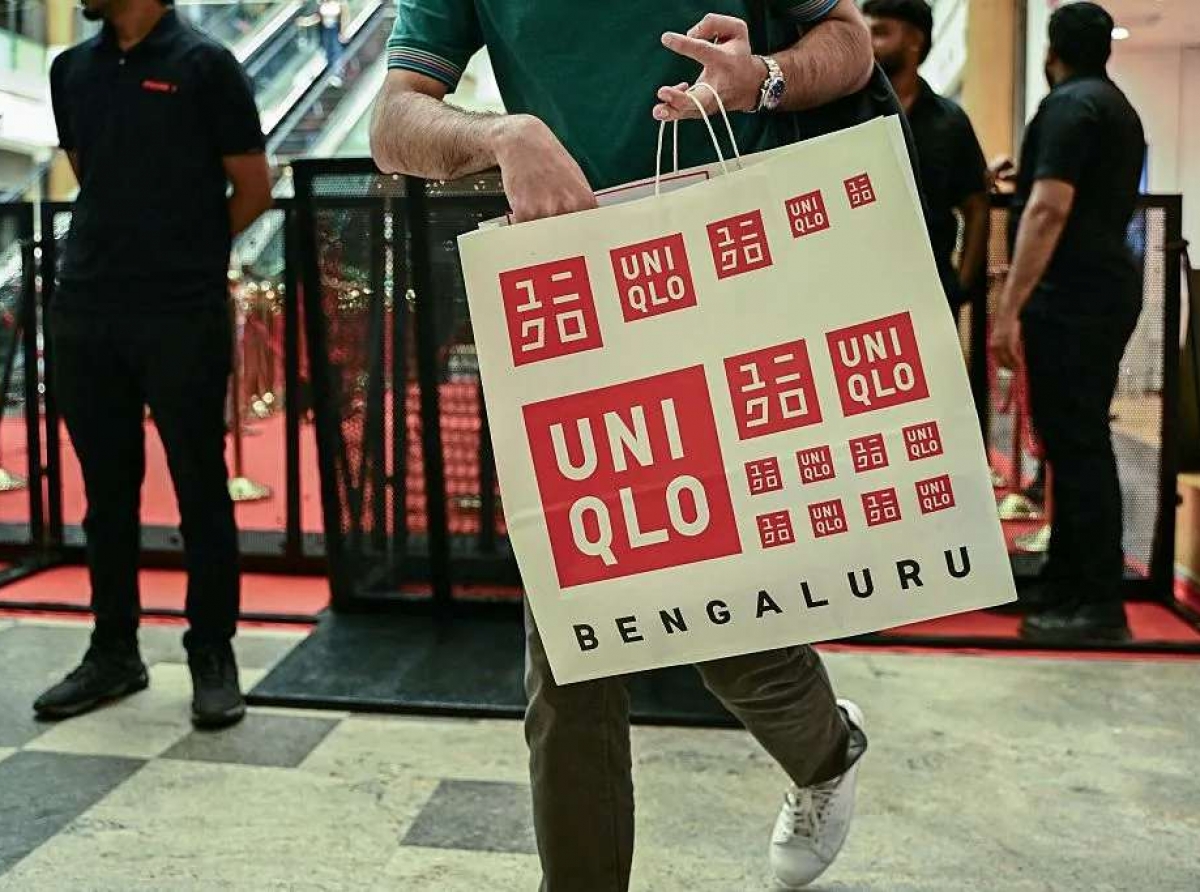
Japan’s corporate sector is stepping up its India strategy as shrinking domestic demand, geopolitical tensions and supply-chain concentration risks force companies to search for new engines of growth. For Japanese fashion, lifestyle and retail companies India is changing from a diversification market to a long-term strategic base.
Seventeen consecutive years of population decline in Japan have increased pressure on companies to offset weak domestic consumer volumes, while increasing China-related risks are encouraging businesses to diversify their Asian exposure.
The shift has been reinforced by growing bilateral economic engagement. During recent India-Japan trade discussions in Tokyo, Japanese enterprises committed $12.5 billion through 120 agreements across manufacturing, semiconductors and green energy. The commitments form part of a broader Japanese objective to deploy 10 trillion yen in India, signalling a move beyond infrastructure and manufacturing towards consumer-facing businesses.
Retailers move beyond pilot phase
India’s growing urban consumption base is attracting Japanese brands across apparel, footwear, home and lifestyle categories. Fast Retailing’s Uniqlo has already established a profitable operating model in India, while Muji and Onitsuka Tiger continue to expand across premium shopping centres in Mumbai, Delhi-NCR and Bengaluru.
The next phase is bringing new categories into the market. Nitori Holdings, Japan’s largest furniture and home-furnishing retailer, with over 1,000 stores globally, has entered India with a flagship outlet at R City Mall in Mumbai. The company is targeting an Indian home-interiors market expected to cross $38 billion by 2029.
Convenience retail is another potential growth avenue. Lawson has outlined plans to establish an Indian base and has a long-term ambition to build a network of up to 10,000 stores across the country by 2050.
Table: Japanese retail & lifestyle majors India expansion strategies
|
Japanese company/brand |
India strategy |
Opportunity |
|
Uniqlo |
Store and sales expansion |
Apparel and urban consumption |
|
Muji |
Premium lifestyle retail |
Home, lifestyle and fashion |
|
Onitsuka Tiger |
Premium footwear expansion |
Affluent urban consumers |
|
Nitori |
Mumbai entry |
Furniture and home interiors |
|
Lawson |
Long-term market entry |
Convenience retail |
Capital creates a wider market
The retail push is being supported by a deeper Japanese corporate ecosystem in India. Deloitte research on Japanese Global Capability Centres reveal Japan is the largest Asia-Pacific contributor to India’s GCC, with over 100 dedicated innovation and engineering centres. These operations support enterprise technology, supply-chain analytics and artificial intelligence, strengthening the infrastructure available to Japanese companies expanding locally.
India’s broader GCC industry itself is projected to generate $470 billion-$600 billion by FY2030, creating an attractive technology and talent base for Japanese corporations. Financial investment is also growing. MUFG Bank’s acquisition of a 20 per cent stake in Shriram Finance for $4.4 billion and Sumitomo Mitsui Banking Corporation’s 24.22 per cent holding in Yes Bank demonstrate the scale of Japanese institutional capital entering India. Meanwhile, Suzuki Motor Corporation’s arm, Next Bharat Ventures, has launched a $200 million fund to invest in regional businesses.
Uniqlo offers the template
Uniqlo offers the clearest example of how Japanese retailers can scale in India by combining global operating systems with local market adaptation. Uniqlo India reported revenue of more than Rs 1,100 crore in FY25, a 44 per cent year-on-year growth. Its strategy has centred on functional everyday apparel, localisation through Indian manufacturing partnerships and positioning stores in high-quality shopping destinations. The company is now targeting a significant increase in its physical network and has set its sights on Rs 3,000 crore in annual sales over the medium term.
For other Japanese retailers, the model shows that India's value proposition is not simply its population size. Rising disposable incomes, urbanisation and the expansion of organised retail provide opportunities to build large, recurring consumer businesses.
India brings its own hurdles
The opportunity, however, comes with substantial execution challenges. Japanese companies entering retail must deal with local sourcing requirements applicable to single-brand retail, expensive real estate in major metro markets and lengthy municipal and environmental approval processes. These factors can raise the cost and time required to establish large physical networks.
There is also a limitation to India’s role as a China alternative. Japanese companies remain deeply connected to East Asian manufacturing and supply networks. Consequently, India's emergence is more likely to represent diversification rather than an immediate replacement for China. The broader strategy is therefore one of risk management: building India as an additional production, technology and consumption hub while reducing excessive dependence on any single market.
India becomes a long-term growth hedge
For Japan's retail sector, India's importance extends beyond immediate store openings. The country offers a combination of demographic scale, expanding middle-class consumption, manufacturing capabilities and a rapidly developing technology ecosystem. As domestic Japanese demand falls, companies such as Fast Retailing are looking at India not merely as another overseas market, but as a platform for sustained Asian growth. The resulting retail expansion could therefore become one of the more visible outcomes of a broader Japanese corporate reallocation towards India one driven as much by necessity at home as by opportunity abroad.











 Get in Touch!
