All Stories

UCB partners Netflix to launch pop culture-inspired collection

16 December 2025, Mumbai

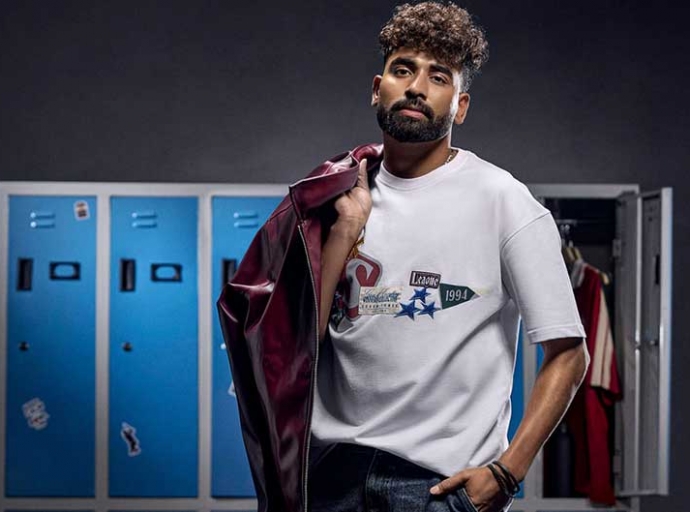
United Colors of Benetton (UCB) is leveraging pop culture nostalgia and experiential retail to drive growth in the competitive Indian market. The brand has launched its Stranger Colors of Benetton collection in collaboration with Netflix to capitalize on the sustained popularity of 1980s fashion, which is a key trend globally and seeing a significant resurgence in India in 2025.

Know More

This move recontextualizes UCB's vibrant, archival '80s aesthetic, shifting it from mere heritage to a cutting-edge consumer hook for younger demographics.

The collection's debut was accompanied by an innovative Augmented Reality (AR) experience at UCB’s Mumbai flagship, transforming the shopping environment into a ‘phygital’ journey - a format recognized at the Images Retail Awards 2025 as the Most Admired Retail Launch of the Year. This blended approach is crucial for capturing the attention of India’s increasingly digitally native shoppers.

Read our latest issue

Financial momentum and strategic rollout

Offering men's, women's, and children's wear, the collection is designed to support Benetton India’s medium-term revenue growth target of 6 per cent-8 per cent annually, following a strong turnaround from previous losses.

The first drop in stores and online is set to be followed by a second, highly-anticipated wave in February 2026, coinciding with the final season’s marketing push and maintaining demand through the key spring-summer buying cycle.

Fashion Guru

‘Collaborations are a critical way to create urgency and relevance for the young consumer,’ noted an industry analyst, adding that such limited-edition drops attract a design-conscious audience.

By fusing authentic '80s archive pieces, co-designed with Amy Parris, Costume Designer, Stranger Things, with the show's cult status, UCB is successfully transforming its knitwear and casual wear categories into highly collectible, fast-moving apparel, an essential strategy to improve operating margins, projected to reach 3 per cent-4 per cent over the medium term, in the intensely competitive Indian apparel sector.

Publications portfolio

Founded in 1965 in Ponzano Veneto, Italy, United Colors of Benetton is a global fashion brand renowned for its colorful knitwear and historically bold, socially-charged advertising campaigns.

The brand operates in over 120 countries, with key markets including India, where it sells fashion apparel for men, women, and children through a large network of franchisee-operated stores and e-commerce channels.

DFU Profile

Benetton India (BIPL) has nearly 300 standalone stores and is focusing on an asset-light, omnichannel expansion, particularly scaling up its footwear and women's wear segments. BIPL reported revenues of Rs 775 crore in FY24, with the parent company providing continued strategic and financial support to underpin future growth.

LATEST FASHION NEWS

Benetton

From Bazaars to Barcodes: The rise of value-driven, tech-powered fashion in India

17 December 2025, Mumbai

India’s fashion economy is in the midst of a sweeping realignment one that is redefining how the country buys, aspires, and expresses itself.

This evolution, often described as the ‘bazaar-to-barcode’ shift, marks India’s transformation from a fragmented landscape of unorganized local markets to a digitally driven, branded, and trust-based ecosystem.

Know More

At the heart of this change lies one of the most powerful forces in the modern retail story: value fashion, shaped by a rapidly expanding value-conscious consumer class.

This is not merely a retail evolution; it is a cultural modernization, one where aspirations meet affordability, and fashion becomes democratic, data-driven, and digitally delivered.

Read our latest issue

The digital foundation fashion economy

India’s fashion and lifestyle sector, now the second-largest consumer category in the country, stands at an estimated value of $110 billion. Of this, the online fashion market contributes roughly $11 billion as of FY23.

The pace of growth in this online segment has been extraordinary.

Fashion Guru

Fuelled by smartphone adoption, digital literacy, affordable data, and pandemic-driven behavioural change, the online fashion category has grew at nearly 30 per cent annually since 2019.

Projections indicate an even more dramatic rise, with the market expected to hit $35 billion by FY28, growing at a robust 25 per cent CAGR.

Behind these numbers lies a deeper socio-economic story.

 Join our group

The explosion of online fashion is fundamentally about access: to brands, to choices, and to reliable quality. While the metros remain strong consumption hubs, the real boost comes from Tier II, III, and IV cities.

These newly digital regions, once dependent on local bazaars and unbranded goods, now enjoy the same breadth of choice that cosmopolitan consumers have had for decades. E-commerce has equalized fashion access in a way that traditional retail models could never achieve, erasing geographical limitations and bringing organized retail to the doorsteps of consumers who were historically underserved.

Join our community

Three catalysts powering value fashion boom

1. Tier II+ India: During the 2023 festive season, Tier II-IV cities accounted for more than 80 per cent of online fashion purchases. For a long time, these markets were dominated by local bazaars. Today, they are the most active adopters of branded apparel.

2. The Gen Z–millennial transformation: Gen Z and younger millennials (18-24) are buying new digital-native fashion brands at nearly double the rate of older consumers. By FY28, this group will fuel 75 per cent of demand for disruptor and D2C brands many of which operate squarely in Value Fashion.

3. GST reform: Recent reforms that lowered GST on garments priced under Rs 2500 have eliminated one of the biggest psychological barriers for value-conscious buyers the belief that branded apparel carries unnecessary “label inflation.” This has tilted the scales in favour of organized players offering trustworthy quality at reasonable price points.

SUSTAINABILITY

As Adarsh Menon of Fireside Ventures observes, “The retail landscape is being rewritten by an explosion of channels. The apparel market’s future will be determined as much by trust infrastructure as by brand power.

The consumer is seeking verified quality at an accessible price point.”

Technology takes center stage

To meet the expectations of this increasingly discerning consumer base, e-commerce platforms and brands have deployed a suite of technological interventions.

Hyper-personalization has emerged as a critical differentiator, with platforms like Myntra employing machine learning and big data to refine recommendations, reduce size-related returns, and enhance customer confidence.

VIEW

Augmented reality solutions particularly virtual try-ons are playing a growing role in helping consumers visualize fits and textures before purchase, a vital factor for shoppers who may be wary of the perceived risks of online apparel buying.

At the brand level, India’s Value Fashion rise is being shaped by four dominant player groups: national brands expanding downward into entry price points, large private labels developed by e-commerce giants, nimble digital disruptors that address niche needs, and formerly unbranded sellers who are formalizing their operations through online marketplaces. Digital disruptors, in particular, have gained ground by addressing underserved categories such as expressive wear, ethnic fusion, and plus-size fashion, all of which are demand-heavy segments that traditional retail often ignored.

Publications portfolio

Simultaneously, the government-led Open Network for Digital Commerce (ONDC) is creating a more democratic digital commerce environment. By onboarding more than 2.3 lakh sellers and service providers, ONDC widens consumer choice, lowers price barriers, and creates a fertile ecosystem for Value Fashion brands to flourish.

One of the clearest examples of democratization enabled by e-commerce is the dramatic rise of plus-size fashion in India. The category, projected to grow at a 34 per cent CAGR through 2030, was historically constrained in physical retail, where options were limited, styles were outdated, and the shopping experience often carried stigma.

Visit for more

Online platforms broke these barriers by offering privacy, variety, and inclusivity on an unprecedented scale. Consumers could now access trend-forward designs at fair prices, backed by transparent sizing systems and user reviews.

Online retail has not only expanded the market but has also nurtured confidence and body-positive narratives among millions of consumers who previously felt marginalized.

LATEST FASHION NEWS

What the future demands

The rapid democratization of value fashion is not without its challenges. Delivering on the promise of access remains difficult in remote regions where logistics infrastructure is still evolving. Brands are responding by investing in near-shoring models, strengthening supply chains, and optimizing last-mile delivery to maintain the affordability equation.

Environmental and ethical concerns present another urgent challenge.

Also refer

As consumers become more aware of fashion’s ecological footprint, the value fashion segment is being nudged from purely cheap toward conscious value. Brands are increasingly expected to show transparency in sourcing and invest in longer-lasting, sustainable materials.

There is also the perennial tension between price and quality. Value-conscious shoppers value deals, yet rising incomes push them toward apparel that promises durability and function. Innovations in breathable, stretchable, and durable fabrics are helping bridge this gap, shifting consumer mindsets from owning more to owning better.

More article

The future of Indian fashion is not merely about expansion it is about inclusion. It is about making design, reliability, and expression available to a far wider audience than ever before.

The bazaar-to-barcode shift signals a future, where digital platforms value-conscious consumers, and value-driven brands converge to create a marketplace defined by transparency and empowerment.

Sustainability

The brands that will win this race are those that understand a simple truth: the new Indian consumer is not buying cheaper clothes; they are buying trusted experiences.

And in a market where aspiration meets accessibility, trust becomes the most valuable currency of all.

Finally, counterfeit proliferation and intense competition threaten the integrity of the category. The path ahead depends on brands building deeper trust through authentic storytelling, stronger quality assurance, and superior digital experiences that cement their legitimacy.

LATEST FASHION NEWS

TechPoweredFashion

Regional consumption trends map the nation's evolving fashion landscape

16 December 2025, Mumbai

A comprehensive analysis of household clothing consumption, based on data from the National Sample Survey Office (NSSO) Household Consumption Expenditure Survey (HCES), reveals a geographically fragmented and culturally rich apparel market in India. Tracking the share of households reporting a purchase in the 365 days ( conducted in 2024) preceding the survey, the data paints a vivid picture of regional economic buoyancy, the enduring appeal of traditional wear, and the rapid adoption of modern fashion.

The Metropolitan Surge: Delhi and the North’s dominance in modern wear

The survey clearly positions North Indian states, particularly Delhi and Uttarakhand, at the forefront of the organized and contemporary fashion market. This ascendancy is characterized by high household consumption across a range of ready-to-wear, fast-fashion, and climate-specific Western apparel.

Delhi, owing to its status as a major metropolitan hub with high urbanization and disposable income, stands out as the national capital for high-volume modern garments, leading in critical categories:

Shirts: Delhi leads with a massive 96.4% household share.

T-shirts, polos, tops, shrugs: Delhi again tops the list at 95.1%.

Trousers, jeans, jeggings, skirts: With 94.7%, Delhi confirms its comprehensive preference for modern bottoms.

Pajamas, salwar, leggings, palazzo: Even in semi-traditional or casual wear, Delhi maintains the lead with 75.1%.

The contiguous states reinforce this pattern. Himachal Pradesh exhibits the highest recorded share across all categories at 98.8% for Innerwear, socks, and other hosiery items, indicating a near-universal penetration of basic essentials. Uttarakhand's high demand for specialized items—Coat, jacket, blazer, sweater, sweatshirts, windcheater (92.2%) and Headwear, belts, ties, hat, scarf, muffler, etc. (79.7%)—is driven by its colder climate and tourist economy. These figures collectively highlight the North's significant tilt towards organized, ready-to-wear clothing, often reflective of global fashion trends.

Table 1: Northern India's leadership in modern Ready-to-Wear

Modern Apparel Category

Leading State

Household Share (%)

Innerwear, socks, and other hosiery items

Himachal Pradesh

98.8

Shirts

Delhi

96.4

T-shirts, polos, tops, shrugs

Delhi

95.1

Trousers, jeans, jeggings, skirts

Delhi

94.7

Coat, jacket, blazer, sweater, sweatshirts, windcheater

Uttarakhand

92.2

Headwear, belts, ties, hats, scarf, muffler, etc.

Uttarakhand

79.7

Pajamas, salwar, leggings, palazzo

Delhi

75.1

Cloth for coat, trousers, suit

Rajasthan

66

The Traditional Heartlands: Sustaining regional textiles and ethnic wear In powerful contrast to the modern segments, the survey data affirms the robust and enduring importance of regional states in preserving and consuming traditional Indian textiles and classic clothing staples. These consumption patterns are deeply rooted in cultural identity, climate, and time-honoured traditions.

Bihar stands out with nearly unanimous household shares for the highly regional Gamchha, towel, handkerchief (96.0%) and the timeless Saree (95.7%). This high figure is a strong testament to the saree's continued role as a primary, daily garment and the gamchha's status as an essential item of utility. Similarly, Tamil Nadu's leadership in Lungi consumption (78.3%) showcases the garment's necessity as comfortable, traditional menswear in the tropical Southern climate.

In the Northeast, Assam leads in the consumption of Blouse, dupatta/stole (93.0%), suggesting the prevalence of three-piece ensembles, often utilizing the state's unique indigenous cotton and silk textiles. The purchase rates in these states demonstrate that traditional attire is not merely ceremonial but remains essential for everyday life for a large segment of the population.

Table 2: Consumption hotspots for Traditional apparel

Traditional Apparel Category

Leading State

Household Share (%)

Gamchha, towel, handkerchief

Bihar

96

Saree

Bihar

95.7

Blouse, dupatta/stole

Assam

93

Cloth for shirt, pyjama, kurta, salwar

Jammu & Kashmir

91.2

Lungi

Tamil Nadu

78.3

Kurta-pajama suits: females

Uttarakhand

60.9

A significant insight into the textile sector is provided by the consumption of unstitched material. In Jammu & Kashmir, the consumption of Cloth for shirt, pyjama, kurta, salwar, etc. hits a substantial 91.2%. This figure reveals a strong cultural and economic preference for purchasing fabric and utilizing local tailors for custom-stitching. This trend is vital for supporting the micro-economy of local darzis (tailors) and indicates a consumer demand for superior fit, material quality, and customization that off-the-rack garments may not fully satisfy. A similar, though lower, preference for unstitched or tailored garments is noted in Rajasthan for Cloth for coat, trousers, suit (66.0%).

The Blended Wardrobe: Co-existence as the new norm

The overarching conclusion from the survey is that the modern Indian consumer is not simply switching between traditional and Western wear, but rather blending their choices. The high penetration of the market, with all categories shown registering a household share over 50%, indicates increasing disposable incomes and accessibility across the country.

The 'Blended Wardrobe' is a pragmatic approach: modern fast-fashion is adopted for professional, casual, and social settings, while traditional garments are maintained for cultural events, religious ceremonies, and comfortable home wear. The fact that Delhi leads in both modern bottoms (jeans) and semi-traditional pajamas/leggings illustrates this dual consumption pattern.

For apparel manufacturers, the key to success lies in navigating this dual market: capitalizing on the booming, digitally-driven modern fashion consumption in metropolitan hubs while simultaneously respecting and catering to the robust, culturally-rooted demand for traditional textiles in states like Bihar, Assam, and Tamil Nadu.

LATEST FASHION NEWS

Regional consumption trends map the nation's evolving fashion landscape

Latest Publications

Image

Join Our Group

Join Our Group