All Stories

Arvind Fashions navigates cost pressures as D2C growth drives Q1 top-line expansion

The licensing partner for international lifestyle labels Tommy Hilfiger, Calvin Klein, and Arrow, Arvind Fashions recorded a 15.5 per cent expansion in Q1 FY27 consolidated revenue from operations, reaching Rs 1,279 crore. Operating EBITDA rose 19.6 per cent to Rs 160 crore, while gross margins widened by 90 basis points to 56.7 per cent, boosted by disciplined discounting and higher full-price sales. However, total operating expenses increased by 15 per cent to Rs 1,245 crore due to elevated raw material costs, higher freight rates, and increased state minimum wages, leading profit after tax from continuing operations to slip to Rs 10 crore from Rs 13 crore in the year-ago period.

Direct retail strategy buffers macro headwinds

Direct-to-consumer (DTC) operations proved pivotal, generating 62 per cent of total quarterly sales through an 11.6 per cent like-to-like retail store growth and a 38 per cent increase in online B2C volume. This performance reflects the resilience of the company’s brand portfolio amidst an inflationary environment shaped by West Asia geopolitical tension and elevated petroleum prices, stated Amisha Jain, Managing Director and CEO, Arvind Fashions.

Portfolio footprint and growth trajectory

Spun off from Arvind Limited in 2018, Arvind Fashions dominates India's premium casualwear and denim sectors with nationwide coverage. Managing marquee brands including US Polo Assn., Arrow, Tommy Hilfiger, and Calvin Klein across 1,000+ stores, the retailer targets 12-15 per cent annual top-line growth via network expansion and AI-driven supply chain optimizations.

Arvind Fashions navigates cost pressures as D2C growth drives Q1 top-line expansion

Trent to open 100 Westside stores annually

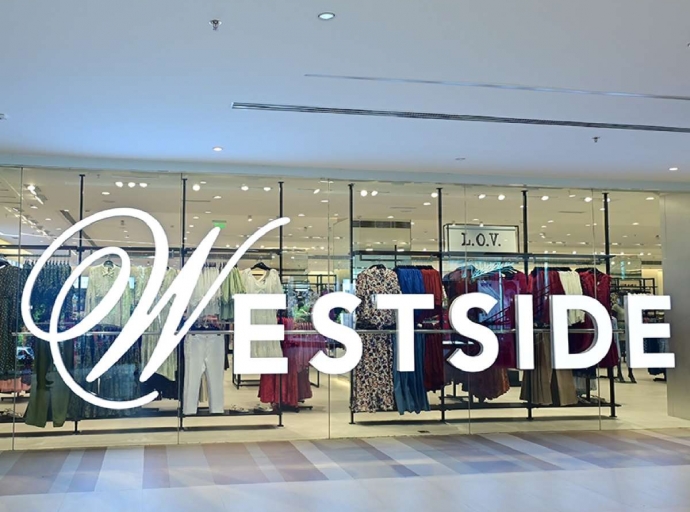
Tata Group’s retail flagship, Trent Ltd is shifting its focus toward its flagship brand, Westside, with plans to open as many as 100 new stores annually.Having operated roughly 300 stores across 97 cities, the retail network will expand into Tier-II and Tier-III centers, alongside deeper penetration into metro hubs like Delhi, Bengaluru, and Hyderabad.

This aggressive push comes as revenue growth moderates for sister format Zudio, amid persistent inflationary pressures and heightened competitive intensity from market rivals including Reliance Retail and Aditya Birla Fashion.To fund this physical footprint and digital expansion, Trent’s board previously approved a Rs 2,500 crore ($260 million) capital raise.

Tech-led operations and omnichannel realignment

Beyond store expansion, Westside is undergoing a digital overhaul to strengthen gross margins.E-commerce operations are targeted to contribute 10 per cent of total brand revenues, up from 6 per cent.Concurrently, the integration of artificial intelligence across design workflows has boosted creative output to 400–500 new styles weekly, while compressing production lead times to just 30 days.

The brand has been opening 10 to 15 stores each year. It is now gearing up to open a hundred stores, says Shailina Parti, CEO, Westside. It aims to give everything a fashion spin.

Launched in 1998 by Trent, Westside offers private-label apparel, footwear, beauty, and home accessories. The brand has 300 stores in 97 Indian cities, targeting 700 locations long-term. It has expanded to major Tier II&III cities. E-commerce constitutes 10 per cent of its total business with AI having accelerated 30-day supply chains.

Trent to open 100 Westside stores annually

IKEA expands South Delhi presence with new store in Saket

Saket is accelerating its footprint into the premier South Delhi lifestyle and retail destination, DLF Avenue by opening a new store on July 30, 2026.

Spanning 30,000 sq ft across two levels, the upcoming outlet serves as IKEA's second city-format store in the capital. Ahead of the launch, brand representatives conducted extensive field research across South Delhi neighborhoods to analyze residential layouts, ranging from multi-generational homes to compact builder floors. This localized insight shaped the curation of nearly 3,000 displayed products - including 1,400 items available for immediate takeaway—alongside nine fully realized room settings.

Efficient space with omnichannel access

Saket and DLF Avenue feel like a natural new home for IKEA in Delhi, notes Patrik Antoni, CEO, IKEA India. Capitalizing on a burgeoning regional loyalty base exceeding 300,000 IKEA Family members, the compact format pairs physical space efficiency with omnichannel access to over 6,900 catalog items through digital platforms and localized planning services.

Retail evolution and omnichannel growth

The expansion highlights the broader evolution of organized physical retail across the NCR, where compact urban footprints complement traditional large-format warehouse stores. Industry analysts observe that integrating customer-centric touchpoints with digital ordering frameworks effectively bridges the gap between online convenience and tactile in-store exploration. Alongside home planning consultations, delivery support, and assembly services, the new outlet features an integrated Swedish Café offering regional and international food options. This experiential layer underscores how contemporary retail hubs are successfully merging functional retail with leisure, setting a benchmark for future commercial developments across metropolitan markets.

Expanding via city-format stores and digital commerce

IKEA operates as a globally recognized Swedish home furnishings retailer specializing in functional, design-focused furniture and accessories. The brand targets urban consumers across key international markets through multi-format retail channels. Driven by an ambitious expansion roadmap aiming for 30 stores across India by 2030, the company is backed by robust capital commitments exceeding Rs 21,000 crore. Historically celebrated for its flat-pack innovation, the enterprise continues to deepen its Indian footprint via city-format stores and digital commerce.

IKEA expands South Delhi presence with new store in Saket

Tata, Reliance, ABFRL race for value fashion dominance beyond Kolkata

West Bengal has emerged as one of India's most closely watched battlegrounds for value fashion, with large retail conglomerates shifting organized apparel retail away from premium high streets, into suburban neighbourhoods and Tier-II markets. Tata Group's Zudio, Reliance Retail's Yousta and Aditya Birla Fashion and Retail's (ABFRL) OWND! are expanding rapidly across the state, signalling a shift in how India's biggest retailers plan growth.

Instead of competing for expensive retail addresses in central Kolkata, these brands are building dense store networks across districts such as North 24 Parganas, Hooghly and Asansol. The strategy reflects an industry-wide belief that affordable fashion can generate destination shopping without premium real estate, while delivering stronger operating economics.

Scale over prestige

The expansion is being driven by a cluster-based approach that prioritises market density over marquee locations. Zudio leads the corporate race with 45 stores in West Bengal as part of a nationwide network approaching 970 outlets. Reliance Retail is expanding Yousta across multiple states with merchandise largely priced below Rs 999, while ABFRL has crossed 75 OWND! stores across the country and considers West Bengal one of its priority growth markets. Regional players continue to strengthen the competition, creating one of India's most vibrant value-fashion market.

Table: Scaling-up lean brick-and-mortar consumption

Brand retail format

Corporate

West Bengal network

Countrywide stores

Entry pricing

CapEx per location

Expansion goals

Zudio

Tata Group (Trent Ltd)

45 Stores

970 Stores

Rs 199

Rs 3.0-4.0 cr

Continuous cluster expansion

Baazar Style Retail

Publicly Listed (Style Baazar)

140+ Stores

250 Stores

Rs 149

Rs 2.5- 3.5 cr

12 new bi-monthly openings

Baazar Kolkata

Baazar Retail Pvt. Ltd.

95 Stores

200+ Stores

Rs 99

Rs 2.0- 3.0 cr

159 stores in 3-year pipeline

V-Mart

V-Mart Retail Ltd.

32 Stores

445+ Stores

Rs 199

Rs 3.0- 4.0 cr

Deep Tier-III cluster saturation

Yousta

Reliance Retail

6 Stores

17+ Stores

Under Rs 499

Rs 3.5- 4.5 cr

200-250 stores across country

OWND!

Aditya Birla Group (ABFRL)

5 Stores

75 Stores

Rs 399

Rs 4.0- 5.0 cr

100 Stores short term target

Economics at work

The move into neighbourhood markets is underpinned by a significant cost advantage. While premium retail locations in central Kolkata can command rentals over Rs 250 per sq ft, suburban and Tier-II markets typically offer commercial space between Rs 45 and Rs 80 per sq ft. These lower occupancy costs allow retailers to maintain an ‘always affordable’ pricing model, with most products staying below the Rs 999 threshold without relying heavily on end-of-season discounts. Large-format stores between 7,000 and 12,000 sq ft also enable retailers to optimise merchandising while keeping operating costs under control.

And as experts point out, physical stores function as customer acquisition engines in densely populated residential areas, reducing the need for expensive advertising while strengthening local supply chains.

Suburban blueprint

Madhyamgram's Jessore Road shows how the strategy is reshaping retail geography. Reliance Retail established Yousta in the suburban corridor instead of pursuing a premium Kolkata address, targeting a large commuter population seeking affordable western wear. The success of the location encouraged similar expansion by other competing brands, showcasing how value fashion can create its own retail destination independent of traditional luxury shopping districts.

Property developers are also adapting. Rather than depending on premium brands to attract footfall, many are positioning value fashion anchors as the primary traffic generators for emerging commercial hubs across suburban West Bengal.

Two winning models

West Bengal's organized value-fashion market is defined by two distinct operating models. Big domestic retailers like the Tata Group and Reliance Retail are utilizing technology-driven supply chains to shorten design-to-store cycles to nearly 12 days. Large-format stores, digital inventory systems and self-checkout technologies allow these brands to replicate mall-like shopping experiences in suburban locations while maintaining lean operating costs. Peak weekend traffic reportedly exceeds 1,200 transactions a day at several high-performing outlets.

Meanwhile, regional players such as Baazar Style Retail and Baazar Kolkata are competing through deep local market intelligence. Their assortments are tailored to eastern India's sizing preferences, family shopping behaviour and regional festive calendars. Local warehousing networks enable inventory transfers across nearby stores within 48 hours, helping maintain higher sell-through rates.

The model has translated into strong financial performance. Baazar Style Retail reported a 71 per cent year-on-year increase in quarterly revenue to Rs 531.9 crore, supported by same-store sales growth of 7 per cent and monthly sales productivity of Rs 865 per sq ft, underscoring the profitability of regional value retail.

The way forward

The corporate push into affordable fashion reflects a broader transformation in India's organized retail. Rather than relying on flagship stores in metro cities, retailers are building dense networks across suburban and Tier-II markets where lower real estate costs, high population density and rising discretionary spending offer stronger long-term returns.

Backed by strong balance sheets, companies such as Tata Group, Reliance Retail and ABFRL can commit to long-term leases while investing in rapid inventory turnover and supply-chain efficiency. Trent, for instance, reported consolidated revenue of Rs 20,074 crore with an operating margin of 19 per cent, giving financial flexibility to increase expansion into emerging markets.

As these value-first formats continue to expand across West Bengal, they are reshaping not only consumer shopping habits but also commercial real estate planning, positioning suburban markets as the next major growth engine for India's organized apparel retail sector.

Tata, Reliance, ABFRL race for value fashion dominance beyond Kolkata

Banana Club enters capital market with new store in Rohini

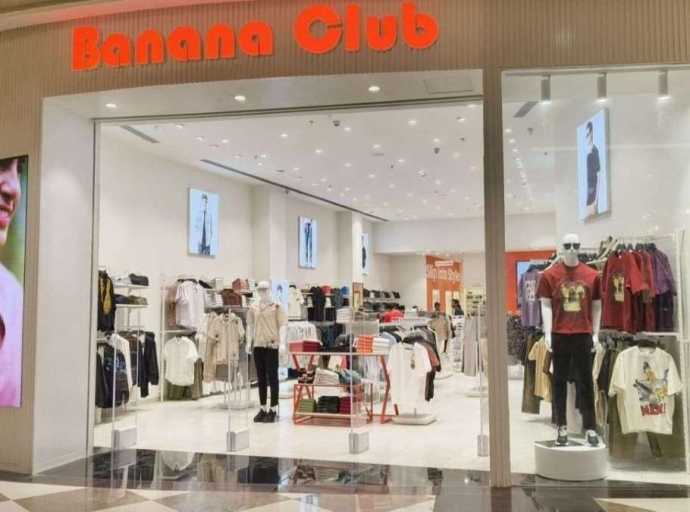
Contemporary menswear brand Banana Club has broadened its physical retail footprint by inaugurating its 21st EBO in Rohini, marking its strategic entry into the competitive New Delhi retail market. Moving away from conventional apparel marketing, the launch featured high-engagement guerrilla tactics, including an interactive gorilla mascot and a dedicated nostalgia zone offering promotional incentives anchored to traditional one-rupee coin motifs. "Delhi has always been an essential market for our growth trajectory, and establishing our twenty-first store here represents a major operational milestone, explains Prashant Lalwani, Co-founder of Banana Club. The experiential retail strategy successfully captured high foot traffic, driving over 300 store-level conversions within the initial hours of opening.

Scaling omni-channel infrastructure nationwide

Building on strong urban demand across southern and western territories, the enterprise continues to execute a disciplined cluster-based store rollout intended to capture heightened fashion consciousness in tier-one and tier-two cities. Neel Bafna, Co-founder, notes, maintaining a vertically integrated operating model grants the company necessary structural agility to scale physical infrastructure rapidly while safeguarding stringent margin controls. With current performance metrics reflecting an annualized revenue run-rate of Rs 150 crore, the company maintains its long-term objective of achieving Rs 300 crore in annual recurring revenue by 2027 alongside expanding its network to 50 outlets. By harmonizing immersive high-street retail activations with a resilient direct-to-consumer digital framework, the label is systematically solidifying its competitive positioning within India's organized menswear segment.

Specialized menswear offerings

Established in Bengaluru in 2023, Banana Club operates as a specialized menswear fashion label focusing on contemporary apparel. The company targets urban consumers across key metropolitan markets through an integrated omni-channel architecture. Backed by venture funding, the enterprise targets aggressive nationwide outlet expansion and sustained financial growth.

Banana Club enters capital market with new store in Rohini

H&M intensfies regional penetration with three stores across emerging Indian markets

International apparel groups are accelerating physical retail deployment within secondary and tertiary urban clusters to capture rising disposable incomes outside primary metropolitan centers. Swedish fast-fashion pioneer H&M has executed a simultaneous three-city launch program, opening independent flagship storefronts in Raipur, Bhopal, and Visakhapatnam. This localized expansion successfully elevates the company's domestic footprint to 74 exclusive commercial locations. Industry analysts note that establishing permanent storefronts in high-growth regional hubs allows global brands to bypass standard market saturation barriers while meeting escalating consumer demand for accessible trends.

Synchronizing omnichannel logistics and inventory flow

Scaling retail operations across geographically dispersed tier-two markets requires robust supply chain frameworks to maintain optimal stock replenishment and rapid inventory turnover. By integrating centralized warehousing networks with localized digital fulfillment channels, the brand ensures that weekly merchandise allocations reach suburban retail floors with minimal latency. Market strategists observe that combining experiential brick-and-mortar touchpoints with comprehensive e-commerce ecosystems significantly reduces customer acquisition costs and drives long-term brand loyalty among emerging demographic cohorts.

Targeting multi-channel growth

H&M is a global fashion and retail enterprise specializing in contemporary apparel, footwear, and accessories for men, women, and children. Operating extensive retail markets across Europe, the Americas, and Asia, the brand offers accessible fast-fashion collections alongside home and activewear lines. Backed by multi-billion-dollar corporate revenues and an expanding Indian network exceeding seventy stores, the company targets aggressive multi-channel growth.

H&M intensfies regional penetration with three stores across emerging Indian markets

The Bear House transitions to an omnichannel retailer with new store expansion

Homegrown menswear label, The Bear House has officially surpassed 500 points of sale, marking a significant milestone in its transition from a digital-first startup to a formidable omnichannel retailer. This expansion spans a robust network of 25 EBOs - including 23 in India and two international flagships in Dubai and Abu Dhabi - complemented by a wide reach across large-format retail chains and multi-brand outlets.

Operational strategy for rapid growth

The brand’s rapid ascent is underpinned by a ‘design-to-retail’ model that emphasizes operational efficiency and inventory management. By leveraging a streamlined supply chain, The Bear House has successfully mitigated the risks associated with large, seasonal inventories. Instead, the company utilizes curated, smaller-batch collections launched throughout the year to optimize working capital. This focus on agility has resonated with the urban male demographic, driving a significant ‘upmarket’ shift: average order values have climbed from Rs 750 to Rs 1,700 online, while in-store purchases now average approximately Rs 5,000. Following a successful Series A funding round of Rs 60 crore, the company has announced plans to launch 30 additional stores during the current financial year to maintain its momentum.

Future outlook and market positioning

With current revenues estimated at Rs 270 crore - a substantial leap from its Rs 1.5 crore start in 2017 - The Bear House has set its sights on achieving Rs 1,000 crore in total revenue. As competition intensifies within India’s menswear sector, the brand continues to diversify its product portfolio across 18 categories, including recent entries like sneakers and perfumes, to solidify its position as a comprehensive lifestyle destination for the modern Indian man.

Founded in 2017 by Harsh and Tanvi Somaiya, The Bear House is a D2C menswear brand offering refined, European-minimalism-inspired apparel and accessories. Its product range includes shirts, chinos, denim, and footwear. The brand aims for Rs 1,000 crore in revenue by scaling its physical store presence and omnichannel footprint across India and the GCC.

The Bear House transitions to an omnichannel retailer with new store expansion

Kora expands retail footprint with new South Extension store

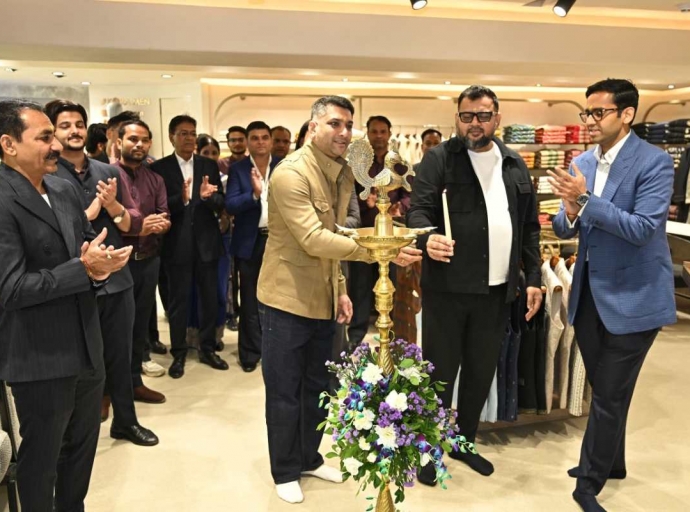
Premium menswear label Kora has scaled its physical retail network in North India by launching a flagship store within New Delhi's high-street retail destination, South Extension. Designed around an experiential visual merchandising framework, the multi-story destination provides high-touch clienteling services tailored specifically for wedding and festive apparel seekers. The launch increases the brand's total global portfolio to twenty-eight exclusive boutiques, reinforcing its presence across key domestic metropolitan centers as well as international markets including Dubai and the United Kingdom. Establishing the brand’s presence in South Extension represents a major strategic milestone as it deepens its engagement with consumers seeking exceptional craftsmanship and personalized styling, notes Nilesh Mitesh, Co-founder, Kora.

Strategic market capture and revenue growth

The prominent retail debut leverages targeted pre-opening digital marketing campaigns and bespoke styling zones to drive sustained foot traffic and early conversion rates in a competitive luxury corridor. By integrating immersive in-store interactions with an established direct-to-consumer omni-channel infrastructure, the enterprise continues to capture expanding demand within India's premium occasion-wear segment. Industry estimates indicate that organized luxury ethnic wear continues to register strong double-digit growth, supported by rising consumer expenditure on weddings and festive celebrations. Management intends to leverage this flagship location as a regional operational hub to support ongoing national expansion plans and sustained long-term financial performance.

Capturing rising demands

Founded by designers Nilesh and Mitesh Mitesh, Kora specializes in luxury men's ethnic wear, custom sherwanis, bandhgalas, and premium Indo-Western attire. Operating twenty-eight flagship locations across India, Dubai, and the UK, the luxury enterprise targets double-digit retail growth by capturing rising domestic and international occasion-wear demands.

Kora expands retail footprint with new South Extension store

John Players accelerates semi-urban penetration with two new stores in emerging markets

Apparel brands are increasingly prioritizing Tier-II & III urban corridors to capture rising disposable incomes and steady foot traffic outside congested metropolitan centers. Menswear label John Players has advanced its physical distribution strategy by executing simultaneous franchise openings in Haridwar, Uttarakhand, and Jamui, Bihar. This dual-city rollout elevates the brand's expansive nationwide network to over 420 exclusive retail touchpoints, complemented by extensive placement across multi-brand department outlets. Industry analysts note that deploying localized brick-and-mortar formats allows national brands to establish immediate brand resonance and lower inventory holding costs in rapidly modernizing regional markets.

Optimizing franchise frameworks for scalable growth

Scaling retail operations across geographically diverse semi-urban clusters requires efficient supply chain coordination and robust local partnerships to maintain consistent inventory flow. By leveraging regional franchise collaborations and utilizing integrated distribution channels linked with digital platforms, the brand ensures rapid stock replenishment across contemporary casualwear, denim, and corporate lines. The brand emphasizes, expanding into high-potential secondary locations secures predictable seasonal volumes and strengthens competitive positioning against localized regional manufacturers.

A brand for young professionals

John Players is a leading Indian menswear brand specializing in contemporary formalwear, smart casuals, and denim for young professionals. Operating over 420 exclusive stores across key national markets alongside digital channels, the label targets aggressive semi-urban expansion, backed by strong corporate ownership under Reliance Retail since 2019.

John Players accelerates semi-urban penetration with two new stores in emerging markets

The Souled Store scales experiential retail as 200-store milestone approaches

The Souled Store is aggressively expanding its footprint across India, with the latest opening at Lodha Xperia Mall in Dombivli serving as a strategic move to penetrate high-growth suburban markets. This transition from a pure-play digital platform to a robust omnichannel retailer reflects a deliberate effort to ground its online fandom in physical reality.By placing stores in key catchments, the brand is capitalizing on the ‘phygital’ retail trend, allowing consumers to experience fabric quality and fit before purchase, which significantly reduces return rates - a perennial challenge in the D2C apparel sector.

Aligning strategy with consumer sentiment

As the brand accelerates toward its target of 200 operational storefronts by 2026-end, the retail strategy is evolving beyond mere volume. The company is now focusing on larger, flagship-style layouts that function as lifestyle hubs rather than traditional outlets. The company’s physical stores are designed to be community anchors where pop culture meets tangible retail, notes a spokesperson. This shift is supported by data-driven inventory management, which uses AI to optimize stock distribution based on regional fandom trends, ensuring that the local merchandise reflects the specific cultural interests of each catchment area. This precision, combined with a focus on oversized streetwear and licensed apparel, positions the brand to capture a significant share of the youth-driven fashion market as it balances rapid scaling with premium in-store engagement.

Leveraging intellectual property partnerships

Founded in 2013, The Souled Store is a premier Indian D2C brand specializing in licensed pop culture merchandise, including apparel, footwear, and accessories.With a strong focus on the youth demographic, the brand leverages exclusive intellectual property partnerships with major media houses.Having achieved profitability, it is now executing a nationwide expansion strategy, targeting 200 physical locations while exploring international markets in the Middle East to sustain its growth trajectory.

The Souled Store scales experiential retail as 200-store milestone approaches

Myntra expands premium retail portfolio with Sisley India launch

Business-to-business wholesale arm of the e-commerce major, Myntra Jabong India has finalized a master franchise agreement with the Benetton Group to introduce the premium fashion brand Sisley to the Indian market. This strategic collaboration leverages Myntra's domestic distribution infrastructure to establish a robust physical and digital footprint. Through licensed franchisee partnerships, the joint initiative will roll out exclusive brand outlets and shop-in-shop formats across major metropolitan centers. Industry analysts view this development as part of a wider commercial movement where global apparel houses favor established local e-commerce wholesale networks over standalone retail entries to accelerate market penetration.

Capturing the premium metropolitan consumer segment

Targeting urban shoppers seeking contemporary wardrobe solutions, Sisley’s initial Indian product portfolio features trend-forward apparel collections for both men and women designed for versatile, occasion-led wear. The launch addresses rising consumer demand for accessible luxury and European design aesthetics within tier-one urban markets. The brand's accessible Italian style, anchored in fashionability, quality, and trend-led design, makes it a highly exciting proposition for Indian customers seeking versatile wardrobes, states Venu Nair, Chief-Strategic Partnerships and Omni-channel, Myntra. Concurrently, Benetton Group views the collaboration as a vital mechanism to capitalize on India's long-term retail expansion. With Myntra's deep understanding of the domestic fashion landscape and strong omni-channel capabilities, this collaboration will help the group build a strong presence, remarks Nicola Capone, CEO- Distribution, Benetton Group.

Sisley operates as a contemporary premium fashion label under the Benetton Group, specializing in trend-driven apparel for men and women across more than 40 international markets. Originating as a denim collection in Paris in 1968 before joining Benetton in 1974, the brand focuses its ongoing expansion on premium urban retail ecosystems and high-growth emerging economies.

Myntra expands premium retail portfolio with Sisley India launch

Myntra accelerates fashion commerce with AI integration across operations

Major fashion e-commerce leader Myntra has successfully compressed its engineering and product deployment timelines by 40 per cent over the past year by embedding large language models directly into its software lifecycle. By automating routine diagnostic testing and code deployment tasks, internal engineering units have accelerated feature rollout velocity while redirecting core resources toward architectural scaling and platform resilience. This technological acceleration extends into merchant relations, where the introduction of the AI-powered Seller Growth Hub and the voice intelligence tool Saarthi has slashed partner onboarding durations from a previous window of 10 to 15 days down to under 48 hours.

Redefining consumer discovery and apparel sizing solutions

Addressing the persistent challenges of digital apparel retail, Myntra has scaled its Size and Fit Intelligence layer to encompass roughly 85 per cent of its eligible clothing portfolio. This system delivers sizing recommendations in under two seconds while supplying contextual rationale and visualisations of how specific garments drape across varied body architectures. Furthermore, inventory management has transformed significantly; upgraded cataloging infrastructure now generates between 400 and 600 dynamic product videos daily, cutting creation cycles from an entire day down to just four hours. Supply chain network simulations that traditionally demanded 48 hours are now executed within sixty minutes.

Technology has always been at the core of every journey on Myntra. For the company, AI is not just a layer added on top, it sits at the heart of how Myntra operates, from the moment a customer opens the app to how their teams continue to innovate, states Sharon Pais, Head, Myntra.

Advancing personalized discovery

Myntra operates as a premier Indian fashion, apparel, and lifestyle e-commerce destination under the ownership of the Flipkart Group. Serving millions of active monthly users with expansive lifestyle catalogues, the enterprise focuses on scaling vendor partnerships and advancing personalized discovery. Historically launched as a personalized gifting venture before scaling into apparel, Myntra continues to secure strong financial health and market dominance by deploying proprietary technology stacks across India's rapidly growing retail sector.

Myntra accelerates fashion commerce with AI integration across operations

TechnoSport intensifies retail footprint to capture growing activewear market

TechnoSport is aggressively scaling its physical retail presence, targeting a significant milestone of 130 exclusive brand outlets by the conclusion of the current fiscal year. The recent opening of a second store at Bhumi World in Bhiwandi, Maharashtra, exemplifies the company’s cluster-based strategy. By deploying both standard exclusive outlets and its newly introduced ‘TechnoSport Express’ compact format, the brand is penetrating both high-footfall commercial zones and emerging neighborhoods. This dual-channel physical strategy serves to bridge the gap between its massive general trade network - spanning over 16,000 retailers - and the rising demand for premium, performance-led activewear.

Manufacturing competitiveness and financial targets

The brand’s expansion is anchored by a vertically integrated manufacturing ecosystem in Tiruppur, where it maintains stringent control over costs and quality through in-house fabric production. Supported by a Rs 175 crore capital infusion from A91 Partners, the company is also investing Rs 100 crore into a state-of-the-art manufacturing facility in Odisha to boost supply chain resilience. The company continues to focus on democratizing performance technology for the everyday consumer, stated Puspen Maity, CEO as the firm tracks toward a revenue milestone of Rs 1,000 crore by FY27. This growth trajectory highlights an industry-wide pivot where agile manufacturing and localized physical presence are providing domestic players a distinct edge against global incumbents.

High-performance apparel with anti-static technologies

TechnoSport is a Bengaluru-based activewear manufacturer founded in 2007. The company specializes in high-performance apparel featuring moisture-wicking and anti-static technologies. Driven by a 130-store expansion goal and substantial manufacturing investments, it targets Rs 1,000 crore in revenue by FY27 while maintaining a strong D2C and trade-partner presence.

TechnoSport intensifies retail footprint to capture growing activewear market

Latest Publications

Image

Join Our Group

Join Our Group