
From full price to fast turn apparel retailers are rewiring store economics
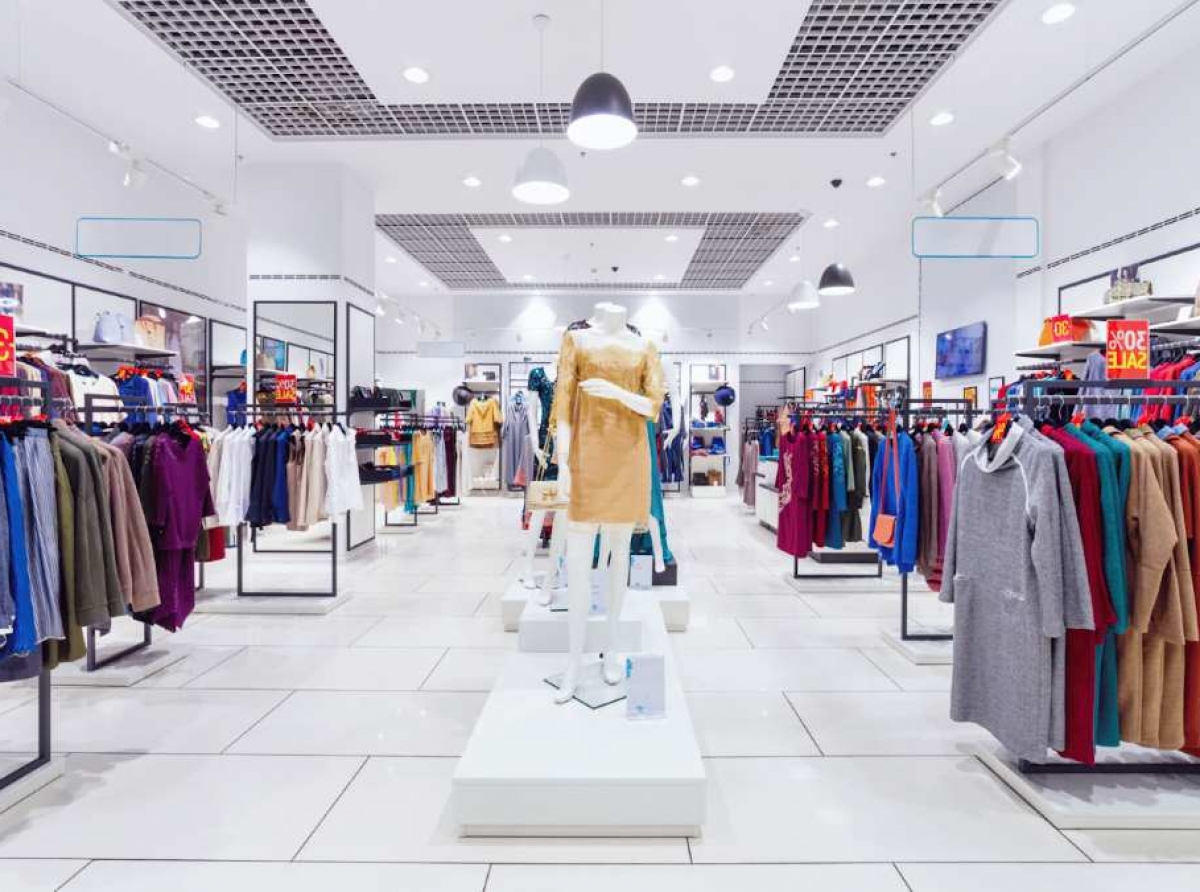
After years of pursuing scale through store rollouts and broad-based mid-market positioning, large retailers are now reworking their physical networks around a more demanding reality: consumers want better products, but they are unwilling to pay traditional mid-tier prices.
This shift is becoming visible not through new store launches, but through store conversions. Across several markets, established apparel retailers are transforming existing full-price outlets into off-price formats designed to maximize inventory velocity, improve asset productivity, and capture a growing value-conscious customer base.
Reliance Retail’s decision to convert selected Trends locations into Fashion Factory outlets reflects a broader transition underway across the industry. Rather than expanding through entirely new infrastructure, retailers are repurposing existing real estate to align with changing demand patterns and emerging profitability requirements.
New role for physical stores
The conversion of conventional apparel stores into discount-led formats is more than a branding exercise. It is a direct response to declining efficiency in the traditional mid-market apparel model.
For years, organized fashion chains relied on predictable pricing structures supported by seasonal promotions. That equation has become more and more difficult to sustain as inventory turnover slows and consumers delay discretionary purchases. Retailers are now prioritizing formats capable of moving merchandise faster while extracting greater productivity from existing assets.
Off-price stores have emerged as a practical solution. By offering branded merchandise at discounts ranging from 20 to 70 per cent, these outlets function as institutional inventory-clearing platforms while continuing to attract aspirational consumers seeking branded fashion at accessible prices. The model creates value on both sides. Consumers gain access to premium and national brands at reduced prices, while retailers monetize excess inventory without incurring additional real estate investments or customer acquisition costs.
Economics behind the shift
At the heart of the shift lies a change in apparel consumption behavior. India's fashion market continues to grow, but growth is becoming more polarized between value-driven and premium segments. Consumers in the mass and lower-middle-income categories are displaying higher price sensitivity even as their expectations around design, quality, and fashion relevance continue to rise. This has placed considerable pressure on traditional mid-market retailers that occupy the space between low-cost value players and premium fashion brands. The result is a restructuring of market share toward formats capable of delivering strong value propositions through operational efficiency rather than pricing power.
|
Market segment |
Average unit price |
Projected CAGR (2026-34) |
Primary competitive driver |
|
Mass & Value Market Tier |
Sub-Rs 999 |
14.80% |
Supply chain velocity and volume turns |
|
Off-Price Liquidation Tier |
Rs 799-2,499 |
18.20% |
Multi-brand sourcing and brand aspiration |
|
Mid-Premium Structural Tier |
Rs 3,500-7,000 |
25% |
Accessible luxury positioning |
|
Premium & Couture Market Tier |
Above Rs 7,000 |
45% |
Brand identity and experiential retail |
Source: Institutional Retail Research and Deloitte India Fashion Ecosystem Matrix, June 2026
The table highlights a clear bifurcation. While premium and luxury segments continue to benefit from affluent consumers and experience-led purchasing, the off-price segment is projected to outpace the broader value market, reflecting the growing appeal of branded bargains.
Winning through speed, not margin
The success of India's leading value retailers shows that margin reduction can be offset through rapid inventory turnover and supply-chain efficiency. For example, Tata Trent’s Zudio, Vishal Mega Mart and V2 Retail have shown that profitable growth is possible even at lower average selling prices. Vishal Mega Mart reported revenue of Rs 10,716 crore in FY25 with a 14.3 per cent EBITDA margin, while V2 Retail delivered revenue growth of over 62 per cent alongside strong same-store sales expansion. These results have reinforced investor confidence in the value-fashion model.
To maintain profits, more and more retailers are controlling larger portions of the supply chain. Vertical integration, direct sourcing relationships and streamlined logistics networks are reducing dependence on intermediaries while accelerating merchandise flow from factories to stores. Private-labels have become central to this strategy. By managing everything from fabric procurement to final retail distribution, companies can preserve gross margins in the 38-42 per cent range despite operating at aggressive price points. Product development cycles have also shortened, with some retailers reducing design-to-shelf timelines from six months to just over three weeks.
For converted off-price stores, this creates an additional advantage. Surplus inventory from premium or mid-market formats can be redirected into discount channels without undermining the pricing integrity of flagship retail banners.
Real estate becomes a lever
The growing preference for value formats is also reshaping retail real estate strategy. Store conversions allow retailers to optimize existing leases and preserve established customer catchment areas while adapting to changing market dynamics. For landlords, however, the transition introduces a different retail ecosystem. While discount-led stores often generate strong footfalls, they can alter spending patterns across shopping centres and high streets, forcing neighbouring tenants to rethink their own positioning.
At the same time, competition for suitable retail locations is increasing. As multiple retailers expand value-fashion networks across Tier-II, III cities, the availability of high-quality commercial space is becoming increasingly constrained. This is pushing up occupancy costs and raising questions about the long-term sustainability of rapid store expansion. The challenge is compounded by the economics of off-price retail itself. The model depends heavily on volume. Any slowdown in unit sales can quickly erode profitability as rising rents, labour costs and operating expenses compress already narrow margins.
End of the middle ground
Thus India’s apparel sector is now rewarding retailers that operate at either end of the value spectrum. Brands with strong aspirational equity continue to command pricing power, while value-led operators are winning through speed, efficiency and scale. The traditional middle ground is becoming harder to defend.
Store conversions from full-price formats to off-price outlets reflect this reality. What appears on the surface to be a simple change in signage is, in fact, a deeper restructuring of retail economics. As consumer expectations evolve and inventory productivity becomes the defining performance metric, the future of apparel retail may depend less on what retailers sell and more on how quickly they can move it.











 Get in Touch!
