All Stories

Raymond Lifestyle consolidates communication channels under Publicis Groupe India

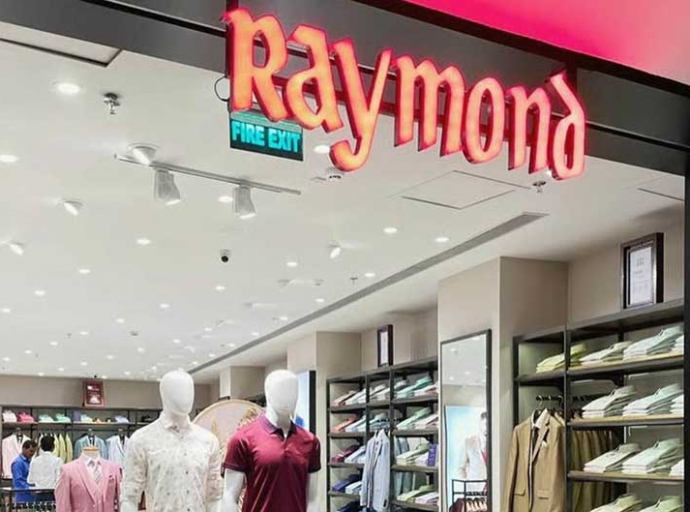
Raymond Lifestyle has officially appointed Publicis Groupe India as its comprehensive integrated marketing partner to streamline brand messaging across digital, media, and creative portfolios. The strategic alliance brings together fragmented advertising operations under a unified ‘Power of One’ framework, merging performance marketing, CRM, data analytics, and reputation management into a single operational structure. Industry experts note, large apparel and lifestyle retailers are increasingly moving away from siloed agency models to ensure consistent consumer engagement across physical brick-and-mortar storefronts and digital e-commerce platforms. By deploying a bespoke unit dubbed Team One Thread - led jointly by agency executives Paritosh Srivastava and Jai Lala - the company aims to optimize its advertising expenditures and sharpen its retail positioning.

Adapting to evolving omnichannel retail dynamics

The partnership coincides with a broader organizational realignment within Raymond Lifestyle, highlighted by key executive appointments such as Vineet Shah as Head - Omnichannel Media. As consumer preferences shift toward digitally integrated shopping journeys, fashion brands face mounting pressure to deliver hyper-personalized campaigns that bridge traditional tailoring heritage with modern lifestyle aspirations. Consolidating our marketing ecosystem allows us to respond with greater agility to changing market demands while maximizing consumer touchpoints, noted a senior retail strategy advisor based in Mumbai. The collaboration is expected to accelerate data-driven customer acquisition strategies, reinforcing the brand's competitive edge within India's highly contested premium apparel and tailoring segments.

Building a textile heritage

Raymond Lifestyle is a premier Indian textile and apparel conglomerate specializing in branded fabric, custom tailoring, and diverse fashion retail formats. Operating an extensive pan-India store network alongside expanding global export channels, the company focuses on scaling its lifestyle brands, enhancing omnichannel retail capabilities, and building upon a legendary corporate heritage rooted in India's textile manufacturing history.

Raymond Lifestyle consolidates communication channels under Publicis Groupe India

Visage Lines Personal Care elevates growth strategy with dual executive appointments

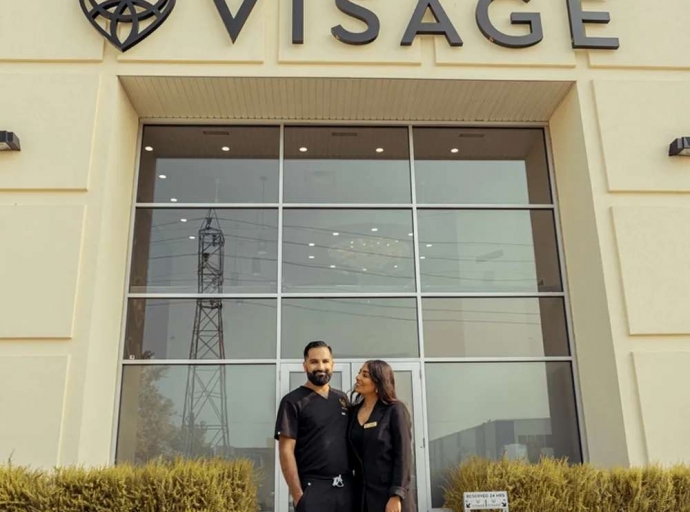
Visage Lines Personal Care has expanded its executive leadership structure by appointing Varun Gupta as the new Chief Marketing Officer of Bombay Shaving Company and bringing in Jasmeet Singh as Senior Vice President of Ecommerce. Having previously spearheaded category expansion and achieved a twenty-fivefold growth metric in core grooming segments, Gupta will now direct unified brand building across the company's direct-to-consumer portfolio.

Concurrently, Singh leverages over 14 years of strategic distribution experience with multinational giants like L'Oréal and Kenvue to direct digital scale across high-velocity marketplaces, quick-commerce channels, and specialized beauty portals. According to company executives, these leadership appointments are engineered to capture surging consumer discretionary spending in urban grooming while optimizing operational margins across complex retail channels.

Navigating evolving grooming ecosystems

The strategic realignment addresses structural challenges within India’s fast-moving personal care sector, where rising customer acquisition costs and rapid inventory turns require specialized channel management. By integrating dedicated marketing oversight with advanced digital distribution expertise, the enterprise aims to consolidate its market share in men’s grooming and women’s personal care. Industry analysts note that aligning marketing execution directly with high-speed digital fulfillment provides emerging direct-to-consumer brands a distinct competitive advantage over legacy conglomerates amid shifting consumer preferences.

Expanding with digital scaling and strong financial support

Visage Lines Personal Care is a fast-growing Indian consumer goods enterprise operating popular grooming brands including Bombay Shaving Company, Bombae, and 100Days. The company targets domestic and international markets with specialized personal care products, expanding its footprint through aggressive digital scaling, strong financial backing, and omnichannel retail distribution.

Visage Lines Personal Care elevates growth strategy with dual executive appointments

Raymond Lifestyle to mitigate US trade exposure with a shift to Europe

Raymond Lifestyle is executing a geographic realigning of its export operations to hedge against tariff shifts and policy turbulence in North America. The Indian apparel major expects European markets to generate up to 25 per cent of its total export volume within the next two years, moving up from 17 per cent prior. Simultaneously, the company plans to compress its exposure to the United States to between 55 and 60 per cent, down from a historic high of 65 per cent.

Europe will grow faster for us, states Satyaki Ghosh, CEO, Raymond Lifestyle, noting, recent customer engagements are yielding strong conversion rates across key regional markets.

MUCH MORE

Leveraging trade agreements to expand garment exports

This structural redirection coincides with momentum surrounding trade arrangements between India, the United Kingdom, and the European Union. Official industry data indicates, Indian textile and garment shipments to key European destinations rose 9 per cent to Rs 69,445 crore ($7.29 billion) during FY26, while direct exports to the US slipped 7 per cent over the same period.

To support expanding buyer agreements in Germany, France, Poland, and Britain, the group is expanding production capacity across its offshore facility in Ethiopia and scaling its manufacturing lines in Andhra Pradesh.

SUSTAINABILITY

Global manufacturing and export profile

Raymond Lifestyle operates as the flagship branded apparel, textile, and global manufacturing arm of the Raymond Group. The company commands a dominant domestic market presence with portfolio brands including Park Avenue, Raymond Ready-To-Wear, and ColorPlus, while serving international retail clients such as Charles Tyrwhitt and JCPenney. Exports generate approximately one-fifth of overall revenues. Founded on a century-long legacy in fabric production, the enterprise is expanding capacity across its domestic and overseas manufacturing plants to support rising European order books.

Latest Issue

Raymond Lifestyle to mitigate US trade exposure with a shift to Europe

Raymond Group strengthens lifestyle and retail real estate synergy with new appointment

Raymond Group’s real estate arm, Raymond Realty, has appointed Karishma Mehta as Cluster Head – Marketing to drive brand strategy and consumer acquisition across its key residential and retail developments in Mumbai and Thane. The strategic move comes as the textile and apparel major continues to leverage its century-old consumer trust and retail footprint to scale high-value real estate projects. Mehta, who brings over 15 years of cross-industry experience across luxury retail, media-tech, and banking, will oversee integrated marketing and demand generation for marquee developments including The Address by GS, Ten X Habitat, and Ten X Era.

MUCH MORE

Capitalizing on multi-cluster growth and retail integration

Mehta’s mandate encompasses both residential clusters and retail spaces, aligning with Raymond’s broader strategy of creating integrated lifestyle precincts. With robust pre-sales performance and an expanding pipeline in prime metropolitan hubs like Bandra, the company is sharpening its cluster-level marketing strategy to accelerate customer conversion. Adding dedicated cluster leadership enables us to deliver tailored brand positioning and sustained engagement as we scale our project pipeline, noted Senior Executive Officer,  Raymond Realty. The leadership transition underscores Raymond's ongoing focus on converting strong brand equity from its core apparel legacy into high-margin real estate ventures.

VIEW

Targeting aggressive revenue expansion

Raymond Realty operates as the real estate development division of Raymond Limited, focusing on premium residential and commercial retail projects across major urban Indian clusters. Building on Raymond’s textile heritage established in 1925, the unit targets aggressive revenue expansion backed by strong pre-sales momentum and a robust multi-project development pipeline.

SUSTAINABILITY

Raymond Group strengthens lifestyle and retail real estate synergy with new appointment

Spykar Lifestyles secures top workforce accolade at RAI MMR HR Awards 2026

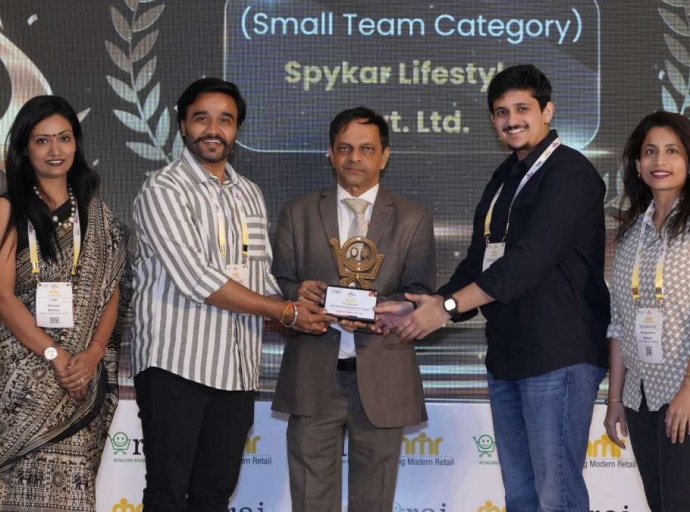
Spykar Lifestyles has claimed the Retail Workforce Innovation of the Year honor at the RAI MMR HR Awards 2026, validating its strategic deployment of digital enablement tools to elevate frontline employee engagement. Unveiled during the 20th RAI MMR HR Conclave at Mumbai's Westin Garden City under the theme ‘The New Retail Talent: Agile, Digital, Human,’ the accolade highlights how apparel enterprises are modernizing internal human capital frameworks. Industry specialists note that organized fashion retail networks face acute retention hurdles, making technology-driven upskilling and continuous performance recognition imperative for maintaining service excellence across expanding physical stores.

Sector impact and talent agility

The recognition underlines a broader structural shift within India's apparel retail sector, where traditional human resource management is transitioning toward data-driven employee lifecycle management. As brands scale operations to meet escalating domestic consumption, digitized training modules and structured incentive architectures directly curb frontline attrition rates.

Sector impact and talent agility

Integrating agile digital tools into daily store operations ensures that retail staff remain responsive to evolving consumer preferences, explains Neha Kulkarni, Senior Retail Human Capital Consultant, Nexus Advisory. By bridging the gap between automated inventory management and frontline execution, pioneering denim and apparel brands are establishing new benchmarks for talent retention and operational productivity.

Pursuing aggressive retail expansion plans

Founded as a premier denim-first youth fashion brand, Spykar Lifestyles specializes in contemporary apparel and accessories for men and women across India's Tier-I and Tier-II urban markets. The company pursues aggressive retail expansion plans backed by robust digital integration, targeting long-term financial growth and enhanced workforce efficiency across its nationwide store network.

Spykar Lifestyles secures top workforce accolade at RAI MMR HR Awards 2026

Raymond Lifestyle drives garmenting growth amid retail optimization

Raymond Lifestyle reported a 6 per cent Y-o-Y increase in Q1 FY27 total income to Rs 1,560 crore, supported by a 50 per cent expansion in its export garmenting division. Operational gains were boosted by favorable trade dynamics, including US-India tariff rationalization and the implementation of the UK Free Trade Agreement, which generated strong international order inflows. The growth in global apparel assembly helped balance domestic headwinds in branded textiles, where revenue adjusted to Rs 684 crore due to elevated baseline effects.

MUCH MORE

Re-engineering physical networks to safeguard margins

To optimize distribution channels, the group refined its retail footprint to 1,627 stores nationwide by June 2026, closing non-performing doors to improve store-level economics. While front-loaded network restructuring costs and depreciation led to a loss before tax of ₹38 crore, consolidated operating EBITDA expanded 11 per cent to Rs 135 crore, with net working capital requirements reducing to 75 days. Combining supply-side scale in export garmenting with store-level network discipline allows us to build a leaner, debt-free retail operation, noted a corporate development executive.

VIEW

Integrated lifestyle flagship of the Raymond Group

Demerged from Raymond Limited, Raymond Lifestyle operates leading menswear and apparel brands, including Park Avenue, ColorPlus, Parx, and Raymond Fine Fabrics. Serving domestic multi-brand doors, exclusive outlets, and global export buyers across over 50 countries, the enterprise aims for sustained margin enhancement, backed by a net cash surplus of Rs 154 crore.

SUSTAINABILITY

Raymond Lifestyle drives garmenting growth amid retail optimization

Crafting cultural capital: How Fabindia shaped India’s lifestyle retail paradigm

Indian lifestyle retail has long navigated the delicate balance between commercial scalability and cultural preservation, a dynamic masterminded by heritage institutions. Established in 1960, Fabindia transitioned from an export-oriented upholstery venture into a dominant domestic retail force by positioning traditional handlooms as everyday wardrobe staples. Rather than depending on aggressive promotional discounting, the brand scaled its operations by embedding community-owned supply chains directly into organized retail value networks. By connecting over 40,000 rural artisans with urban consumers, the enterprise demonstrated that cultural authenticity could successfully command value-premium pricing without diluting traditional integrity.

Navigating omnichannel expansion and experiential scale

To sustain market relevance amid intense competition from contemporary digital-first entrants, Fabindia has actively modernized its operational footprint. The enterprise currently oversees an extensive network nearing 400 brick-and-mortar storefronts, complemented by strategic integration into quick-commerce delivery ecosystems. Executive leadership notes that physical locations are progressively transitioning into experiential service hubs featuring dedicated interior design studios, bespoke customization facilities, and integrated digital touchpoints. According to Ajay Kapoor, Chief Executive Officer, the integration of QR codes across merchandise allows younger demographics to trace specific textile techniques like Bagru and Chikankari, bridging traditional craftsmanship with modern consumer curiosity.

Balancing profitability with purpose-led growth

Despite generating over R1,000 crore in annual standalone revenue, the company continues to confront complex financial headwinds, marked by fluctuating bottom-line performance and elevated inventory holding costs stemming from strategic transitions toward company-operated retail models. Sector analysts observe that while omni-channel upgrades and international scaling into regions like the UK and Southeast Asia present robust growth vectors, optimizing working capital remains critical. Ultimately, Fabindia’s ongoing evolution offers a vital blueprint for lifestyle brands attempting to reconcile heritage preservation with aggressive corporate expansion.

Founded in 1960 by John Bissell, Fabindia is India’s foremost lifestyle retail brand specializing in handcrafted apparel, home furnishings, personal care items, and organic goods. The brand operates extensively across Indian metros, tier-II, and tier-III cities alongside key international touchpoints in Southeast Asia, Europe, and the Middle East, with ethnic wear and sustainable homeware forming its primary revenue pillars.

The company is aggressively expanding its physical footprint toward the 400-store milestone, scaling western-wear label Fabels, enhancing omnichannel digital infrastructure, and expanding international e-commerce channels. Maintaining a robust revenue baseline exceeding Rs 1,000 crore, the firm is focused on strengthening operational efficiency, reducing debt obligations, and streamlining inventory management.

Crafting cultural capital: How Fabindia shaped India’s lifestyle retail paradigm

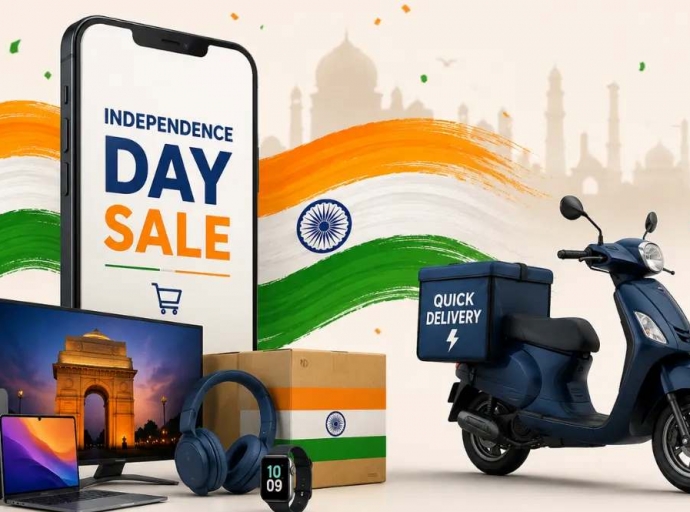
Independence Day sales signal strong festive rebound for Indian retail

Indian fashion and lifestyle retailers recorded strong sales over the Independence Day shopping weekend, outperforming internal projections and putting a sluggish first half of the calendar year firmly behind them. Retailers across apparel, department stores, electronics and digital marketplaces reported sales growth of up to 25 per cent year-on-year, while overall unit volumes increased by around 5-7 per cent. The improvement is significant because it points to a recovery in actual consumption rather than growth driven mainly by inflation or higher ticket prices.

The rebound follows a relatively weak first half of the calendar year, when higher household expenses, cautious discretionary spending and supply-chain disruptions linked to geopolitical tensions weighed on retail demand. For organised retailers, the Independence Day period therefore served as an early indicator of whether consumers were prepared to loosen their wallets ahead of Onam, Dussehra and Diwali.

MUCH MORE

Footfalls replace discounting

The most important shift is taking place in fashion retail. Brands have become more cautious about using deep promotions to generate sales. Instead of replicating earlier end-of-season sale strategies, apparel retailers reportedly capped discounts at around 50 per cent on selected merchandise. This allowed them to clear transitional inventory without aggressively sacrificing gross margins. The distinction matters. A retail recovery driven by heavy markdowns can lift billing but weaken profit. A recovery led by higher store traffic and unit sales is more sustainable.

Department stores have been among the key beneficiaries. For examokem Lifestyle International reported double-digit growth during the Independence Day period, supported by stronger footfalls across malls and high streets. Devarajan Iyer, CEO, Lifestyle International says consumer sentiment have improved and sales increase is being driven by volumes rather than merely higher billing values. The trend suggests that shoppers who had postponed discretionary purchases are beginning to return, particularly as retailers enter the peak consumption quarter.

Latest Issue

Premium products gain ground

The recovery is not limited to mass-market categories. Electronics retail is seeing an even stronger premiumisation trend. Vijay Sales recorded over 20 per cent growth in value sales, while volumes rose about 5 per cent. Haier India reported a 45-50 per cent increase in value demand and a 30-35 per cent rise in volumes, driven by products such as large-screen televisions and side-by-side refrigerators. This gap between value and volume growth indicates that consumers are willing to spend more on selected categories, even while remaining cautious elsewhere.

The development could be important for retailers heading into the festive quarter. Premium products generally offer stronger absolute revenue per transaction and can improve overall retail productivity, provided inventory is aligned with demand.

SUSTAINABILITY

Online mirrors offline

The recovery is also visible across e-commerce, suggesting that the improvement is not confined to physical retail. Amazon India reported demand doubling from baseline run rates across fashion, beauty and consumer electronics during the holiday period. Flipkart also recorded high double-digit growth across fashion and home categories, while selected smartphones and appliances sold out rapidly.

The intermingling of online and offline demand is particularly relevant for fashion retailers. Physical stores remain critical for discovery, trial and festive purchases, while marketplaces provide scale and promotional reach. Rather than competing for the same consumer, both channels are functioning as complementary components of the same festive sales funnel.

Mobile retail provides another indication of improving consumer confidence. Multi-brand mobile retail chains recorded value growth of 35-45 per cent, with consumers moving towards higher-priced devices.

The trend suggests that discretionary spending is returning selectively. Consumers may still be cautious about routine purchases, but major replacement categories are benefiting when promotions, financing and product upgrades coincide. For retailers, this creates an opportunity to increase average transaction values without depending entirely on steep price reductions.

DFU Profile

Lean stocks improve festive outlook

Perhaps the biggest advantage for retailers entering the festive season is inventory discipline. The strong Independence Day performance has come at a time when retailers are carrying relatively leaner inventories. This reduces the likelihood of aggressive clearance activity later in the season and improves working-capital efficiency. The TV category reveals the dynamic. Super Plastronics reportedly sold out its TVs across Amazon and Flipkart and registered 14 per cent year-on-year growth. The company indicated that growth could have reached 20% if additional inventory had been available. That constraint is significant. When demand exceeds available inventory the limiting factor shifts from consumer willingness to spend to retailers' ability to replenish.

For fashion retailers, however, the challenge will be more complex. Festive apparel requires much tighter assortment planning because missed demand cannot always be recovered after a particular celebration or fashion cycle has passed.

Festive quarter looks positive

The Independence Day weekend does not guarantee a uniformly strong festive season. But the combination of higher footfalls, rising unit volumes, premiumisation and controlled markdowns gives a healthier starting point than retailers had at the beginning of the year. The key question is: if this momentum can sustain through Onam, Dussehra and Diwali.

If it does, India's organised retail sector could finish the year with a meaningful shift in growth quality, from discount-led billing expansion to volume-led consumption growth. For fashion and lifestyle retailers, that would be particularly valuable. After a period where inventory management and promotions dominated operating decisions, the festive season could restore the most important retail metric of all: consumers walking into stores and buying more.

Independence Day sales signal strong festive rebound for Indian retail

Lifestyle, not location, driving India’s retail growth as fashion map is being redrawn

For decades, India's fashion retail market growth followed a familiar formula. Premium brands prioritized metros, mid-market labels targeted Tier-II cities, while value retail dominated smaller towns and rural markets. Merchandise planning, inventory allocation and marketing budgets were all built around postal codes. That model is rapidly becoming obsolete.

India's fashion industry is entering a new phase where consumer aspirations are shaped less by geography and more by digital lifestyles. Social media, creator-led commerce and widespread smartphone adoption have created a nationwide consumer base with remarkably similar expectations around fashion, quality and brand experience. For retailers, this marks a structural shift from city-led expansion to mindset-led merchandising. As the market continues to grow, brands that continue to define consumers by city classifications rather than behavioural patterns risk missing the country's fastest-growing demand pockets.

Digital discovery has redesigned fashion market

Consumers across India's metros and smaller cities now discover fashion through the same digital platforms. A shopper in Gorakhpur today follows the same global fashion creators, sneaker launches and streetwear trends as someone living in Mumbai or Bengaluru. The result is a merging of consumer expectations. Rather than aspiring to local retail standards, shoppers across the country now expect premium fabrics, contemporary silhouettes, faster deliveries and seamless omnichannel experiences irrespective of where they live.

Industry forecasts reflect the scale of this opportunity. India's apparel market is projected to reach $124.32 billion by 2030, growing at a CAGR of 12.9 per cent. Importantly, much of the incremental demand is expected to emerge outside traditional retail centres, where consumption is growing faster than physical retail infrastructure.

Table:

Metric size

Value

Retail impact

Projected Market Size (2030)

$124.32 bn

Triggers massive supply-chain scaling to regional nodes

Compound Annual Growth Rate

12.90%

Outpaces generic consumer goods segments

Gen Z Share of Fashion Spend

47%

Drives shift toward streetwear and highly expressive aesthetics

Millennial & Gen Z Combined GMV

75%

Forces legacy brands to adopt omni-channel distribution

Activewear Annualized Growth

14%

Blurs the lines between performance clothing and casual wardrobes

Consumers are buying identities, not categories

The evolution is visible inside wardrobes as well. Consumers are no longer shopping for broad categories such as casualwear or formalwear. Instead, they are assembling wardrobes around multiple lifestyles: fitness, travel, work, celebrations, content creation and social occasions. This behavioural change is being led by younger consumers. Market studies indicate that Gen Z already accounts for nearly 47 per cent of India's fashion spending, while Millennials and Gen Z together generate approximately three-fourths of the gross merchandise value for digital-first fashion brands.

These shoppers treat apparel as an extension of personal identity rather than functional clothing. This explains why categories like activewear continue to record annual growth of around 14 per cent, while denim, athleisure and contemporary fusion wear maintain strong momentum. The traditional distinction between workwear, casualwear and occasion dressing is steadily disappearing as consumers seek versatile products that fit multiple environments.

Premiumisation is becoming behavioural

Another significant shift is visible in premium purchasing. For long, premium fashion purchases closely followed rising household incomes. Today's consumers are displaying different behaviour. Retailers are seeing shoppers trade up based on confidence, aspiration and perceived value rather than waiting for income levels to rise substantially. Consumers are willing to spend more for superior craftsmanship, sustainable materials, cultural authenticity and transparent sourcing.

For brands, this changes the premiumisation equation. Success no longer depends solely on creating luxury labels but on delivering premium experiences at accessible price points. Brands capable of balancing aspiration with affordability are improving margins without diluting brand equity. The growing acceptance of affordable premium fashion is increasing the addressable market well beyond India's largest metropolitan centres.

Fusion fashion shows new demand patterns

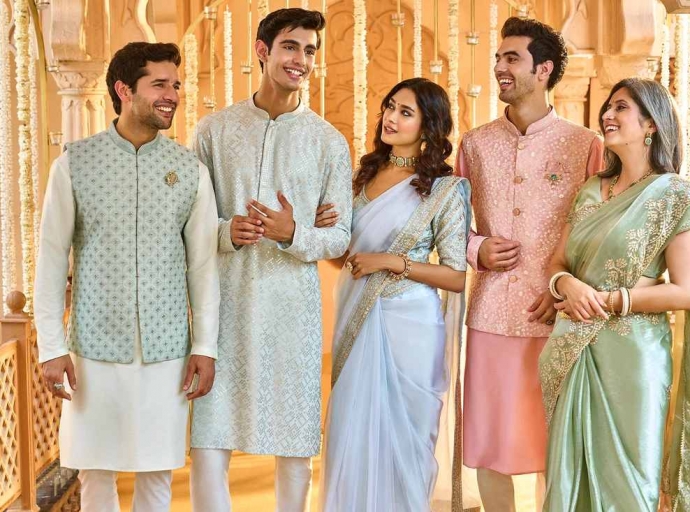
Few categories showcase this shift more clearly than contemporary fusion wear. Designs such as pre-draped saris, cape blouses and modern lehenga combinations were once largely confined to premium boutiques in major metros. Today, over half of premium fusion wear orders are reportedly being fulfilled outside India's top eight metros. Regional influencers are setting fashion trends instead of merely adopting them, while brands are incorporating digital engagement data into merchandising decisions.

Artificial intelligence-powered demand forecasting and regional inventory hubs are helping retailers place products closer to emerging demand centres. Besides improving customer experience, these systems can reduce logistics costs and minimise inventory inefficiencies by ensuring products are stocked where digital demand is strongest. The shift also enables faster deliveries for consumers in smaller cities, narrowing the service gap between metros and emerging markets.

Retail networks becoming lifestyle platforms

The implications extend beyond merchandising. Retailers are redesigning supply chains around digitally connected consumers instead of administrative city classifications. Regional fulfilment centres, data-driven inventory planning and omnichannel integration are becoming strategic priorities as brands seek to serve customers across the country with consistent speed and assortment.

Lifestyle-focused collections are also becoming commercially attractive. Estimates show lifestyle-led apparel portfolios generate average order values that are over 40 per cent higher than generic product lines. This gives retailers with both stronger profits and better customer engagement by targeting behavioural segments instead of geographic ones.

The next phase of India's fashion retail expansion, therefore, is unlikely to be defined by how many stores brands open in Tier-II, III cities. Instead, it will depend on how effectively they identify shared aspirations, interpret digital signals and build products that resonate with consumers regardless of location. For India's fashion industry, the country's most valuable retail segment is no longer a city, it is a lifestyle.

Lifestyle, not location, driving India’s retail growth as fashion map is being redrawn

Raymond Lifestyle evaluates agencies for Rs 300-crore integrated marketing mandate

Raymond Lifestyle (RLL) has officially initiated a comprehensive agency review for its integrated creative and media mandate, valued at upwards of Rs 300 crore. The formal evaluation process covers brand strategy, media planning, digital communications, and campaign execution across its prominent portfolio. This competitive pitch ranks among the most significant marketing alignments within the domestic fashion and retail sector, drawing participation from several top-tier agency networks. The strategic review reflects a growing preference among large-scale consumer enterprises to unify traditional and digital capabilities under a singular operational umbrella to optimize marketing efficiency and campaign consistency.

Financial commitment and strategic growth alignment

The corporate impetus behind the extensive marketing review aligns with substantial promotional investments highlighted in the company's recent financial disclosures. According to its annual performance metrics, the enterprise allocated Rs 322.91 crore toward advertising and sales promotion, supporting its diverse brand ecosystem that includes Park Avenue, ColorPlus, Ethnix, and Raymond Ready To Wear. Industry observers note that consolidating these promotional workflows will enable more targeted data-driven consumer engagement across both urban retail storefronts and digital channels. Participating agencies are currently undergoing rigorous evaluations centered on integrated storytelling, media buying efficacy, and multi-platform consumer connectivity as the organization aims to maximize return on marketing capital.

Pursuing aggressive expansion

Raymond Lifestyle operates as a leading integrated textile and apparel enterprise in India, offering premium worsted suiting, shirting, and readymade garments. Serving diverse consumer segments through an extensive retail network exceeding 1,600 stores across hundreds of cities, the company pursues aggressive domestic expansion alongside robust financial performance, building upon a rich legacy spanning nearly a century of industrial manufacturing and retail excellence.

Raymond Lifestyle evaluates agencies for Rs 300-crore integrated marketing mandate

Modern Bazaar consolidates retail as quick commerce reshapes apparel and lifestyle market

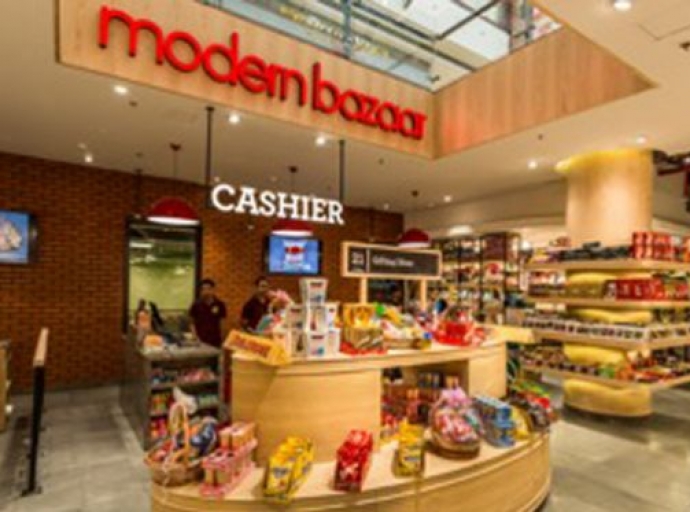
Gourmet grocery and lifestyle giant Modern Bazaar has initiated strategic equity partnership discussions with industry heavyweights, including Reliance Retail and DS Group’s Le Marche. Seeking a valuation between Rs 100 crore and Rs 150 crore, the Delhi-NCR-based retailer is exploring equity dilutive options to insulate its large-format footprint against rapid quick-commerce encroachment. The shift reflects a broader retail evolution where instant-delivery platforms are expanding aggressive assortments into premium gourmet, apparel, and lifestyle categories, putting severe margin pressure on traditional brick-and-mortar operations.

MUCH MORE

Operating overhead and digital diversification

Elevated store overheads and a 13.6 per cent revenue decline in FY25 to Rs 247.24 crore have forced physical retailers to re-evaluate standalone expansion strategies. To counter falling store footfalls, brick-and-mortar brands are forming strategic alliances with conglomerate retail networks that offer robust supply chain integration. We are in active discussions with select strategic investors who can add value and speed to our growth plans, states Kunaal Kumar, Promoter and Managing Director, Modern Bazaar. Industry analysts note, omnichannel integration is no longer optional, as quick-commerce platforms capture high-margin impulse purchases across metro hubs.

SUSTAINABILITY

A premier lifestyle retailer

Founded in 1971, Modern Bazaar is a premier grocery and lifestyle retailer operating 18 large-format stores across Delhi-NCR and Chandigarh. Specializing in imported gourmet, fresh bakery, and home essentials, the company targets expansion to 116 stores by FY30 while balancing FY25 revenues of Rs 247 crore amid sector-wide digital shifts.

Latest Issue


Modern Bazaar consolidates retail as quick commerce reshapes apparel and lifestyle market

Garmenting growth, margin expansion anchor Raymond Lifestyle amid Q1,FY27 net loss

Raymond Lifestyle reported a consolidated net loss of Rs 22.59 crore for Q1 FY27, widening from Rs 19.82 crore in the corresponding prior-year period. Despite the bottom-line pressure driven by transition overheads and retail network expansion costs, revenue from operations grew 5.9 per cent Y-o-Y to Rs 1,516 crore, while total operating EBITDA increasing 11 per cent to Rs 135 crore.

Operational growth was spearheaded by a 50 per cent revenue growth in the garmenting division to Rs 296 crore, buoyed by US-India tariff rationalization and expanding international order books. Conversely, Branded Textile revenue eased marginally to Rs 684 crore due to a high base effect.

Supply chain optimization and balance sheet resilience

To safeguard margins against channel mix fluctuations, the company improved its net working capital cycle down to 75 days from 90 days a year ago, maintaining a net cash surplus of Rs 154 crore. Building on our solid foundation from FY26, Q1 FY27 has delivered steady performance marked by strong international traction and sustained domestic demand, stated Satyaki Ghosh, Whole-Time Director and CEO. In a representative case study, double-digit growth in casual apparel across large-format stores and digital channels helped absorb inflationary pressures, positioning the brand to capture market share during upcoming festive retail cycles.

Raymond pure-play fashion & lifestyle enterprise

Spun off from the historic 1925 Raymond Group, Raymond Lifestyle is a pure-play menswear apparel and suiting enterprise. Operating brands like Park Avenue and Ethnix across India and global markets, it targets double-digit retail expansion. The company maintains strong top-line momentum and a net cash-positive balance sheet.

Garmenting growth, margin expansion anchor Raymond Lifestyle amid Q1,FY27 net loss

Skechers accelerates Indian retail footprint with 450th store launch

American lifestyle and performance footwear major Skechers has reinforced its retail blueprint in South Asia by launching its 450th EBO in India. The milestone highlights a calculated commercial strategy prioritizing long-term physical reach over short-term financial gains. Rather than concentrating solely on Tier I metropolitan hubs, the brand is scaling its presence across tier-two and tier-three urban centres where surging disposable incomes and organized retail real estate are creating high-yield demand for casual and athletic products.

Capturing market share in the athleisure economy

The competitive landscape of Indian apparel and footwear retail has grown increasingly intense, with global giants like Nike, Adidas, and Puma locking horns with domestic entrants such as Campus Activewear. To maintain its competitive edge, Skechers is leveraging its proprietary comfort technologies - including Arch Fit and Hands Free Slip-ins  - alongside an expanding apparel line to boost average transaction values. Industry data indicates that the brand's balanced integration of exclusive brand outlets, e-commerce channels, and multi-brand partnerships continues to drive resilient volume growth.

India remains one of our most vital international growth engines, propelled by a rapidly expanding consumer class that demands both technical performance and everyday comfort, notes Rahul Sharma, Head - Retail Operations, Skechers India. Reaching 450 stores validates the brand’s localized retail playbook and their commitment to deep market penetration."

Optimizing omnichannel logistics and capital allocation

To sustain this growth trajectory without compressing operating margins, Skechers utilizes an asset-light franchise-owned, company-operated (FOCO) model across major commercial districts. A notable case study is its recent regional scaling in northern and western markets, where standardized store footprints of roughly 1,000 to 1,500 sq ft achieve profitability within accelerated timelines. By synchronizing physical inventory with its digital platforms, the company ensures uninterrupted product availability, mitigating supply chain vulnerabilities while capturing the shifting preferences of modern Indian shoppers.

Headquartered in Manhattan Beach, California, Skechers designs, develops, and markets diverse footwear and apparel for men, women, and children. Operating heavily in North America, Asia-Pacific, and Europe, the brand focuses on lifestyle and performance categories. Driven by robust international demand and disciplined capital deployment, Skechers targets steady multi-channel expansion, backed by historical global revenues exceeding $8 billion and an established operating history dating back to its founding in 1992.

Skechers accelerates Indian retail footprint with 450th store launch

Latest Publications

Image

Join Our Group

Join Our Group