
Beyond price cuts, IKEA rebuilds its India retail model for local consumers
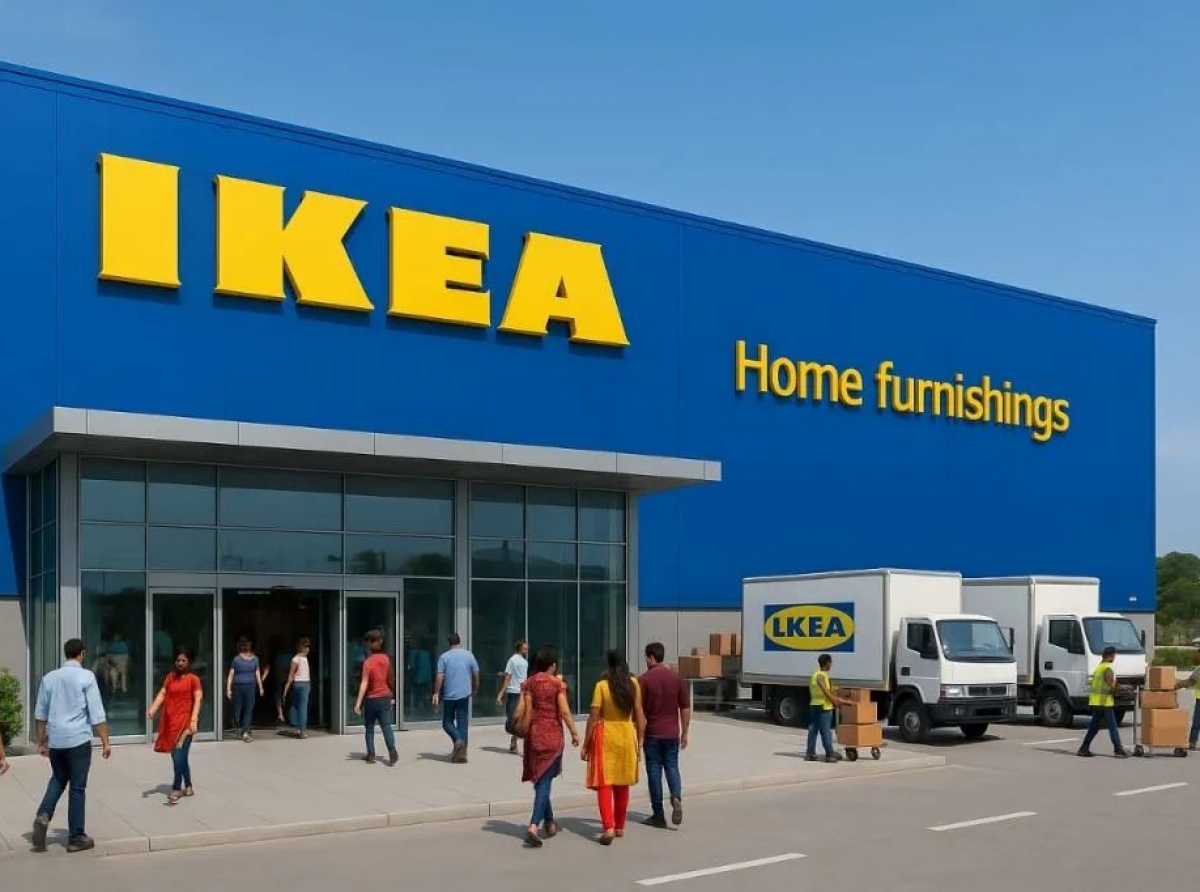
While IKEA’s decision to cut prices across Europe is aimed at defending demand in mature markets, its India strategy is focused on a very different challenge: changing how consumers buy, assemble and access furniture. Ingka Group’s €1.2 billion European price-reduction programme, including cuts of up to 28 per cent on products such as the Billy bookcase and Kallax shelving unit, comes against subdued consumer sentiment and persistent inflation. In India, however, IKEA is using price, sourcing and service as tools to penetrate a fragmented market estimated at more than $27 billion, where nearly 80 per cent of trade remains unorganised.
Table: IKEA’s European and India strategy an overview
|
Attribute |
European strategy |
Indian strategy |
|
Commercial Intent |
Defensive volume protection against high inflation |
Gain share from unorganised furniture trade |
|
Pricing Calibration |
Margin-diluting cuts across mature SKUs |
20% to 30% below Western baselines; 1,000+ items priced sub-Rs 200 |
|
Assembly Model |
Self-directed DIY (consumer absorbs assembly labor) |
Service-assisted ‘Do-It-For-Me’ (in-house teams + Urban Company) |
|
Procurement Base |
Established cross-border pan-European supply networks |
30% domestic sourcing baseline, moving towards 50% |
|
Format Deployment |
High-density suburban big-box stores + high-street boutiques |
Flagships, urban mini-centres and Lykli hubs |
Localising the FLAT-PACK MODEL
IKEA’s biggest adjustment in India has been around assembly. The DIY proposition that works naturally in Western markets has faced issues in India, where households traditionally depend on local carpenters for furniture installation and modification. IKEA responded by building an in-house installation team of around 150 carpenters and partnering Urban Company.
The move effectively converts IKEA from a pure self-service retailer into a service-assisted furniture business. Assembly visits of around 30 minutes have been offered at roughly Rs 250, lowering one of the biggest barriers to purchasing flat-pack furniture for first-time customers. The shift also reflects a broader Indian retail reality: convenience, installation and assisted fulfilment can be as important as the headline product price.
Sourcing becomes a cost advantage
India’s 30 per cent domestic sourcing requirement for single-brand foreign retailers could have been viewed purely as a regulatory obligation. IKEA has instead turned it into part of its operating strategy. The company has spent decades developing Indian suppliers for its global operations and now sources categories including mattresses, metals, plastics and cotton from domestic vendors. Its Indian sourcing share is moving from the statutory 30 per cent threshold towards a 50 per cent target.
That localisation can reduce exposure to freight costs, import duties, currency fluctuations and international supply-chain disruptions. As IKEA expands its India footprint, domestic procurement increasingly functions as a cost and resilience advantage rather than simply an FDI compliance measure.
Rethinking the big-box store
The traditional IKEA destination store can span roughly 400,000 sq. ft, but replicating that format across India’s largest cities is a challenge. High real-estate costs, congestion and long suburban commutes can make a store visit an occasional destination rather than a frequent shopping trip. IKEA is therefore building a more flexible network. Large stores in Hyderabad, Navi Mumbai and Bengaluru are being complemented by smaller urban formats, while mixed-use developments under the Lykli brand are being developed in Noida and Gurugram. The physical network is supported by digital fulfilment reaching over 80 cities, allowing IKEA to combine destination stores with more accessible urban touchpoints.
Designing for Indian homes
IKEA’s Hyderabad flagship shows how deeply the company has modified its global proposition for India. Before the 2018 opening, teams studied hundreds of Indian households and identified differences in cleaning practices, room sizes, storage needs and family living arrangements. These observations influenced product choices, including more multifunctional storage, elevated furniture and adjustments to fabrics and dining products.
The store also introduced a 1,000-seat cafeteria, the largest in the IKEA network at the time, with chicken and vegetarian alternatives alongside Indian dishes. Pricing was another localisation tool. Over 1,000 lifestyle accessories were positioned below Rs 200, creating accessible entry points for first-time shoppers while encouraging larger basket purchases.
The Rs 21,000 crore bet on India
IKEA’s India strategy ultimately goes beyond opening stores. The company is working towards a Rs 21,000 crore capital expenditure programme, with an ambition to build 30 mixed-format locations and reach Rs 8,000 crore in annual revenue by 2030. Globally, IKEA operates more than 500 stores through its franchise structure led by Ingka Group and reported €44.6 billion in FY25 retail turnover.
For India, however, the long-term opportunity depends less on exporting the Swedish retail template and more on rebuilding it around Indian consumer behaviour. From assisted assembly and local manufacturing to smaller urban stores and sub-Rs 200 products, IKEA is effectively treating localisation as the core of its growth model not an adaptation at the margins.











 Get in Touch!
