
India-US Trade Talks and the New Export Moment for Indian Ethnic Wear
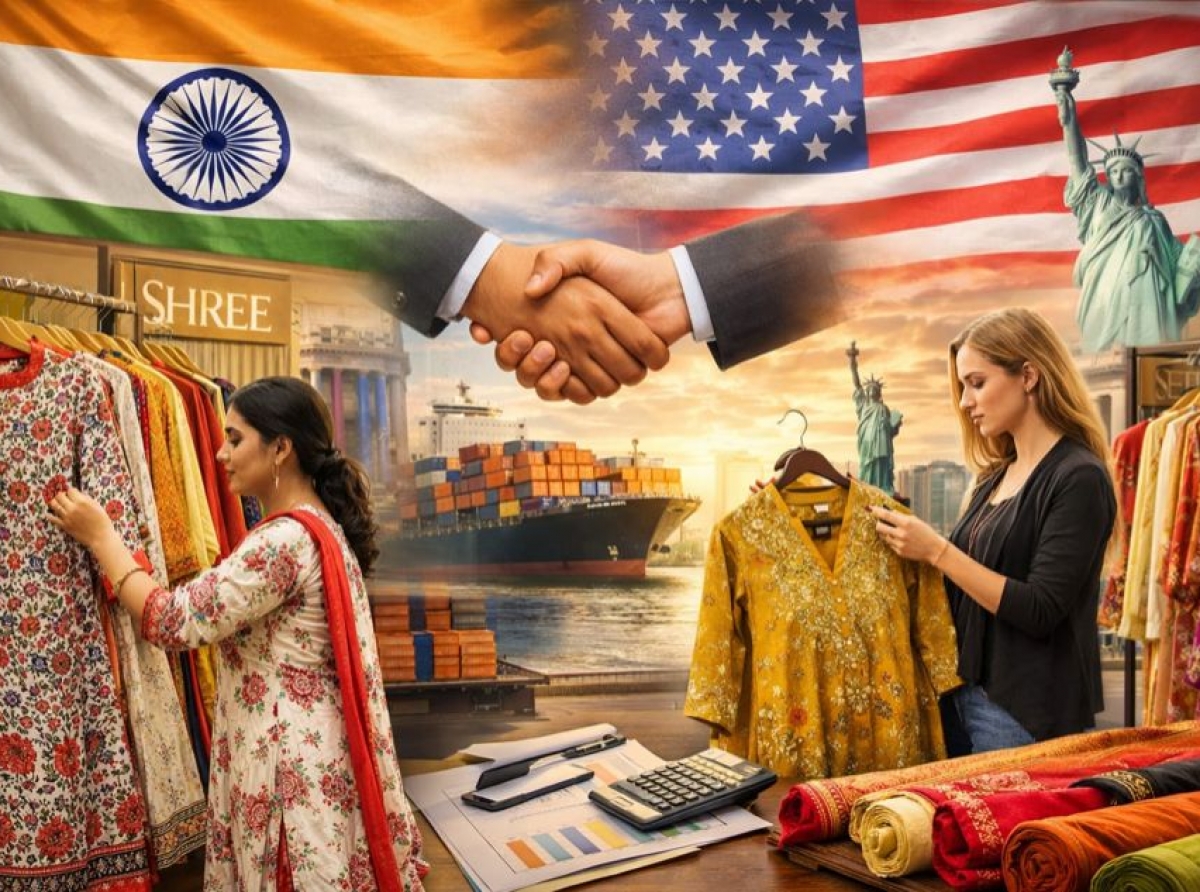
The Indian apparel industry entering into a testing phase starting in 2026.
The FTA framework for future trade negotiations between India and the US will create better export opportunities for Indian garment manufacturers that produce value-added products such as women's ethnic wear and occasion-specific clothing.
Know More
The US remains India’s largest apparel export destination with shipments close to $4–5 billion annually.
Indian apparel lines currently face duties between 10 to 20 percent which could ease and less burdensome through gradual tariff reductions that will enhance their market competitiveness without harming supplier and vendor profit margins.
Much will depend on the final negotiation outcomes and the timeline of implementations.
Read our latest issue
Ethnic Wear Demand Expands Beyond Diaspora
The Indian ethnic wear demand in the US has traditionally been driven by the Indian and South Asian diaspora. The Indian diaspora in the US is estimated at around 4.8 million and weddings and festivals remain key demand drivers.
The industry now experiences a shift because both ethnic and fusion clothing styles have begun to attract more customers.
The North America ethnic wear market is expected to witness the growth between 9-10% annual rate because non-diaspora consumers show interest in craftsmanship, comfort and cultural fashion trends. US retailers such as Anthropologie and Nordstrom have also carried India-inspired assortments, indicating broader lifestyle interest, even if still niche in scale.
FTA Benefits Are More Than Tariffs
Trade access helps, but exporters will need to watch key levers Such as:
• Rules of Origin, which decide what qualifies as “Made in India”.
• Better market access for embellished and occasion-led categories.
• Stronger linkage to compliance and labour transparency norms.
• Sustainability and traceability expectations are becoming the baseline.
• Faster customs clearance and smoother logistics.
• Rising competition pressure from Vietnam and Bangladesh.
Execution Will Decide the Real Winners
For the US market, buyers are looking for reliability, speed, and consistent sizing.
Productivity is the key driver as the US faces a labour crunch, raising energy costs and tighter delivery windows.
The Way Forward
The opportunity for the Indian apparel industry is huge, but the access is just the beginning of the journey.
If an FTA framework takes shape, the next step for the Indian apparel industry is to align its business model with the rules of origin or the “Made in India” label while focusing on the execution of the business model rather than focusing on store-led expansion.
CREDITS: Views shared by Sandeep Kapoor, CMD, SHREE Lifestyle Brand, often referred to in the industry as the “Fabric Guru” for his focus on fabrics and demand trends.










 Get in Touch!
