
India's Apparel, Textile Label Overhaul: Matching global standards for a transparent future
13 December 2025, Mumbai
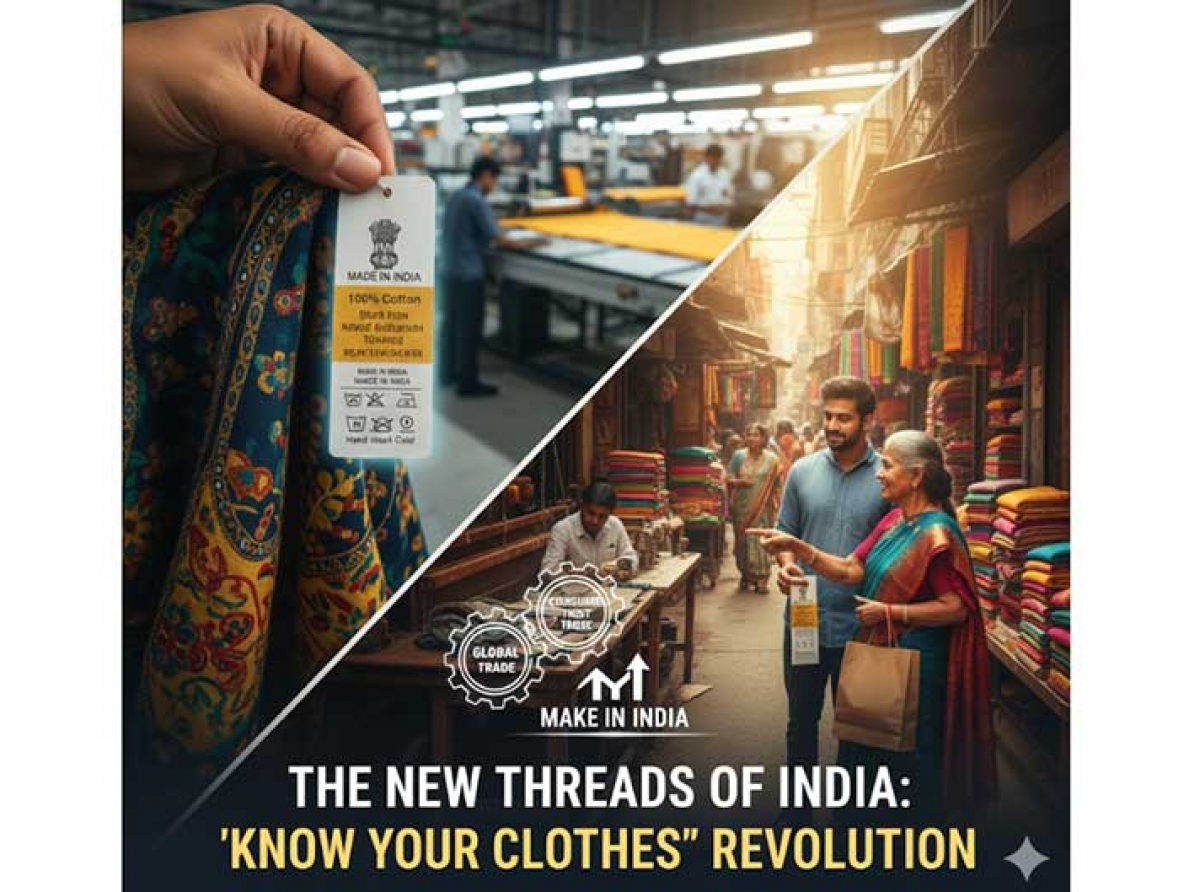
Indian consumers of apparel and home textiles are on the cusp of a major transformation in how they shop, as the government moves to finalize a new, mandatory labeling rule.
This proposed regulation aims to make the disclosure and display of crucial information—including fibre composition, country of origin, and comprehensive wash and care instructions—mandatory for all ready-made garments and made-up articles sold in India.
The move is a strategic step to align India with advanced global practices, enhance consumer protection, and boost the country's textile industry.
Why this now?- The drive for global parity and consumer trust
The push for mandatory labeling is driven by multiple factors, chief among them the need to match global practices and close the information gap for consumers.
Currently, a lack of standardized, mandatory information allows for ambiguity, which can mislead shoppers about a product's true origin or composition; the new system is designed to safeguard against inaccurate or misleading claims, empowering consumers to make informed choices.
Furthermore, the regulation will help "demarcate cheap imported products from the ones locally produced," a crucial step in the context of India's numerous trade agreements. This change supports the domestic textile industry, which generated approximately $175.7 billion in 2024, by ensuring a level playing field.
Finally, experts highlight the essential nature of knowing the fibre content for efficient textile recycling. Clear labeling ensures the cloth is compatible with recycling processes, supporting the textile ministry's action plan to boost the textile waste value chain.
How Does It Help?- Benefits for buyers and businesses
|
Stakeholder |
Key Benefit |
Detail |
|
Consumer |
Informed Purchasing |
Clear details on fibre content, origin, and care allow for selection based on quality, value, and ethical preferences. |
|
Consumer |
Garment Longevity |
Accurate wash and care instructions prevent shrinkage, fading, and damage, prolonging the life of the product and reducing returns. |
|
Domestic Industry |
Fair Competition |
Helps differentiate quality-controlled, locally-made goods from potentially misleading imported alternatives. |
Stakeholder Key Benefit Detail Consumer Informed Purchasing Clear details on fibre content, origin, and care allow for selection based on quality, value, and ethical preferences. Consumer Garment Longevity Accurate wash and care instructions prevent shrinkage, fading, and damage, prolonging the life of the product and reducing returns.
Domestic Industry Fair Competition Helps differentiate quality-controlled, locally-made goods from potentially misleading imported alternatives.
Global Standards: The blueprint for Indian reform
Developed economies, including the United States and the European Union, have robust, mandatory labeling frameworks that India is aiming to emulate.
For Fibre Content, the US (Textile and Wool Acts) requires clear labeling of fibre contents in descending order by percentage, while the EU mandates labeling of main fibre types and their percentages to be easily accessible.
Regarding Care Instructions, while not always strictly mandatory by law in the EU, the use of symbols is highly recommended to avoid liability.
The globally recognized system, GINETEX/ISO 3758, uses five international symbols (washing, bleaching, ironing, dry-cleaning, drying) to communicate care instructions independent of language.
Finally, for Country of Origin, it is mandatory for all imported products in the US, and in the EU, it is required if its omission would mislead the consumer about the product's true origin.
Implementation challenges in India
While the intent is clear, implementing this comprehensive system across India’s vast and complex textile value chain presents several hurdles.
A significant portion of India's textile production is handled by a fragmented, decentralized sector (e.g., power looms and small-scale manufacturers); therefore, implementing stringent, uniform labeling compliance across countless small units will be a massive logistical and regulatory challenge.
Secondly, studies have indicated a lower awareness of comprehensive labeling requirements among smaller retailers and even some consumers, meaning mandatory labeling will require a significant public awareness campaign and extensive training for manufacturers, retailers, and salespeople.
Lastly, Cost of Compliance may be an issue for Small and Medium-sized Enterprises (SMEs) who may face initial financial difficulties in upgrading their processes to accurately test and track fibre content, origin, and ensure permanent, legible attachment of labels
This move marks a crucial step in modernizing the Indian textile industry, promising a future of greater transparency and alignment with global trade standards.











 Get in Touch!
