
Beyond the Generalist: Mastering ‘Niche Segmentation’ for market penetration and high-margin growth in 2026

07 January 2025, Mumbai
The Indian fashion and apparel industry has exited 2025 not just larger, but fundamentally rewired.
The era of the "Generalist Retailer" is in retreat. In its place, a sophisticated, high-margin ecosystem of niche segments has emerged.
As we cross the threshold into the 2026 Outlook, the narrative is dominated by a clear mandate: master the specifics or lose the floor space. Total domestic apparel consumption is on track to hit $135 billion by 2030, as reported by BCG, but the real story lies in the 12% CAGR of branded niche segments compared to the stagnant performance of unorganized mass-market wear. From technical engineering in plus-size activewear to "Inventory-as-a-Service," 2026 is the year of the Niche & Specialist.
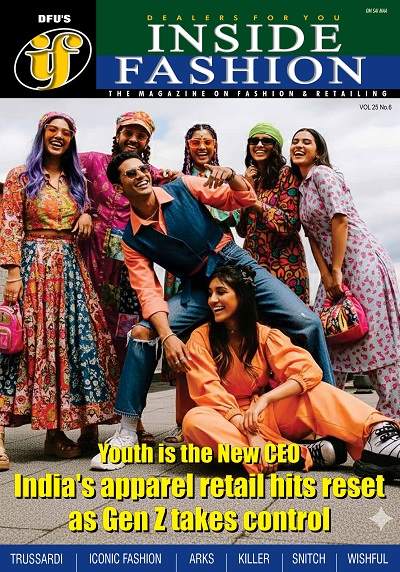
Read our latest issue
The $11 Billion Ethnicwear Market Behavioral Shift: From Ceremony to Convenience
The 2025 Wrap confirmed that "Everyday Ethnic" has reached peak maturity. While brands like FabIndia and BIBA successfully cemented the kurta as the corporate uniform, 2026 marks a fundamental psychological shift: the consumer no longer views ethnic wear as a "labor-intensive" choice. The Indian women’s ethnic wear market, expanding at an 8.4% CAGR is pivoting toward a "Plug-and-Play" model. The traditional behavioral barrier; the "fussy" nature of draping and maintenance, has been dismantled by a workforce that demands cultural identity without the time-tax.
Market dynamics & buying strategy: We are witnessing the industrial "death of the complex ensemble." 2026 procurement cycles are dominated by "The Structured Drape", specifically Saree-Gowns and pre-stitched sets that can be donned in under sixty seconds. This behavioral shift from "ceremony" to "convenience" is most visible in the "Wedding Guest" economy, which is currently outpacing core bridal growth by 3x.
The 2026 "strike point" isn't heavy heritage, but high-glam agility. The demand has shifted toward lightweight, high-impact materials. By leveraging Bead-Drop Tassel Hems and Digital Sequin fabrics that replicate high-end luxury at 40% of the production cost, manufacturers are enabling retailers to capture the massive volume of social-attendee orders who prioritize "The Look" over the "Labor."
From Body Positivity to Performance Priority: The $18 bn Plus-Size behavioral shift
The 2025 Wrap confirmed that plus-size apparel has decisively migrated from "hidden tabs" on e-commerce sites to premium, high-traffic retail floor space.
However, as we enter the 2026 Outlook, the industry is witnessing a fundamental behavioral shift: the plus-size consumer is no longer just looking for "coverage", they are demanding high-performance parity. This segment is projected to reach $18.29 billion by 2032 with a robust 6.8% CAGR, driven by a workforce that refuses to compromise on style or technical functionality.
Market dynamics & precision sizing: The primary hurdle remains the 20% "size penalty", the overhead of higher fabric consumption and complex pattern grading.
In 2026, the solution is "Curve-Tech." Forward-thinking brands are moving away from standard grading and deploying AI-driven sizing and Virtual 3D Try-Ons. These tools are critical for profitability, as they target the 30% return rates that have historically eroded margins.
Business strike point: The breakout sub-sector for 2026 is Inclusive Athleisure. As fitness awareness penetrates Tier II and III cities, the demand for high-performance, inclusive-sized gym wear is at an all-time high.
Manufacturers specializing in high-elastane recovery fabrics and reinforced seam construction are seeing record procurement volumes. The behavioral shift here is significant: plus-size consumers are transitioning from "casual-only" buyers to active lifestyle participants, making technical, moisture-wicking, and supportive activewear a top-tier procurement priority for 2026.
Maternity & Postpartum: The rise of the "Transition Wardrobe"
Maternity wear surpassed a $2.1 billion revenue milestone in 2025. The 2026 focus is shifting "Beyond the Bump" to "Nursing-to-Normal" apparel, garments engineered with hidden zippers and high-stretch fabrics designed to remain in a woman's rotation for 12–24 months post-delivery.
Market dynamics & fiber Integrity: The modern mother is prioritizing longevity and health. In the 2026 B2B cycle, "Chemical-Free" is the mandatory standard.
Buyers are aggressively sourcing GOTS-certified organic cotton and bamboo-blend textiles for innerwear and loungewear. Suppliers who can provide verified certifications for non-toxic dyes and sustainable fibers are commanding higher premiums as the segment professionalizes.
Modest Fashion: Global style fusion moves from community-specific silos
Modest fashion has moved from community-specific silos into a global style-driven movement valued at $90 billion
Market Dynamics & Global Trends: The 2026 Outlook is defined by Hijab/Abaya Fusion, where traditional modesty meets high-street aesthetics like oversized blazers and high-neck midis. The consumer, primarily Gen Z and Millennials, is looking for "Style-driven Modesty." For manufacturers, this means a surge in demand for breathable, high-opacity technical fabrics that provide coverage without bulk, catering to a demographic that blends cultural values with global fashion trends.
Workwear: The "Power-Casual" transition and technical knits
The traditional workwear sector, valued at $19.2 billion, is facing a structural shift. The 2025 return-to-office mandates did not bring back the rigid suit. Instead, 2026 is the year of "Power-Casual";a blend of authority and agility dominated by Cropped Blazers and High-Gauge Knits.
Business strategy: The 2026 professional demands garments that transition from a board meeting to a social setting. Industry is changing to Hybrid Textiles, materials that offer the structure of a woven with the comfort of a knit. This "Workleisure" sub-segment is seeing a 12% CAGR, forcing sourcing agents to prioritize wrinkle-resistant, travel-friendly blends for the modern "Digital Nomad" professional.
Rental Occasion Wear: Scaling through "Inventory-as-a-Service" (IaaS)
Inflationary pressures and Gen Z’s "access over ownership" mindset have accelerated the Luxury Rental market, projected to reach $6.7 billion by 2031.
Market dynamics & the circular economy: Traditional ethnic retailers are no longer viewing rental as a competitor. By 2026, flagship stores are integrating "Buy-back" or "Rental" sections to monetize existing inventory repeatedly. This has created a high-growth business vertical: Maintenance Logistics.
The business of specialized high-end dry cleaning, precision repair, and refurbishment is becoming the infrastructure for the rental fashion ecosystem.
Niche Segment Comparison: 2025 Performance vs. 2026 Projection
|
Niche Sector |
2025 Market Status |
2026 Strategic Strike Point |
Projected Growth (%) |
|
Ethnic Wear |
Occasion & Office Basics |
Fusion Co-ords & Pre-draped Sarees |
22% |
|
Plus Size |
Mass Market (Economy) |
Premium & Luxury Inclusive Sizing |
35% |
|
Maternity |
Pregnancy Basics |
Postpartum & Nursing Tech-wear |
18% |
|
Modest Fashion |
Community-specific |
Global Style-driven Fusion |
15% |
|
Workwear |
Formal Rigid Blazers |
"Power-Casual" (Cropped & Knits) |
12% |
C-Suite & Strategic Outlook: The 2026 mandate
From a leadership perspective, 2026 is defined by "Agile Sourcing." CEOs of top apparel houses are abandoning massive, inflexible seasonal buys in favor of "Demand-Sensing", using real-time data to trigger small-batch, niche production. The goal is to maximize full-price sell-through by catering to specific life stages and body types.
"Scale is no longer just about volume; it’s about precision," notes a leading retail analyst. Strategic investment is currently flowing into On-Demand Manufacturing and Digital Twins to reduce pre-production waste. In 2026, the competitive edge belongs to the brand that can synchronize its supply chain with the hyper-specific identity shifts of the Indian consumer.
Editor’s Conclusion: The year of the specialisation
As we analyze the 2025 Wrap, it is clear that the "one-size-fits-all" retail strategy has failed to keep pace with a fragmented market. The 2026 Outlook confirms that profitability now lives in the margins of niche expertise.
Whether it is the technical engineering of a plus-size sports bra or the chemical purity of a nursing gown, the industry is demanding a higher level of intentionality. For the stakeholders;manufacturers, wholesalers, and sourcing agents, the path to growth is through specialization. 2026 is the year where the "Niche" becomes the "Mainstream."










 Get in Touch!
