
Luxury’s New Geography: How Chanel is anchoring its future in India
18 March 2026, Mumbai
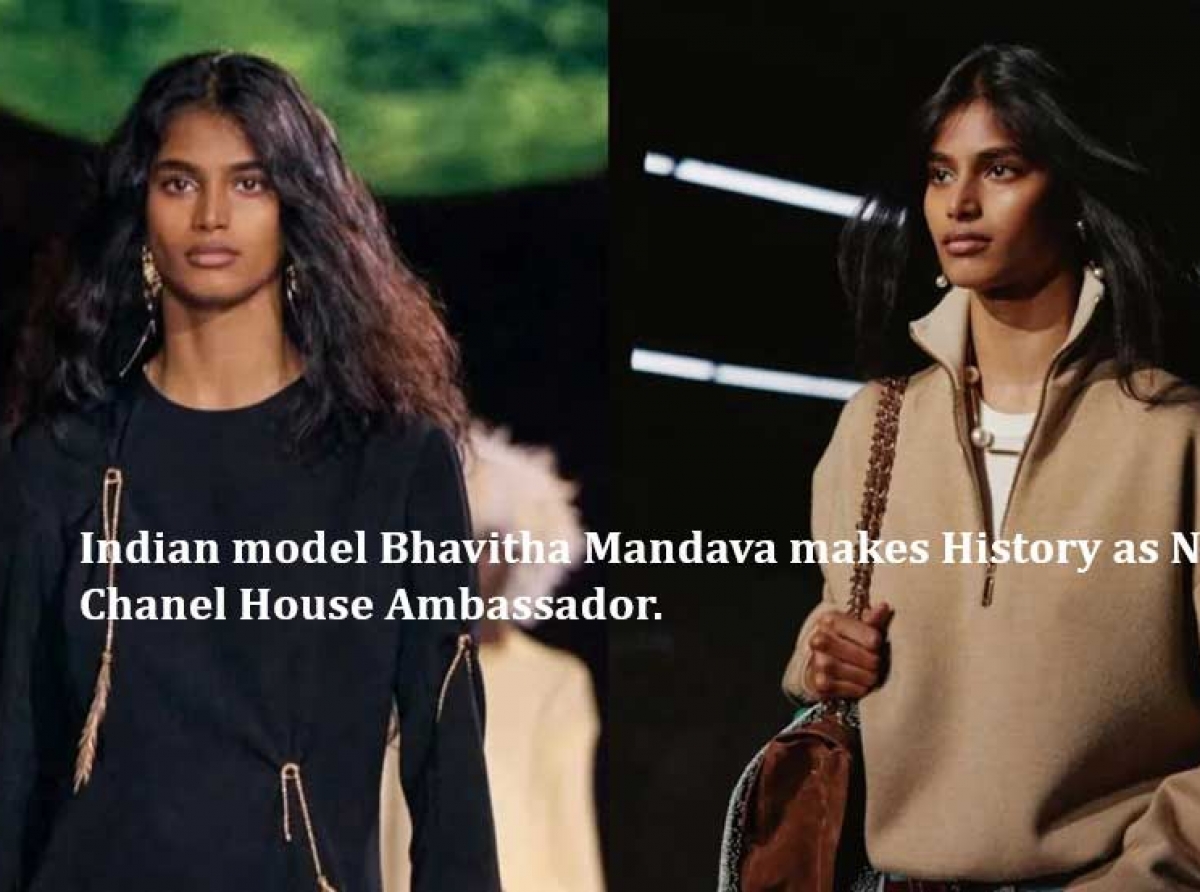
The appointment of Bhavitha Mandava as a House Ambassador for Chanel is an important moment in the evolving relationship between global luxury houses and India. Far from a routine ambassadorial selection, Mandava’s presence on the runway at the Chanel Métiers d’Art 2026 show is a representation of how luxury maisons interpret cultural influence in the modern global economy.
Luxury brands have long relied on ambassadors to personify their values, but the criteria for such representation are shifting. Cultural influence, digital resonance, and regional authenticity are now as important as celebrity appeal. Mandava’s appointment reflects this transformation, positioning India not simply as a consumer market but as an essential contributor to the creative and cultural ecosystem of global luxury.
For Chanel, the move signals a broader attempt to weave Indian narratives into the heritage-driven identity of the brand. As luxury markets fragment and consumer identities become more localized, brands are recognizing that their long-term relevance depends on their ability to resonate with regional cultural contexts. In this environment, ambassadors like Mandava function as bridges between centuries-old European craftsmanship and the emerging aspirations of new luxury consumers.
India’s growing importance
Luxury houses historically viewed India primarily through the lens of untapped retail potential. However, recent economic trends have altered this perception significantly. India’s luxury market is projected to cross the $14 billion threshold by 2026, making it one of the fastest-growing high-end consumer markets globally.
More importantly, the drivers of luxury growth in India differ from those in mature Western markets. A rapidly expanding affluent middle class, strong digital engagement with global fashion culture, and a demographic profile dominated by younger consumers are creating a unique environment for luxury brands.
The shifting growth dynamics across global regions highlight why luxury houses are reworking their priorities.
Table: Global growth dynamics
|
Market region |
Projected growth (2026) |
Primary growth driver |
|
India |
10.50% |
Premiumization & Youth Aspiration |
|
China |
2.80% |
Domestic Brand Loyalty |
|
Europe |
3.20% |
Heritage & Tourism Spend |
|
US |
4.10% |
Wealth Effect & Equity Markets |
The data reveals a striking difference between India and traditional luxury strongholds. With projected growth of 10.5 per cent, India is growing at more than double the rate of most established markets. This increase is largely due to premiumization, the shift of aspirational consumers toward higher-value products and the cultural influence of a digitally connected youth population.
In contrast, China’s luxury growth is stabilizing as domestic brands gain traction and consumer nationalism reshapes purchasing decisions. Europe continues to rely heavily on tourism-driven luxury spending, while the US remains closely tied to fluctuations in financial markets and wealth creation cycles.
For luxury houses such as Chanel, these dynamics underscore the need for deeper engagement with India. The market offers not only growth potential but also cultural momentum capable of influencing global brand narratives.
Cultural integration becomes a competitive advantage
Beyond pure economic metrics, luxury houses are increasingly pursuing strategies that integrate local culture into global brand storytelling. This shift reflects the realization that cultural authenticity can drive both consumer engagement and long-term brand equity.
A notable early example of this approach emerged through Dior’s collaboration with the Chanakya School of Craft in Mumbai. By incorporating Indian embroidery traditions and artisanal techniques into global runway collections, Dior reframed India’s role in the luxury supply chain from a source of craftsmanship to a visible creative partner.
The collaboration was widely viewed as a milestone in redefining the narrative around Indian artisanship. Rather than presenting these skills as peripheral production capabilities, the partnership elevated them as central components of contemporary fashion design. In doing so, Dior demonstrated how luxury houses can leverage regional craft traditions to strengthen their global cultural relevance.
Runway narratives and cross-cultural creativity
The strategy of cultural integration has also begun to reshape runway presentations themselves. A recent illustration came from Louis Vuitton’s Spring/Summer 2026 menswear show, led by creative director Pharrell Williams. The presentation incorporated visual references inspired by the traditional Indian board game Moksha Patam, interpreted in collaboration with architect Bijoy Jain.
This creative collaboration transformed the runway into an immersive narrative environment that linked luxury fashion with philosophical symbolism drawn from Indian culture. Rather than relying solely on product display, the show emphasized storytelling as a tool for cultural connection.
Such initiatives highlight a broader shift in the luxury sector: brands are moving beyond aesthetic borrowing toward deeper collaborative engagement with regional cultural traditions. For companies competing in a crowded global luxury landscape, cultural intelligence is becoming an essential capability.
Chanel’s long-term investment philosophy
Chanel’s expansion of its Indian cultural footprint is occurring during a period of cautious recovery for the global luxury industry. Macroeconomic uncertainty and geopolitical tensions affected consumer sentiment in 2025, prompting many brands to reassess growth strategies.
Unlike publicly listed luxury conglomerates that face constant shareholder pressure, Chanel’s privately held structure allows it to pursue longer-term strategic investments. The company has historically prioritized brand equity, craftsmanship, and experiential retail over rapid sales expansion.
With annual revenue exceeding $18 billion, Chanel continues to reinvest heavily in its creative ecosystem, client engagement initiatives, and boutique networks. In emerging markets such as India, this strategy is particularly relevant because luxury consumption remains deeply tied to experiential discovery.
Indian consumers, especially first-generation luxury buyers, often prefer physical retail environments that offer immersive brand storytelling. Chanel’s boutique strategy increasingly focuses on creating sensory retail spaces that combine architecture, craftsmanship, and personalized service.
Experiential retail and the Indian consumer
The emphasis on experiential retail aligns closely with the behavioral patterns of Indian luxury shoppers. While e-commerce has increased rapidly across the broader retail sector, high-end consumers still value the tactile and experiential elements associated with boutique shopping.
Luxury stores in major Indian cities are evolving into cultural spaces rather than purely transactional environments. Art installations, curated product narratives, and personalized client interactions are becoming central components of the retail experience. For Chanel, investing in such experiential formats enables the brand to reinforce its heritage while adapting to the expectations of a new generation of luxury consumers.
Founded by Coco Chanel, Chanel remains one of the most influential independent luxury houses in the world. The brand’s portfolio spans haute couture, ready-to-wear, fragrances, fine jewelry, and accessories. Unlike competitors that have been absorbed into large conglomerates, Chanel’s private ownership structure has enabled it to maintain a consistent long-term vision. This independence has been particularly valuable in periods of market volatility, allowing the company to prioritize brand heritage and craftsmanship over short-term financial targets.
As India’s luxury market grows, Chanel’s decision to integrate Indian cultural figures such as Bhavitha Mandava into its global identity suggests a deeper change. The brand is not merely expanding its retail footprint in the country; it is embedding India within the cultural architecture of global luxury itself. In an industry where heritage and innovation must constantly coexist, this form of cultural anchoring may ultimately define the next phase of luxury’s global evolution.









 Get in Touch!
