
All Stories
24th August 2021, Mumbai:
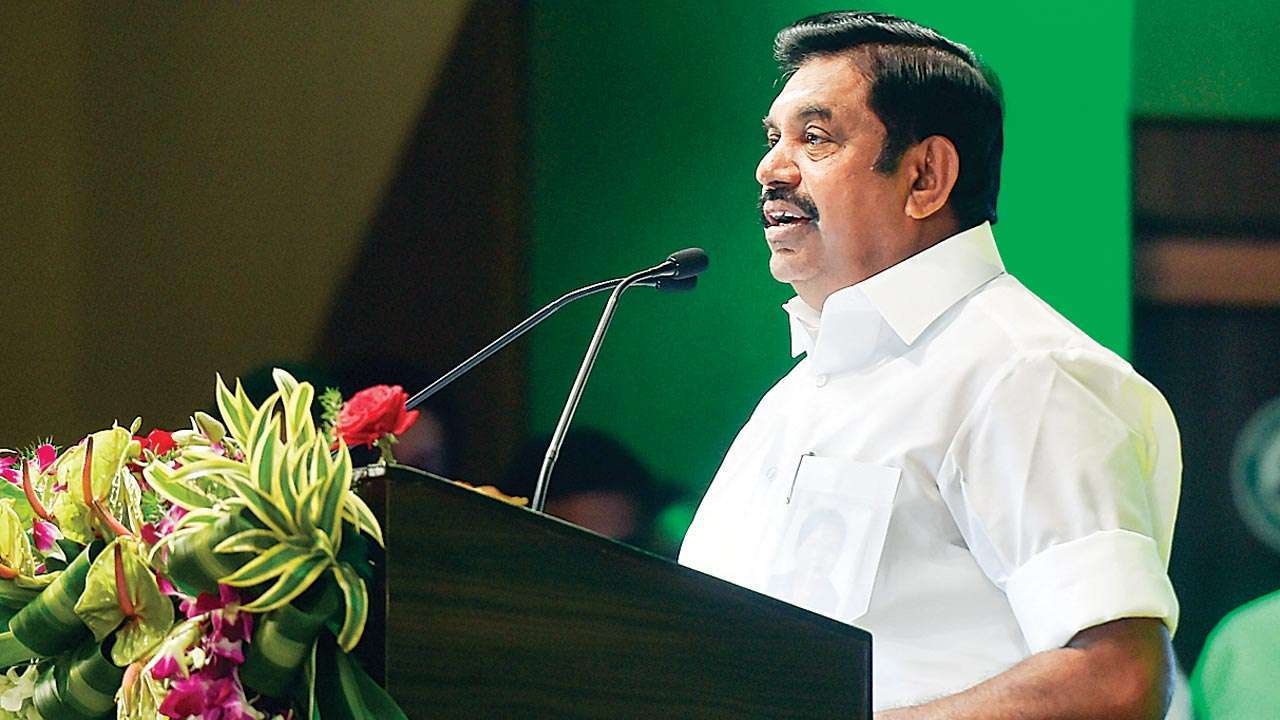
As the state prepares to reopen next month, the Tamil Nadu government has allowed stores and businesses in Coimbatore to stay open until 10 p.m.
Tamil Nadu is lifting its retail restrictions after months of lockdown due to high rates of coronavirus infections and fatalities, a decision that will be welcomed by shops and companies. The state administration in Coimbatore has declared that, in addition to increasing ordinary business hours, theatres and movie halls would be allowed to reopen at 50% occupancy on August 27 after being closed for over four months, according to the Press Trust of India.
https://www.linkedin.com/feed/update/urn:li:activity:6835857749474103296
The government has created 24-hour immunization centers at medical institutions and government hospitals in anticipation of looser retail restrictions and to reduce Covid-19 instances. According to the Times of India, the government stated on Monday that these centers, which are available at all hours of the day and night, are intended to boost the state's poor immunization rate. For the 11th day in a row, Covid-19 instances have been reported in Tamil Nadu. With nearly 34,700 deaths, the state has been one of the worst-hit by the epidemic in India.
YouTube Channel https://www.youtube.com/c/DFUPublications/videos
TOP 5:
- India's clothing exports increased to $7.48 billion in the first half of this year, thanks to a massive recovery in major destinations
- The ‘ABOF' of Indian clothing behemoth Aditya Birla Fashion and Retail is linked to e-commerce platforms
- Arvind Fashions receives Rs 439 crore from promoters and investors
- Tirupur's clothing industry is concerned about container scarcity and lockdowns
- The government has formed a council to recommend measures to increase handloom production and exports
.png)
21st August 2021, Mumbai:
Piyush Goyal, Minister of Textiles, Commerce, and Industry, met with the Export Promotion Councils (EPCs). The conference was called to get feedback on the sectors' export performance as well as to get comments on a variety of topics.
This meeting was attended by the chairmen and heads of about 35 EPCs, commodity boards, and senior government officials. The problem of rate enhancements under the Remission of Duties and Taxes on Exported Products (RoDTEP) program was highlighted by Raj Kumar Malhotra, Chairman of EPCH.
They asked the Minister to intervene because handicrafts exporters, who previously received higher MEIS rates, now factor in the MEIS incentive in their pricing, and low RoDTEP rates will make their products uncompetitive. He emphasized the need of increasing RoDTEP rates for the handicrafts industry, citing the fact that the handicrafts sector employs 7 million craftsmen, and every rise or drop in exports has an impact on their livelihood.
He also brought up issues such as the reinstatement of duty-free imports of essential handicraft embellishments, trimmings, tools, and consumables; the reinstatement of MAI provisions for the opening of showrooms, warehouses, and marketing offices abroad, as well as display in international department stores; high container charges levied by shipping lines; and policy framework for B2B e-commerce, among others.
YouTube Channel https://www.youtube.com/c/DFUPublications/videos

TOP 5:
- Cotton Corporation of India Ltd (CCI) market intervention meaningless till cotton prices rule firm
- Flipkart, an Indian e-commerce behemoth, has created 4,000 new positions
- Rs. 1,100 crore investment! SVP Global Ventures, an Indian textile company, has opened a facility in Oman
- In the current fiscal year, Indian textile exporters are expected to expand by 20-25 percent, according to ICRA
- In July, apparel sales in India were at 63 percent of pre-pandemic levels

19th August 2021, Mumbai:
Cotton Corporation of India Ltd (CCI) state-run firm although is keeping a close tab on the market dynamics staying prepared for MSP operations at the 1st opportunity.
What contributes to this fragile demand supply equation
WATCH: https://www.youtube.com/watch?v=G2blP2du9aE
Sustained demand from mills, depleting & dwindling local stocks, surprisingly higher & sustained than exports traction on the back of global trade growth and an consistent decline in hectarage area being currently sown under the cotton crop are clearly factors leading to cotton prices buoyancy & bullishness.

https://www.linkedin.com/feed/update/urn:li:activity:6834005659743252480
TOP 5:
- Delhi HC to implement order stalling Future Group Deal
- India’s e-commerce market to grow to $38 billion in FY21: Bain & Co estimates
- Wendell Rodricks launches new collection at COMO Designers’ Collective
- Happenstance launches new national campaign for 'Super Trios collection'
- Louis Philippe (Aditya Birla Fashion and Retail) launches new premium casual collection
.png)
23rd August 2021, Mumbai:
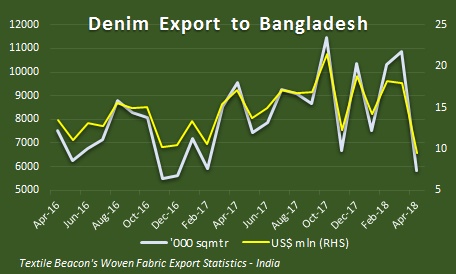
Despite a drop in domestic sales as a result of the second wave, the export market has provided a much-needed boost to denim fabric sales. Denim sales and production at Gujarat mills have increased as a result of continuous export demand.
Gujarat is justifiably known as the denim capital of the country since it houses around 60% of the country's total denim production capacity. "Demand from the foreign market, which includes nations such as the United States and Europe, has substantially improved, and orders have begun to stream in. Export orders, in fact, were a lifeline for denim manufacturers, as they helped compensate for a drop in domestic demand from April to June 2021, when the second wave of Covid-19 was at its peak and a slew of restrictions were imposed to keep the spread in check "Jindal Worldwide Limited's head of corporate finance and strategy, Gaurav Davida, stated.
Despite the fact that denim producers saw strong growth in the first quarter, owing to a low base from the previous fiscal year's same quarter, the output is gradually returning to pre-Covid levels. "Manufacturers are also seeing higher price realizations, which is helping to offset margin losses. This is due to a rise in demand, with merchants in major regions such as Europe, the United Kingdom, and the United States reporting a double-digit increase in both offline and online sales "a source in the sector stated. Clearly, major denim fabric manufacturers saw a significant increase in revenue in the first quarter of 2021-22.
https://www.linkedin.com/feed/update/urn:li:activity:6835573453257531392
Arvind Limited, for example, recorded a 186 percent rise in denim revenues in the first quarter, going from Rs 145 crore in the first quarter of 2020-21 to Rs 416 crore in the first quarter of 2021-22. Overall volumes increased 2.8-fold year over year, according to the company's investor presentation. "We achieved at least 80% of our pre-Covid level of revenues from denim sales in the April to June quarter of 2021-22," Davda continued, "thanks to the higher realization from exports, we registered a revenue of at least Rs 500 crore during this time." Manufacturers all around the globe have been searching for alternatives to China since the Covid-19 epidemic.
Gujarat, as a denim manufacturing center, stands to benefit, according to denim manufacturers. According to P R Roy, a denim expert, "Given its huge manufacturing capacity, China is a major participant. However, following the recent US and European sanctions on China's Xijiang province - a textile manufacturing powerhouse – based on reports of human rights violations, companies have moved their focus to India, and specifically Gujarat, for denim sourcing." As a result, Gujarati denim manufacturers have begun to receive more export orders.
TOP 5:
- Indian clothing exporters are delighted about the positive momentum surrounding FTAs
- EPCs asks the Indian government to increase the tariffs under the RoDTEP plan
- Shahi Exports, in collaboration with AMHSSC and Haldiram, supports a skill development program in India
- Shree to foray into the ready-to-stitch category, plans more retail expansion
- Gujarat's textile industry anticipates more exports
.png)
19th August 2021, Mumbai:
Textile exporters predict an increase in order volumes as a result of the revised rates announced by the Centre under the Rebate on Duties and Taxes on Export Products (RoDTEP) program. According to the revised rates, RoDTEP offers a 2.5 percent to 4.5 percent incentive on the export of various types of yarn and textiles.
Despite the fact that procurement price limitations have been set in order to qualify for the benefit, textile exporters claim the refund will significantly boost their cost competitiveness.
WATCH: https://www.youtube.com/watch?v=mRSKhp9xNeA
“One of the biggest problems Indian exporters confront is price competition from textile manufacturers in Vietnam and Bangladesh. Both of these nations have FTAs with European and other markets, providing them a significant advantage over Indian manufacturing. This is especially true for garments and made-ups, where the government's withdrawal of the Merchandise Export Incentive Scheme (MEIS) made it impossible for Indian textile manufacturers to remain cost-competitive, according to Chintan Thaker, head of Assocham – Gujarat state council.

TOP 5:
- Cotton Corporation of India Ltd (CCI) market intervention meaningless till cotton prices rule firm
- Flipkart, an Indian e-commerce behemoth, has created 4,000 new positions
- Rs. 1,100 crore investment! SVP Global Ventures, an Indian textile company, has opened a facility in Oman
- In the current fiscal year, Indian textile exporters are expected to expand by 20-25 percent, according to ICRA
- In July, apparel sales in India were at 63 percent of pre-pandemic levels
.png)
18th August 2021, Mumbai:
SVP Global Ventures, a leading global cotton yarn producer, has begun commercial operations at its massive textile factory in Oman. In Oman's Sohar Free Trade Zone, the Group has spent US $ 150 million (about Rs. 1,100 crores) in the installation of 1.5 lakh spindles and 3,500 rotors.
The facility is anticipated to achieve full capacity next month and contribute significantly to the company's overall income. SVP Global is an approved supplier for a number of well-known brands, including IKEA and Zara.
SVP Group, founded in 1898 by Shri Vallabh Pittie, specializes in the production of polyester, polyester & cotton mix, and 100% cotton yarn at three state-of-the-art manufacturing facilities in Jhalawar (Rajasthan), Ramnad (Coimbatore), and Sohar (Rajasthan) (Oman). This extension will provide long-term strategic operational and logistical benefits. It provides 100% foreign ownership, a cheap cost of capital, and lower electricity costs, in addition to a 25-year corporation tax break. In comparison to India's domestic market, power costs are 40% cheaper.
Oman also has FTAs with the United States, Turkey, and a number of other nations. It also has zero import and re-export tariffs. The company's overall operational capacity has grown to 4 lakh spindles and 5,900 rotors with the completion of the expansion at Sohar. “The robust demand for high-margin combed compact cotton yarn, along with sales off-take agreements, will allow us to fully use the expanded capabilities and add value for our stakeholders,” says the company. Chirag Pittie, the company's Director, stated, "We have a mission to be the world's top integrated textile producer."
https://www.linkedin.com/feed/update/urn:li:activity:6833755028004646912
“Our Group is now poised to venture into the full value chain of textile,” stated Major Gen OP Gulia, SM, VSM (Retd.). The company's order book presently stands at Rs. 5,000 crore, which is enough to cover income for the next 2-3 years.” It's worth noting that the company's financials for the first quarter of FY22 were strong, with net sales of Rs. 412 crore, up over 300 percent year on year, and a net profit of Rs. 39 crore (PAT margin of 9.5 percent). The firm recorded a total income of Rs. 1,422 crore and profit after tax of Rs. 25 crores for FY21. The firm claims to be among the top 2% of Indian manufacturers, with technology less than 5 years old and the industry's maximum production of 153-154 grams per spindle each shift.

TOP 5:
- Louis Philippe launches new premium casual collection
- Skechers’ new Arch Fit range offers ultimate comfort for men and women
- Dr A Sakthivel, President, FIEO HAILS THE ROSCTL SUPPORT OF THE APPAREL SECTOR
- Handlooms from India are being pushed! There are ten additional Design Resource Centers in the works
- The Indian start-up ecosystem has the ability to transform the country into a center for creativity and invention: Piyush Goyal is an Indian businessman
.png)
21th August 2021, Mumbai:
The government said on Friday that it has formed an eight-member committee to formulate a plan for tripling handloom output and quadrupling exports in next three years. Sunil Sethi, Chairman of the Fashion Design Council of India (FDCI), will lead the group, which will give its final report in 45 days.
The committee's mandate includes developing a strategy and policy framework for increasing output and enhancing the quality of handloom products, according to a statement from the textiles ministry. The panel would also recommend strategies for handloom weaver agencies to collaborate with designers, buyers, institutions, organizations, and exporters, as well as steps to double exports.
https://www.linkedin.com/feed/update/urn:li:activity:6834825797807730689
It would also recommend strategies to improve product marketing and input supplies (raw materials, credit, technological upgrades, skilling, and designs), according to the report. "The committee shall provide its preliminary recommendations within 30 days of its formation, and its final report within 45 days," it said. Handloom output must be quadrupled from its current level of about Rs 60,000 crore in three years, and exports must increase from Rs 2,500 crore to Rs 10,000 crore, according to Textiles Minister Piyush Goyal.

TOP 5:
- Cotton Corporation of India Ltd (CCI) market intervention meaningless till cotton prices rule firm
- Flipkart, an Indian e-commerce behemoth, has created 4,000 new positions
- Rs. 1,100 crore investment! SVP Global Ventures, an Indian textile company, has opened a facility in Oman
- In the current fiscal year, Indian textile exporters are expected to expand by 20-25 percent, according to ICRA
- In July, apparel sales in India were at 63 percent of pre-pandemic levels
.png)
19th August 2021, Mumbai:
Various textile trade associations have expressed gratitude to the government for announcing the rates of the Remission of Duties and Taxes on Exported Products (RoDTEP) program, which has long been a desire of Indian textile exporters who were not covered by the RoSTCL scheme.
According to T. Rajkumar, Chairman of the Confederation of Indian Textile Industry (CITI), textile exports have deteriorated in recent years due to the lack of duty-free access.
He went on to say that the withdrawal of certain export benefits for yarns, fabrics, and other products, such as incremental export incentives, focus product and focus market export incentives, interest subvention, and so on, has pushed India to sixth place in the global textile trade from second place. He went on to say that the Indian textile sector was paying embedded taxes of 6-8 percent on cotton yarn and cotton fabric goods and that these taxes were never returned to them.
“The program would put Indian textile exporters on a level playing field with foreign rivals, allowing them to expand their market share and making the Indian textile sector Atmanirbhar in every sense,” he added. It will go a long way, according to Manoj Kumar Patodia, Chairman of TEXPROCIL, not only in guaranteeing the healthy growth of the value chain but also in enhancing India's competitiveness in international markets. He also mentioned that the RoDTEP Rates will help clusters manufacture raw materials, provide completed items, create jobs, and realize the goal of an "Atmanirbhar Bharat."
YouTube Channel https://www.youtube.com/c/DFUPublications/videos

TOP 5:
- Cotton Corporation of India Ltd (CCI) market intervention meaningless till cotton prices rule firm
- Flipkart, an Indian e-commerce behemoth, has created 4,000 new positions
- Rs. 1,100 crore investment! SVP Global Ventures, an Indian textile company, has opened a facility in Oman
- In the current fiscal year, Indian textile exporters are expected to expand by 20-25 percent, according to ICRA
- In July, apparel sales in India were at 63 percent of pre-pandemic levels

17th August 2021, Mumbai:
What deals a blow to Furture Group that Delhi HC will execute the single judge order stalling FRL on 17th Aug observing that it is looking at implementing the single-judge order restraining Future Retail (FRL) from proceeding with the ongoing deal with a business consideration of Rs 24,713-crore to sell its business interest to Reliance Retail.
It is important to re-iterate that the aforementioned case is been objected & argued vehemently to by US-based e-tailer biggie Amazon, shall it not to get no stay is from the H'ble Supreme Court in four(4) weeks.
Justice Suresh Kumar Kait, is hearing Amazon India's plea for enforcement of the award by Singapore's Emergency Arbitrator (EA) restraining FRL from moving ahead with the deal, said contextually in case the stay is not the outcome from the apex court/ SC, there will be no headroom available but to enforce the order passed by Justice JRMidha on March 18. "So the writing is clear on the wall, Either get a stay within 2-3 weeks on March 18 order or adhere to with the order to avoid inevitability. This court is completely run out of options," the judge said reports, PTI

https://www.linkedin.com/feed/update/urn:li:activity:6833743375489916928
TOP 5:
- Louis Philippe launches new premium casual collection
- Skechers’ new Arch Fit range offers ultimate comfort for men and women
- Dr A Sakthivel, President, FIEO HAILS THE ROSCTL SUPPORT OF THE APPAREL SECTOR
- Handlooms from India are being pushed! There are ten additional Design Resource Centers in the works
- The Indian start-up ecosystem has the ability to transform the country into a center for creativity and invention: Piyush Goyal is an Indian businessman
.png)
21st August 2021, Mumbai:
The apparel industry is pleased with Minister of Commerce, Industry, and Textiles Piyush Goyal's announcement that there is "very positive momentum" in terms of FTAs with the United Kingdom, the European Union, Australia, Canada, the United Arab Emirates, Israel, and the Gulf Cooperation Council countries.
“We are delighted to hear that negotiations on FTAs with several countries are proceeding quickly,” said Dr. A. Sakthivel, Chairman of the Apparel Export Promotion Council (AEPC). We've been pleading with the government to expedite trade agreements.
In several areas, FTAs would eliminate tariff disadvantages for Indian clothing. Early Harvest Agreements with the United Kingdom and Australia may help India increase its clothing exports to these countries in the next three years.”
He stated that the government is making serious efforts to reach the objective of $400 billion in merchandise exports for the current fiscal year, with both the Prime Minister and the Commerce Minister taking the lead in having rapid meetings with Export Promotion Councils (EPCs).
“With the proactive leadership given by the present Government, we will not only meet the ambitious objective of US $ 400 billion this year, but we will also achieve the 2030 export target of US $ 2 trillion, with equal contributions from product and services exports,” he added.
Dr. A.Sakthivel also discussed the Interest Equalisation Scheme (IES), raw material export difficulties, the prolongation of the export requirement period till March 31, 2022, freight support, RoDTEP issues, FTAs, and banking challenges that garment exporters encounter.

TOP 5:
- Cotton Corporation of India Ltd (CCI) market intervention meaningless till cotton prices rule firm
- Flipkart, an Indian e-commerce behemoth, has created 4,000 new positions
- Rs. 1,100 crore investment! SVP Global Ventures, an Indian textile company, has opened a facility in Oman
- In the current fiscal year, Indian textile exporters are expected to expand by 20-25 percent, according to ICRA
- In July, apparel sales in India were at 63 percent of pre-pandemic levels
.jpeg)
19th August 2021, Mumbai:
Vardhman Textiles, a major textile company situated in Ludhiana, and Christian Medical College, Ludhiana, have inked an agreement to renovate and upgrade hospital infrastructure in order to give better healthcare to patients.
Dr. William Bhatti, Director of Christian Medical College Society, and SP Oswal, CMD of Vardhman Textiles, signed a Memorandum of Understanding. CMC Hospital's Dr. Joseph John and Director DK Sindwani, as well as Vikas Kumar, VP-HR from Vardhman, were in attendance.
Vardhman will support the construction of a state-of-the-art Vardhman Multi-Speciality Ward, Vardhman Bone Marrow Transplant (BMT) Cell, and Vardhman CMC Rehabilitation Centre as part of the remodeling project. The project's projected cost is Rs. 6.30 crore. Once completed, these buildings will significantly increase the hospital's capacity for admitting patients while also offering modern medical care. “We design all of our CSR efforts after assessing the necessity. “We strive to make sure that the benefit reaches the people who need it the most,” Vikas Kumar added.
https://www.linkedin.com/feed/update/urn:li:activity:6834143358315753472
“The organization is contributing to the people and the county by offering support in areas that touch a big number of people,” Dr. William said of Vardhman's assistance and value addition to the hospital in helping it better serve the community. Vardhman, as a responsible corporate citizen, seeks to make a positive contribution to the development of a healthier and better society through its CSR efforts. The firm has been offering cash donations to well-known charitable and government-run hospitals for the treatment of underprivileged people on a regular basis. During the second wave, it also assisted in the development of a Level 3 Covid care ward at CMC.

TOP 5:
- Cotton Corporation of India Ltd (CCI) market intervention meaningless till cotton prices rule firm
- Flipkart, an Indian e-commerce behemoth, has created 4,000 new positions
- Rs. 1,100 crore investment! SVP Global Ventures, an Indian textile company, has opened a facility in Oman
- In the current fiscal year, Indian textile exporters are expected to expand by 20-25 percent, according to ICRA
- In July, apparel sales in India were at 63 percent of pre-pandemic levels
.png)
17th August 2021, Mumbai:
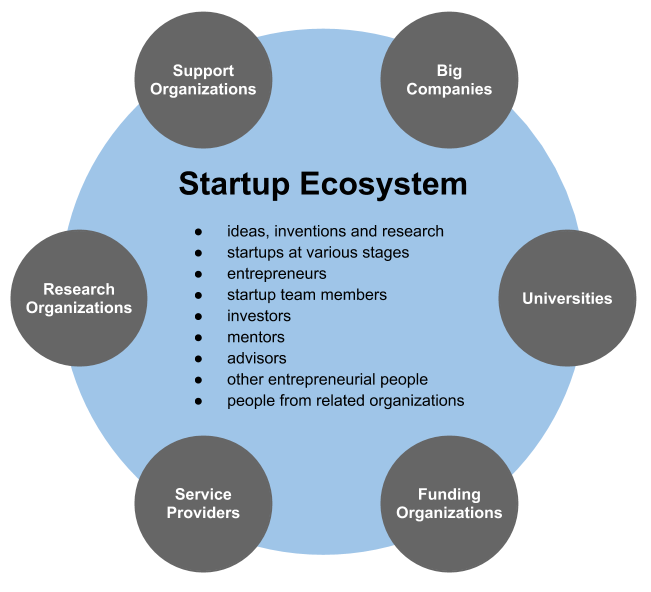
Piyush Goyal, the Union Minister of Commerce, Industry, and Textiles, has stated that the Indian start-up ecosystem has the potential to become India the world's innovation and invention powerhouse. The Indian government wants to see new businesses flourish across the country, particularly in Tier 2 and Tier 3 areas.
It will increase job creation and enhance both forward and backward connections. During a virtual meeting of the National Startup Advisory Council (NASC), he stated that putting concepts like funding, mentorship, and taxation into action will help us develop our start-up ecosystem even more.
The Minister stated that India's start-up ecosystem reflects the energy, excitement, and agility of Indian youth and that the Startup India movement has resulted in a "shift in attitude" from "can do" to "will do." “Our start-up ecosystem has the potential and promises to make India the world's innovation and invention center, and NSAC has been diligently working to pave the road forward for India's emerging start-up entrepreneurs. He stated that the NSAC will support start-ups in their efforts to improve their competitiveness and make India the start-up capital of the world.
It should be noted that India has one of the greatest start-up ecosystems in the world, with almost 60 unicorns. In the last six months, India has created 21 unicorns. With open doors, open arms, and an open mind, he urged DPIIT to now function as a "facilitator." Many notables attended the meeting, including Rajan Anandan, MD, Sequoia Capital; Ritesh Agarwal, Founder, OYO Rooms; Manoj Kohli, Country Head, Softbank India; Abhiraj Bhal, Co-founder, UrbanCompany; Kunal Bahl, Co-founder, Snapdeal; Sanjeev Bhikchandani, Co-founder, InfoEdge; Mohandas Pai, Co-founder & Chairman.
TOP 5:
- 'Independence Day' Sales a positive surprise
- Go Fashion (India), a womenswear business, is preparing for an initial public offering (IPO)
- A start-up from Tamil Nadu, India, has won an award for innovation in textile waste management
- India's clothing will assist the country meet its $400 billion export goal: Chairman of the AEPC
- Label Makers, a Bangladeshi company, would spend $1.14 million in the Dhaka EPZ

- A start-up from Tamil Nadu, India, has won an award for innovation in textile waste management
- Label Makers, a Bangladeshi company, would spend $1.14 million in the Dhaka EPZ
- The anti-dumping tariff on viscose staple fibers (VSF) has been removed by India
- The extension of RoSCTL till 31 March 2024 widely hailed










 Get in Touch!
