
Organized retail rewrites India’s apparel market growth amid $117 mn outlook
12 May 2026, Mumbai
From a fragmented, unorganized marketplace India’s apparel sector is fast becoming a more consolidated and efficiency-led retail space. Valued at $88 billion in 2025, the market is projected to reach $117.05 billion by 2034, with a steady CAGR of 3.16 per cent. While the growth rate signals maturity rather than volatility, the absolute expansion of nearly $29 billion underscores the scale of opportunity unfolding across the value chain.
At the heart of this transformation lies the ‘Bharat’ consumption story, where rising aspirations in Tier II and Tier III cities are reshaping demand curves. Organized retailers are no longer confined to metros; instead, they are systematically penetrating semi-urban and rural markets, bringing structured pricing, standardized quality, and brand-driven consumption to regions historically dominated by local traders.
Value fashion consolidates market power
The mass segment continues to anchor the industry, accounting for 71.6 per cent of the total market in 2025. However, its composition has fundamentally changed. Instead of fragmented, unbranded offerings, the segment is increasingly controlled by organized value-fashion chains that rely on scale efficiencies and centralized sourcing.
These retailers are building dominance relying on volume-led procurement strategies and optimizing supply chains to maintain aggressive price points. Their expansion into smaller cities is unlocking latent demand, particularly among first-time branded apparel buyers. The shift reflects not merely a change in retail format but a reconfiguration of how affordability and aspiration intersect in the Indian market.
Table: Market structure and growth drivers
|
Segment |
Market share (2025) |
Growth driver |
|
Mass |
71.60% |
Volume-based procurement & Tier II/III expansion |
|
Women |
41.50% |
Rising workforce participation & fashion consciousness |
|
Offline |
57.80% |
Tactile experience & immediate gratification |
|
West India |
35.40% |
High purchasing power & commercial hubs (Mumbai/Surat) |
The table highlights how scale, demography, and geography are coming together to define growth. The dominance of the mass segment reinforces the importance of affordability, while the regional skew toward western India reflects the enduring influence of commercial hubs such as Mumbai and Surat in driving consumption.
Womenswear a demand catalyst
Womenswear has evolved into the primary trigger, contributing 41.5 per cent of the total market. This shift is closely tied to broader socioeconomic changes, particularly the steady rise in female workforce participation and the expansion of discretionary income.
The modern Indian consumer is building a diversified wardrobe that accommodates both traditional and contemporary needs. Ethnic wear continues to hold cultural relevance, but it now coexists with western formals, occasion wear, and performance-driven categories such as activewear and intimate apparel.
Retailers are responding by sharpening category segmentation and investing in product innovation. Strategic collaborations between domestic retailers and global design and manufacturing firms are enabling faster product development cycles and more targeted offerings, especially in high-growth subcategories like athleisure and innerwear.
Offline retail holds ground
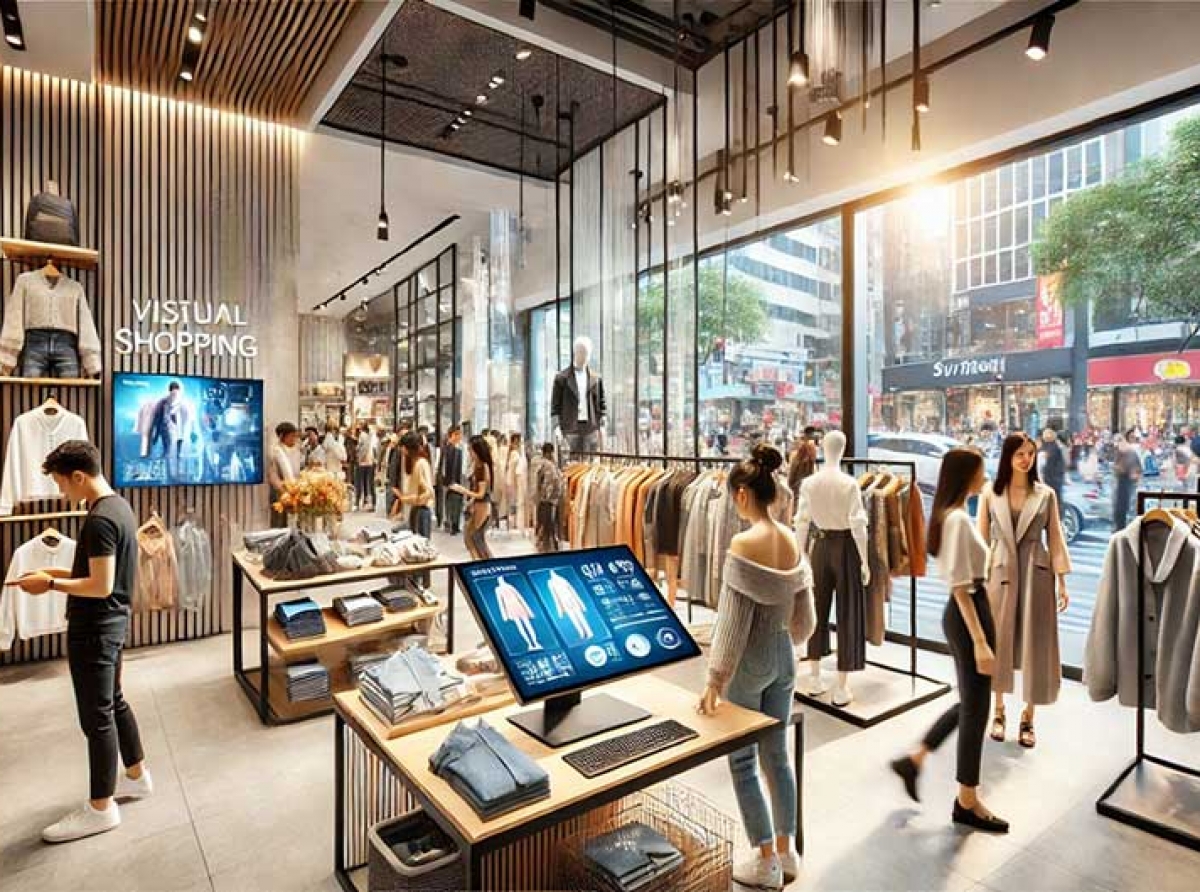
Despite rapid digital adoption, physical retail remains the dominant channel, accounting for 57.8 per cent of total sales in 2025. The preference for in-store shopping is deeply embedded in consumer behavior, particularly for categories where tactile evaluation and fit assurance are critical.
Ethnic wear, bridal segments, and premium occasion apparel continue to rely heavily on offline formats, where experiential retail plays a decisive role. Expansion plans by leading apparel companies indicate sustained confidence in brick-and-mortar retail, even as digital platforms evolve into powerful discovery and engagement tools.
The future of Indian fashion retail is increasingly hybrid. Brands are integrating digital technologies such as AI-driven personalization, QR-enabled product journeys, and omnichannel inventory systems to bridge the gap between physical stores and online platforms. All this is enabling retailers to deliver both convenience and experiential value without compromising on either.
Policy support strengthens manufacturing
Government intervention is playing an important role in reinforcing the sector’s transformation. The Production Linked Incentive (PLI) scheme for textiles, with an allocation of Rs 10,683 crore, is designed to boost investments in man-made fiber (MMF) production, a segment critical for global competitiveness.
Complementing this is the National Textile Policy 2025, which offers capital subsidies of up to 35 per cent% for fixed investments. These measures aim to modernize infrastructure, enhance production efficiency, and reduce dependence on volatile raw material cycles, particularly in cotton and polyester. The policy framework is not only strengthening domestic manufacturing capabilities but also positioning India as a resilient node within global supply chains, capable of responding to shifting trade dynamics and sourcing strategies.
Speed and global capital redefine competition
The market is being reshaped by two parallel forces: the rise of rapid commerce and the influx of global brands. The emergence of ultra-fast delivery models, including experiments with sub-60-minute fulfillment in cities, signals a new phase where speed becomes a key differentiator even in fashion retail.
At the same time, international players are intensifying their focus on India, attracted by its scale, demographic advantage, and evolving consumption patterns. Strategic alliances and flagship store launches in key metros highlight India’s growing importance as a priority market within global retail portfolios. This dual dynamic is forcing domestic players to recalibrate strategies, balancing speed, assortment, and pricing while maintaining operational efficiency.
The evolution of Campus Activewear exemplifies how domestic brands are adapting to shifting consumer preferences. In 2026, the company expanded beyond its footwear stronghold to launch a dedicated athleisure line, leveraging its established brand equity in the sports segment.
This move aligns with the broader wellness economy trend, where consumers are prioritizing comfort, functionality, and lifestyle integration in their apparel choices. By capitalizing on the sustained growth of online activewear demand observed in previous years, the company has strengthened its competitive positioning against both domestic peers and global athletic brands.
Growing role of intelligence platforms
As the Indian fashion ecosystem grows in complexity, the role of industry intelligence platforms becomes increasingly critical. FashionatingWorld has emerged as a key source of insights, offering data-driven analysis on manufacturing trends, policy developments, and retail strategies. Such platforms are enabling stakeholders across the value chain to navigate an increasingly dynamic environment, where decisions are shaped by a combination of domestic consumption trends, global trade shifts, and technological advancements.
The road to a $117 bn market
The bottomline is India’s journey toward a $117 billion apparel market is less about rapid growth and more about structural depth. The confluence of organized retail expansion, rising participation of women consumers, policy-led manufacturing support, and technological integration is creating a more resilient and scalable industry framework.
The next phase of growth will likely be defined by how effectively brands can integrate these elements, balancing affordability with aspiration, speed with experience, and scale with personalization. In this evolving landscape, the Bharat consumer is not just a growth driver but the central force redefining the contours of India’s fashion economy.










 Get in Touch!
