
Mall space crunch pushes fashion retailers to India’s high streets
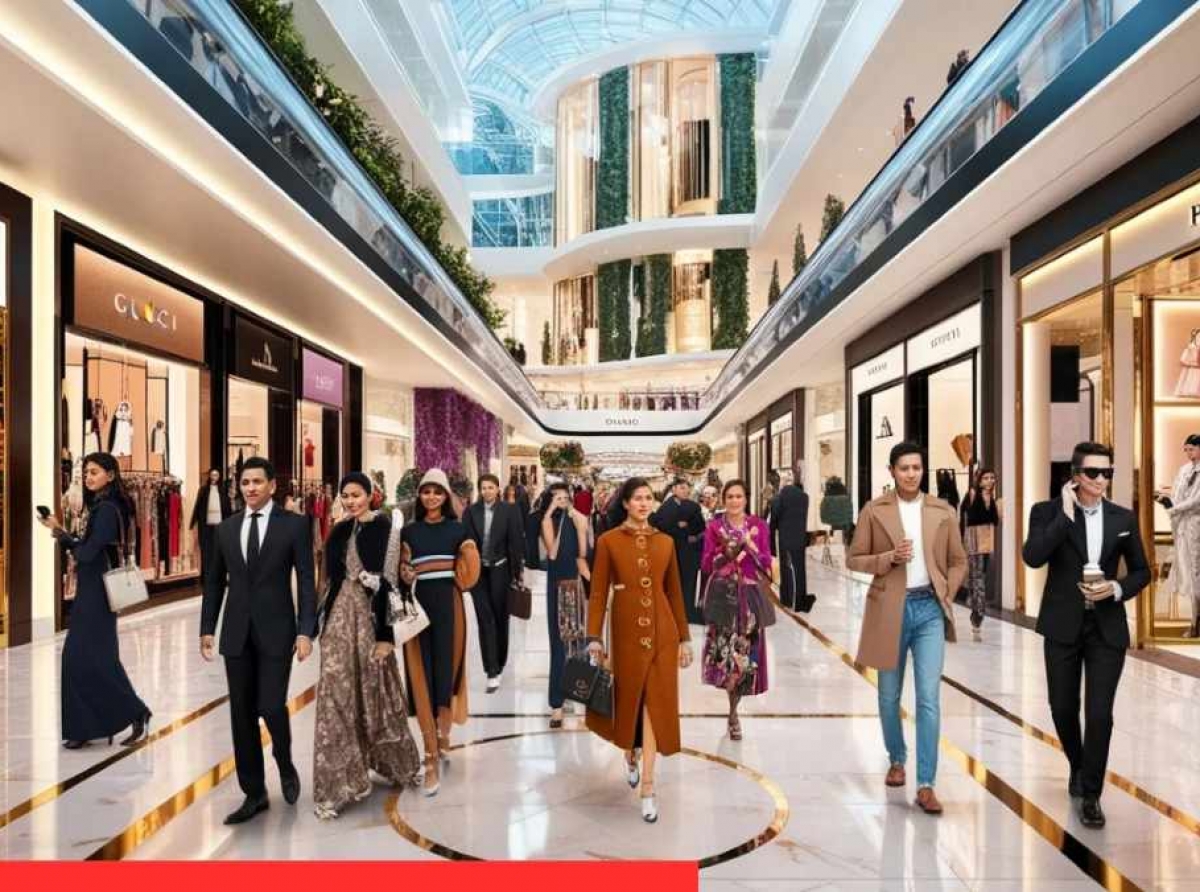
India’s fashion and apparel retailers are taking their expansion plans to high streets as a shortage of Grade-A mall space reshapes the country’s retail real-estate market. Gross retail leasing inside shopping malls across India’s top eight commercial centres fell 38 per cent year-on-year to 0.71 million sq ft in the July-September quarter, according to real estate advisory Cushman & Wakefield. The decline, however, is less a reflection of weak consumer demand than of constrained premium supply. Total retail absorption across Mumbai, Delhi-NCR, Bengaluru, Hyderabad, Chennai, Kolkata, Pune and Ahmedabad fell a modest 4.4 per cent to 2.22 million sq ft in Q3.
High streets moved in the opposite direction. Leasing across prominent open-air retail corridors jumped 33 per cent to 1.51 million sq ft, accounting for 68 per cent of total quarterly absorption, compared with just 32 per cent for malls. The shift is giving fashion, apparel and lifestyle brands an alternative route to store expansion as premium shopping-centre inventory becomes increasingly difficult to secure.
High streets take lead
Grade-A malls in Tier-I cities are operating near peak occupancy, with average vacancy falling to 4.8 per cent after three consecutive quarters without fresh completions. For retailers planning aggressive store additions, this has translated into longer waits for premium ground-floor and anchor locations. Rather than defer expansion, brands are increasingly turning to established high-street micro-markets.
“India’s retail market continues to demonstrate steady underlying occupier interest, even as quality retail space remains constrained,” says Gautam Saraf, Executive Managing Director, Mumbai and New Business, Cushman & Wakefield. Domestic retailers accounted for 86.3 per cent of Q3 absorption, or 1.92 million sq ft, while international brands contributed 13.7 per cent. Fashion, apparel and lifestyle remained the dominant demand drivers, together with food and beverage, accounting for more than 57 per cent of transactions.
Delhi-NCR leads
The city-level numbers underline the uneven availability of quality retail space. Delhi-NCR remained the largest market, with 0.55 million sq ft of absorption, while Hyderabad recorded the strongest growth among major markets.
Table: Retail space by cities
|
City market |
Gross leasing volume (Q3) mn sq. ft |
Market share ( per cent) |
YoY performance & dynamics |
|
Delhi-NCR |
0.55 |
24.9 |
Up 7.9 per cent YoY; high streets in Khan Market and Gurugram absorb key fashion flagships. |
|
Hyderabad |
0.45 |
20.3 |
Up 18.3 per cent YoY; rapid commercial retail corridor take-up in Jubilee Hills and Gachibowli. |
|
Mumbai |
0.35 |
15.7 |
Down 40.8 per cent YoY; acute space scarcity; Linking Road and Fort see sharp rent spikes. |
|
Bengaluru |
0.24 |
10.8 |
Steady expansion led by Indiranagar, Koramangala, and outer ring road retail. |
|
Pune |
0.21 |
9.5 |
Absorption dipped alongside Mumbai due to limited fresh mall supply additions. |
|
Chennai |
0.18 |
8.1 |
Active take-up across Cathedral Road, RK Salai, and key central commercial strips. |
|
Ahmedabad |
0.13 |
5.8 |
Moderate absorption driven by value-fashion expansion on standalone avenues. |
|
Kolkata |
0.10 |
4.5 |
Jumped 68.8 per cent YoY from a lower base ahead of festive Puja season merchandise rollouts. |
Delhi-NCR and Hyderabad together accounted for 45.2 per cent of quarterly absorption. Hyderabad’s 18.3 per cent year-on-year growth was supported by rapid take-up across Jubilee Hills and Gachibowli. Mumbai, in contrast, recorded a 40.8 per cent decline as limited availability constrained transactions. Prime corridors such as Linking Road and Fort are also witnessing sharp rental increases.
Visibility wins
For fashion retailers, high streets offer something very valuable: speed. Standalone properties can enable brands to launch stores without waiting for new mall projects or navigating extensive shopping-centre fit-out requirements. They also offer direct street visibility, independent operating hours and easier access for consumers.
Costs are also changing the equation. High-street leases can have simpler commercial structures than malls, where retailers face common-area maintenance charges, central air-conditioning costs and revenue-sharing arrangements. Prime open-air locations have recorded average rental appreciation of 6.8 per cent year-on-year, prompting brands to secure properties through longer-term agreements before rents rise further.
Retailers are adapting store formats accordingly. Trent has expanded standalone Zudio and Westside formats, including multistorey corner properties positioned along high-footfall transit corridors. Aditya Birla Fashion and Retail and Reliance Retail are also using high streets for womenswear, menswear and footwear concepts in markets such as Indiranagar, Linking Road and South Extension.
Malls still matter
The high-street surge does not signal the decline of malls. Instead, retailers are moving towards a two-format strategy. Around 12.7 million sq ft of Grade-A mall inventory is expected to be delivered through 2028, led by Delhi-NCR, Bengaluru and Chennai. But only 1.35 million sq ft is projected to be completed this year, keeping near-term supply tight.
This is pushing retailers to use each format for a different purpose: high streets for everyday visibility, accessibility and frequency, and malls for scale, experiential retail and broader consumer engagement. For brands, the practical approach is about having the right mix of high streets for visibility and everyday footfall, and malls for scale and a more complete consumer experiences, say analysts.
Milin Rohinesh, Head of Retail-India at Cushman & Wakefield, opines the definition of quality retail is also evolving towards curated, experience-led destinations. For apparel companies, however, the next challenge will be economics. As more retailers compete for limited high-street inventory, rising rents could begin to pressure store-level margins.
India’s retail expansion is therefore moving outdoors not because malls have lost relevance, but because the shortage of premium mall space is making the high street the fastest available route to growth.










 Get in Touch!

