All Stories

The Physical Wall: How established brands are reclaiming the High-Street from D2C disruptors

As 2025 draws to a close, the Indian fashion industry is witnessing a massive strategic shift from the digital ether back to the physical pavement.

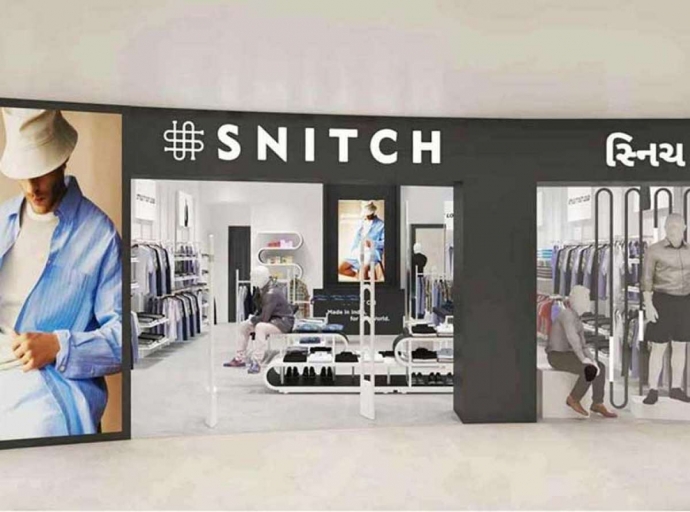
For the last several years, the narrative was dominated by the meteoric growth of funded D2C disruptors like Snitch, BlissClub, and The Souled Store.

Know More

These players used low-cost digital entry and venture capital to bypass traditional gatekeepers, scaling rapidly on a diet of high-velocity "drops" and performance marketing. However, as we look toward 2026, the era of unbridled cash burn for customer acquisition is hitting a structural limit.

The "Physical Wall" has emerged as the definitive moat for established brands like ABFRL, Raymond, and Arvind Fashions, who are now leveraging their institutional balance sheets and deep supply chains to reclaim the high street.

Read our latest issue

The D2C sector in India grew at a staggering CAGR of 40% between 2020 and 2024, reaching an estimated market value of $100 billion by 2025.

This growth initially blindsided the market, forcing established retailers to defend their territory against players who operated without the baggage of legacy overheads.

This "blitzkrieg" triggered a period of margin compression as giants were forced to discount heavily to match D2C prices.

Publications portfolio

Furthermore, established players faced a "trend lag" where the 15-day design cycles of disruptors made traditional six-month calendars look prehistoric.

Digital-first brands also mastered "thumb-stop" marketing, siphoning off the top-of-the-funnel traffic that previously flowed naturally to shopping malls.

But the tide is turning. The "Physical Wall" represents a shift where the cost of digital-only growth has become prohibitive.

DFU Profile

Customer Acquisition Costs (CAC) for fashion in India now range from ₹800 to ₹2,000, often swallowing 50% of the total order value.

This "leaky bucket" makes the stability of a physical storefront not just attractive, but essential for survival.

Redefining the 2026 Competitive Matrix

Strategic Pillar

Funded D2C Disruptor Move

Established Brand Strategy (2026)

Capital Efficiency

High "Cash Burn" for reach; high CAC.

Focus on Customer Lifetime Value (LTV).

Supply Chain

Third-party/White-label (Flexibility).

Full Vertical Integration (Cost Control).

Real Estate

High-street "Hype" stores in Tier-I.

"Lease Lock" in Tier-II/III (Bharat Expansion).

Logistics

Q-Commerce reliance (10-30 mins).

Omnichannel Mirroring (Ship-from-Store).

Product Cycle

14-day "Fast-Fashion" drops.

12 "Monthly Capsules" (Agile Manufacturing).

Securing the "Bharat" perimeter through real estate

The most aggressive tactical shift for 2026 is the "Lease Lock" strategy. In the first half of 2025 alone, funded D2C disruptors doubled their retail footprint, accounting for nearly 18% of all retail leasing in India.

While this influx triggered a bidding war in premium Tier-I malls, established brands are moving beyond the saturated metros.

Fashion Guru

The battle for "Bharat" is now being fought in the commercial hubs of Ludhiana, Indore, and Coimbatore, where leasing volumes have surged by over 20%.

Established players are securing long-term, ten-year leases with escalations tied to store performance rather than market speculation, effectively locking out smaller competitors who lack the capital for such commitments.

 Join our group

This strategy is bolstered by the "Compact-Format Advantage." By utilizing smaller, 800–1,200 sq. ft. Exclusive Brand Outlets (EBOs), established brands achieve a "Density Advantage" that disruptors cannot easily replicate.

These stores act as physical anchors for an omnichannel strategy, providing a touch-and-feel experience that reduces the industry-standard 25–30% online return rate to less than 12% through in-store trials and local pick-ups.

Sustainability

Weaponizing the supply chain

The true strategic advantage of established brands in 2026 lies in their ownership of the "loom."

While D2C brands often struggle with quality inconsistencies and "leaky bucket" unit economics due to their reliance on third-party manufacturers, legacy giants like Raymond and Arvind own the entire value chain.

As one CEO of a legacy apparel conglomerate noted, "Cash is a tactical tool, but a resilient supply chain is a strategic weapon. While disruptors won the battle for clicks, the war for the wardrobe is won by those who control the margin at every step."


By 2026, these established players are redefining their manufacturing into 12 "Monthly Capsules" rather than the traditional two-season calendar. This allows them to match the visual velocity of Instagram-first brands while maintaining a much lower cost-per-unit.

Unit Economic Comparison (Estimated 2026)

Metric

Funded D2C Brand

Established Vertical Brand

Gross Margin

55% - 60%

65% - 72%

Marketing/CAC

25% of Revenue

8% - 12% of Revenue

Logistics/Returns

15% (High RTO)

6% (Store-led fulfillment)

EBITDA Margin

5% - 8%

18% - 22%

 Transforming stores into service hubs

Established brands are also redefining the role of the retail associate. By training floor staff to act as "Style Influencers," they are using the physical store as a studio for social selling.

Staff manage localized WhatsApp groups and live-stream styling sessions for their top customers, creating a deep-rooted loyalty that algorithms cannot manufacture.

Also read

This human-led approach is a direct counter to the "Utility-First" model of Q-Commerce.

While platforms like Zepto deliver basics in under 15 minutes, established brands are using these platforms as "Dark Store" partners.

By leasing sections of underperforming Tier-I stores to Q-commerce players, they capture a customer via a utility purchase, like socks or t-shirts and then use that data to drive them toward a high-margin, occasion-wear purchase at their nearest physical flagship.

Technology

C-Suite 2026 Strategic Outlook: Resilience over burn

The financial focus has shifted toward a "P&L Correction." The market is no longer rewarding top-line growth at the expense of profit.

This has led to the rise of "Inventory-as-a-Service" (IaaS), where physical stores act as zero-inventory showrooms and orders are fulfilled from localized micro-fulfillment hubs, effectively turning deadstock into a thing of the past.

Arvind Fashions, for instance, reported a 27% year-on-year increase in profit in late 2025 by shifting toward a consignment-led model and increasing their EBO contribution to 43% of total revenue, proving that scale and physical presence are the ultimate stabilizers.

WindUp 2025

Editor’s Conclusion: The great synthesis

The narrative of "Established vs. D2C" is maturing into a story of "Scale vs. Speed." The most successful players in 2026 are the ones who synthesize the two: adopting the digital agility of disruptors while using the physical store as the ultimate high-margin fortress.

The "Physical Wall" is not a barrier to innovation; it is the foundation upon which the next decade of Indian retail will be built. In 2026, the brands that thrive will be those that realize the high street is not just where you sell, it’s where you win.

Visit for more

D2CFashion

StyleBuddy launches new service to offer professional advice in reduced time

Personal styling platform, StyleBuddy has launched a new service called ‘Styled Looks’ that dramatically cuts the time and cost for users to get professional fashion advice.

Read our latest issue

Users receive five complete, personalized outfit recommendations. The lookbook is delivered within a revolutionary turnaround time of just 30 minutes. The looks are curated by a human stylist who utilizes rapid technology integration for speed. Each look includes clothing, accessories, and styling notes.

Shoppable links can be included, often as an optional add-on for an additional fee. The service is available for an introductory price of just Rs. 499.

REFER

To use the service, customers follow a simple process. They upload their photo to the StyleBuddy platform. They provide details about the specific occasion they are styling for (eg, a wedding, Diwali celebration, business meeting, or dinner date).

An expert stylist uses this information to deliver the five curated looks to the user within 30 minutes.

Fashion Guru

The ‘Styled Looks’ service aims to democratize professional styling by making it accessible and affordable to everyone, not just the elite. It addresses the common challenge of ‘choice overload’ and last-minute panic by providing a quick, expert-vetted solution for high-stakes events.

Visit for more

StyleBuddy

Fashion leads D2C retail leasing as online brands go offline in India

Having experienced explosive growth during the pandemic, India’s Direct-to-Consumer (D2C) brands are now aggressively expanding their physical footprint, driving a significant shift in the country's retail real estate market.

Refer

The share of retail leasing accounted for by these new-age brands nearly doubled, jumping from just 8 per cent in H1 2024 to 18 per cent in H1 2025, according to a recent CBRE report.

This growth is fueled by D2C companies leveraging flagship stores, franchise outlets, and pop-ups as they realize the crucial role of an omnichannel strategy.

Read our latest issue

The move offline is overwhelmingly led by the clothing sector. Fashion and apparel brands accounted for nearly 60 per cent of all D2C retail leasing in H1 2025. They were followed by:

Homeware and Furnishings at 12 per cent, Jewelry: 12 per cent and Health and Personal Care at 6 percent.

Fashion Guru

Anshuman Magazine, Chairman and CEO, CBRE India, notes, while online shopping continues its growth, physical purchases still represent the majority of transactions.

Unlike a standardized online experience, a physical store allows brands to create a tailored shopping environment that helps them connect deeply with their target audience and reinforce their ethos, he adds.

Join our group

Besides diversifying channels, D2C brands are also diversifying locations. In H1 2025, nearly half of their leasing activity took place outside of traditional mall settings.

The largest share awas occupied by high streets at 46 per cent. This was followed by malls at 40 per cent with standalone outlets making up for the remaining 14 per cent.

Join our community

This mixed-format approach - utilizing everything from showrooms to pop-ups- reflects a flexible strategy aimed at maximum visibility.

Geographically, Delhi-NCR led the way, accounting for the highest share of D2C leasing at 26 per cent, followed closely by Bengaluru (22 per cent) and Hyderabad (18 per cent).

VISIT

Ram Chandnani, Managing Director-Leasing Services, CBRE India, highlights the dual benefit of this strategy. He opines, offline presence helps brands tap into traditional customer bases, enhances trust and credibility, and allows for deeper penetration into lower-tier towns.

This dual play of digital reach and offline experience is set to define the next chapter of India’s retail growth, he concludes.

Visit for more

D2C

Soch launches three new stores in Malaysia

Expanding its presence in Malaysia, evening and occasion wear brand Soch has launched three new stores in Klang, Johor Bahru, and Kuala Lumpur. This move brings Indian ethnic wear directly to shoppers in Southeast Asia.

Read our latest issue

Vinay Chatlani, Co-founder and CEO, Soch Apparels, says, Malaysia allows the brand to carry that promise overseas into a market that deeply understands celebration, heritage, and community. With these stores, it lays the foundation for Soch to be recognized as not just India’s ethnic wear leader, but as a global brand with contemporary cultural relevance, he adds.

Fashion Guru

To facilitate this growth, Soch has partnered with Malaysia-based retail business Venturist Sdn Bhd under a franchise agreement.

The brand plans to add two to three more stores in Malaysia over the next three to five years. Soch will tailor its product mix for the local, tropical climate, offering a curated selection of sarees, kurtis, lehengas, and fusion wear, among other garments.

Refer

Soch Apparels currently operates over 175 stores across 68 Indian cities and has already debuted in the Canadian market. The expansion into Malaysia is a part of Soch's broader commitment to global retail, with the label actively exploring opportunities in other regions, including the rest of Southeast Asia, the Middle East, the UK, and the US.

Know More

SochApparels

Ace Turtle partners Shoppers Stop to launch 24 shop-in-shops across India

Tech-led retail company and the exclusive licensee for G-Star in India, Ace Turtle is partnering with India’s largest listed department sotre operator, Shoppers Stores to launch 24 shop-in-shops in major metropolitan and regional cities, including New Delhi, Mumbai, Kolkata, Lucknow, Hyderabad, Chandigarh, Jaipur, Siliguri and Pune

This strategy allows G-Star to gain instant visibility and access to Shoppers Stop's established customer base across key markets, bypassing the lengthy process of opening standalone stores first. The brand gains a robust platform in one of the world's fastest-growing fashion markets. This move is part of G-Star's new strategy, led by Ace Turtle, to have a more controlled and locally calibrated presence, including plans for local manufacturing in the future.

For Shoppers Stop, this partnership strengthens their international brand portfolio, aligning with their strategy to bring premium global labels to Indian consumers and maintain their position as a leading fashion destination.

In the long term, G-Star plans to follow up the shop-in-shops launch with the opening of standalone stores starting from the next season, aiming for about 15 such stores over the next five years.

Ace Turtle partners Shoppers Stop to launch 24 shop-in-shops across India

Ashish N Soni presents new collection at LFW X FDCI in collaboration with R|Elan

In collaboration with R|Elan, Ashish N Soni presented his highly anticipated collection, 'The Soirée at the Grand Budapest Hotel,' at Lakmé Fashion Week in partnership with FDCI 2025.

Know More

The critically acclaimed show was a masterclass in modern black-tie dressing, blending the cinematic grandeur of the collection's namesake with Soni’s minimalist ‘Less is More’ philosophy.

The collection was a sophisticated array of opulent evening wear primarily rendered in the color black, showcasing a play on shadow, texture, and light.

Read our latest issue

For women, the runway featured fluid gowns, sculpted shoulders, and cinched waists, softened by dramatic draping to create silhouettes that were both commanding and sensual. Soni described the looks as ‘architecture in motion.’

The menswear adhered to his signature sharp, immaculate tailoring. The collection offered a modern reinterpretation of traditional tuxedo-inspired cuts, pairing architectural jackets with wide-leg, comfortable trousers.

Join our group

The entire line represented a seamless fusion of nostalgia and modernity, achieving a look that was formal yet effortless.

Central to the collection’s success was the partnership with R|Elan, Reliance Industries’ innovative fabric brand. Soni utilized advanced textiles like R|Elan GreenGold, FeelFresh, and Kooltex.

Fashion Guru

These fabrics enhanced the garments' breathability, drape, and lightness, proving that occasion wear can be both luxurious and future-ready.

This focus on performance and innovation without compromising high style has positioned the collection as a true game-changer in the world of high fashion, empowering wearers to move with confidence and flair.

Visit for more

LFWxFDCI

The phygital revolution, why D2C brands are betting big on physical stores

The clear boundaries between online and offline shopping are dissolving in Indian retail space. A new generation of Direct-to-Consumer (D2C) brands those that first built their identities in the digital space, are now taking strong steps towards physical retail.

Know More

From mattresses and skincare to jewellery and athleisure, these brands are setting up brick-and-mortar outlets across major cities, having realized that customer trust, loyalty, and experience often require a tangible connection.

A recent CBRE report highlights, retail leasing by D2C brands more than doubled in just one year from 8 per cent in the first half of 2024 to 18 per cent in the first half of 2025.

Read our latest issue

This rise signals not merely growth of retail footprints but a recalibration: the transition from clicks to bricks is now a defining chapter in India’s D2C growth story.

From digital disruptors to retail contenders

The Indian D2C market, valued at $87.5 billion in 2025, is expected to cross $100 billion by the end of the year, as per industry estimates. What began as an e-commerce revolution pushed by affordable internet access, the rise of digital payments, and the pandemic-era online shopping boom has now matured into a hybrid retail ecosystem.

Fashion Guru

“Brands that were once purely digital are realizing that scale requires presence,” says Anshuman Magazine, Chairman & CEO, CBRE India, Southeast Asia, Middle East & Africa.

“For Indian consumers, physical touchpoints are still critical in the purchase journey, especially in categories like apparel, home, and beauty.”

Refer

Indeed, while online retail has democratized access, offline retail remains where emotional connections are cemented. Whether it’s the texture of a fabric, the scent of a skincare product, or the sound quality of a wireless speaker these experiences can’t be fully replicated on a screen.

Join our group

The CBRE data paints a clear picture of the retail shift underway.

Table: The rise and rise of D2C brand stores

Category

H1 2024 share of retail leasing

H1 2025 share of retail leasing

H1 2025 leading sector

H1 2025 city-wise leasing share

D2C Brands

8%

18%

Fashion & Apparel (60%)

Delhi-NCR (26%)


Homeware & Furnishings (12%)

Bengaluru (22%)


Jewellery (12%)

Hyderabad (18%)


Health & Personal Care (6%)


 Visit for more

Fashion and apparel brands dominate the retail leasing space, accounting for 60 per cent of D2C store openings in the first half of 2025. The geographical concentration in Delhi-NCR, Bengaluru, and Hyderabad further reflects the urban tilt of this trend, cities where millennial and Gen Z consumers are driving experiential shopping.


Omnichannel strategies in action

Behind the glossy storefronts and Instagram-worthy interiors lies a deliberate omnichannel strategy. These brands aren’t abandoning their digital DNA; they’re integrating it seamlessly with the physical world to create what marketers call the phygital experience.

Wakefit, for instance, began its journey as an online mattress startup. Its founders quickly recognized that convincing customers to buy a mattress online without lying on it first was a tough sell. The solution: opening experience centers in major metros where shoppers can test products in person while still benefiting from online pricing and delivery. This hybrid approach boosted Wakefit’s credibility and sales. “Our stores don’t just sell mattresses, they educate consumers about sleep wellness,” says Chaitanya Ramalingegowda, Co-founder, Wakefit.

Similarly, boAt, Mamaearth, and Sugar Cosmetics three of India’s most successful D2C brands have embraced physical retail to deepen engagement.

  • boAt’s experience zones allow customers to test headphones and speakers, bridging the gap between product curiosity and confidence.
  • Mamaearth has launched standalone stores offering personalized skincare consultations, turning routine shopping into a relationship-building exercise.
  • Sugar Cosmetics uses its physical counters to offer trial experiences that online shopping simply can’t match.

For these brands, stores act as both marketing touchpoints and conversion hubs, boosting customer lifetime value and repeat purchases across channels.

SUSTAINABILITY

In fact, the focus on physical stores is not just about brand visibility, it’s about trust economics. In India, where nearly 85 per cent of total retail spending still happens offline, consumers often use digital platforms for discovery and physical stores for decision-making.

Moreover, real estate trends are aligning with this shift. With mall vacancies dropping and developers prioritizing experiential retail, D2C brands are securing premium spaces that were once dominated by legacy retailers. “We’re seeing more pop-up stores, shop-in-shops, and brand-owned boutiques,” notes Ramesh Nair, CEO, Mindspace Retail Advisors. “It’s the rise of the modern Indian flagship.”

VISIT

The hybrid future

India’s total retail market is expected to grow from $950 billion in 2025 to $1.93 trillion by 2030, according to Wazir Advisors. As this growth unfolds, the omnichannel model will no longer be a choice, it will be a necessity. Traditional retailers are learning from D2C brands’ digital agility, while D2C brands are borrowing from legacy retailers’ mastery of physical engagement. The result is a new retail order, where the lines between e-commerce, experiential retail, and community engagement blur into one seamless ecosystem.

“Consumers don’t think in channels they think in experiences,” says Vineeta Singh, Co-founder & CEO, Sugar Cosmetics. “Our goal is to meet them wherever they are online, offline, or in between.”

Join our community

Thus the rise of India’s D2C sector has been one of the country’s most transformative business stories of the past decade. But 2025 marks its maturation a shift from digital disruptor to mainstream retail powerhouse.

As brands expand beyond the screen and into the street, the D2C playbook is being rewritten around the principles of trust, experience, and omnichannel intelligence. What began as a digital revolution has now evolved into a retail reinvention one that reflects how India shops, feels, and connects in the age of the hybrid consumer.

LATEST FASHION NEWS

D2CFashion

Raymond Group celebrates 100th anniversary milestone with an event in Mumbai

Iconic Indian textile and apparel company, Raymond celebrated its 100th anniversary with a grand event at the Jio World Convention Centre in Mumbai.

Read our latest issue

The event paid a tribute to an extraordinary achievement that only a few homegrown Indian companies have reached.

It honored a century-long journey of contributing to India's economy, industry, and culture.

The night featured performances, stories, and tributes that highlighted Raymond's commitment to quality and its role in propelling India's textile industry.

Fashion Guru

Gautam Singhania, Chairman & Managing Director, Raymond Group, said, a century is not just a milestone - it is a saga of endurance, innovation, and trust built over generations.

The Raymond of tomorrow will stand tall on the foundation of 100 years of excellence.

A highlight of the evening was the unveiling of an exclusive ‘100 Years of Raymond’ postal stamp. This stamp serves as a timeless symbol of the company's journey from a small woolen mill in 1925 to a global corporation.

 Join our group

The celebration also included a sneak peek at two new television campaigns and the premiere of an AI-generated short film, a 3.5-minute cinematic experience that hints at Raymond's future.

Over the past century, Raymond has clothed generations of Indians for various occasions, from daily business wear to wedding suits.

Refer

The company has since expanded beyond textiles, diversifying into real estate, engineering, and aerospace and defense.

This growth is guided by a common principle: ‘excellence without compromise.’

Visit for more


GautamSinghania

Azorte expands Mumbai presence with a new neo-store at Phoenix MarketCity

Reliance Retail's premium fashion and lifestyle brand, Azorte, has expanded its presence in Mumbai by launching a new flagship-style store at Phoenix MarketCity.

Designed as a ‘neo-store,’ the new store fuses physical retail with advanced technology to create an immersive and efficient shopping experience.

Spanning 14,881 sq ft, the store reinforces the brand’s position as a key destination in the premium fashion segment. It was inaugurated by actor and style icon Khushi Kapoor, signaling Azorte's appeal to the youthful and fashion-forward audience.

The store incorporates several digital innovations to enhance the customer journey and operational efficiency. These include Smart Trial Rooms offering contextual product recommendations and allowing shoppers to request additional sizes or products at the touch of a button; Interactive Digital Screens to showcase extended collections (endless aisle) and act as dynamic digital signage; RFID & QR Code Technology for efficient inventory management, ensuring better stock availability and fewer gaps; Self Check-Out Counters to provide a seamless and time-efficient option for customers to complete their purchases and a frictionless check-in service for customers who prefer a self-guided shopping experience.

Azorte focuses on offering a curated mix of global and contemporary styles under one roof, appealing to the segment looking for accessible luxury and variety. The brand caters to product categories including womenswear, menswear, kidswear and accessories.

This new store launch marks Azorte's 40th store across India, highlighting Reliance Retail's rapid expansion strategy in the country's fast-growing urban fashion market.

Azorte expands Mumbai presence with a new neo-store at Phoenix MarketCity

Tarun Tahiliani launches new Tasva collection at LFW 2025

Delivering a spectacular opening, renowned designer Tarun Tahiliani launched his latest menswear collection for his brand Tasva at Lakmé Fashion Week (LFW) 2025.

A masterclass in reinterpreting traditional Indian attire for the modern global man,  the show, strengthened Tahiliani's reputation for defining the 'India-Modern' aesthetic.

A groundbreaking presentation of occasion-wear, the Tasva collection focused on lightness, fluidity, and comfort - elements often missing from traditional, heavily structured Indian menswear. Tahiliani successfully blended artisanal techniques with contemporary silhouettes, presenting pieces that are luxurious yet effortless.

Key highlights included an array of updated sherwanis, bandhgalas, and kurta sets. The designer introduced innovative fabrics with subtle textures and drape, moving away from stiff silks and brocades. Expect to see lightweight merino wools, textured cotton silks, and subtle metallic finishes dominating the collection. The color palette was sophisticated, featuring deep jewel tones like emerald green and sapphire blue, offset by classic ivories and rich burgundies.

Tahiliani's genius was evident in the meticulous detailing. Signature elements like the patented Tasva button and concealed pockets enhanced the practicality of the garments. The use of intricate zardozi and threadwork was minimal but strategically placed, adding a touch of traditional opulence without overwhelming the modern structure of the outfits.

The show celebrated Tahiliani's vision of a versatile, confident, and unapologetically Indian man. The Tasva collection proved Indian festive wear can be as comfortable and unconstricting as it is grand. It is poised to redefine how grooms and attendees approach occasion-wear this season.

Tarun Tahiliani launches new Tasva collection at LFW 2025

Gazal Gupta expands retail footprint with new luxury store in New Delhi

Designer Gazal Gupta has expanded her retail footprint with a new luxury store at Dhan Mill in New Delhi. The 5,000-sq-ft space, spread across two floors, embodies the brand's philosophy of ‘restrained luxury,’ blending vintage Indian maximalism with baroque architectural elements.

Know More

The store’s interiors were inspired by traditional Indian craftsmanship, with design features created and sourced from across the country.

In-house elements like ornamented pillars, ceiling motifs, patterned flooring, jeweled chandeliers, and marble inlays highlight the brand's focus on indigenous design and detailing.

Fashion Guru

The new space will feature all of Gazal Gupta's luxury collections, including demi-couture, prêt, and resort wear, along with signature prints. The brand is also introducing its menswear line for the first time.

The store's layout is designed to provide dedicated spaces for each collection, giving customers a comfortable and seamless shopping experience.

 Join our group

While Gupta led the creative vision, the project was executed in partnership with architect Sanchit Arora and his team at Renesa Architects.

Gazal Gupta notes, the significant growth from her first 500-sq-ft store to this new flagship location in one of the city's most prestigious neighborhoods. She credits her team, partners, and customers for the brand's success.

SUSTAINABILITY

According to Gupta, Dhan Mill has become a key hub for luxury fashion and lifestyle retail in New Delhi.

With this expansion, she aims to deepen its connection with customers and reinforce its presence in India's premium fashion market by offering one of the largest luxury retail spaces in the area.

Visit for more


GazalGupta

Latest Publications

Image

Join Our Group

Join Our Group