
Retailers look beyond metros as unmet demand drives store expansion
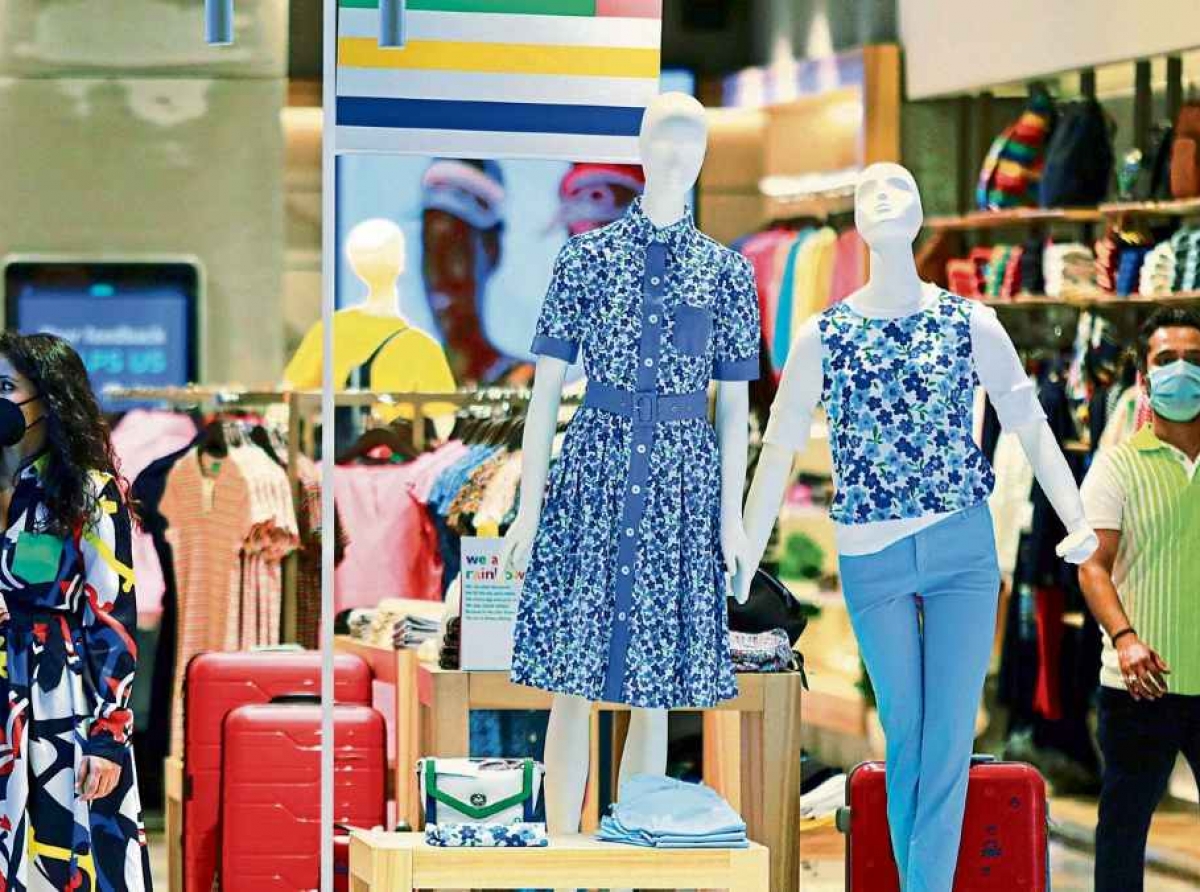
For decades, retail expansion in India was governed by a familiar formula: population tiers, mall footfalls, catchment size, rentals and competing stores. Addresses outside major metropolitan centres were typically assigned higher risk and lower investment. That logic is changing. For apparel retailers, the more valuable factor now is unmet consumer demand where shoppers demonstrate strong intent to buy a brand but lack convenient physical access to it.
E-commerce order patterns, search data and regional sales audits are giving retailers a new map for store expansion. Over 60 per cent of online fashion growth and over half of festive shopping volumes are now estimated to originate outside primary metros. The commercial opportunity is therefore shifting from fighting for space in saturated metropolitan malls to identifying markets where consumer spending exists but organised retail supply remains thin.
Digital demand is the new catchment
Retailers are mining delivery pin codes, search heatmaps and online fulfilment friction to identify potential store locations. Digital commerce is no longer simply a sales channel; it is becoming a low-risk market-testing mechanism. High order concentration in cities like Lucknow, Chandigarh, Surat and Coimbatore indicate that regional discretionary spending can rival, and in some cases exceed, that of saturated metro catchments.
Table: India's next retail powerhouses
|
City |
Grade-A stock (mn sq ft) |
Unique global brands |
Store density per mn people |
Advantage |
|
Chandigarh |
2.4 |
98 |
58 |
High per-capita spend |
|
Mangaluru |
1.1 |
46 |
102 |
Highest store density |
|
Lucknow |
5.6 |
112 |
20 |
Large shopping centres |
|
Vadodara |
1.8 |
54 |
26 |
High full-price sales |
|
Coimbatore |
1.5 |
48 |
29 |
Low vacancy rates |
Source: Knight Frank India Retail Research and industry market monitors
Knight Frank and CBRE data point to a broader restructuring of retail real estate. Tier II cities have added 5.9 million sq ft of Grade-A retail space since 2020, with institutional-quality assets accounting for 61 per cent of total retail stock, compared to 45 per cent in metros. The contrast is particularly visible in markets such as Mangaluru and Lucknow. Mangaluru has the country's highest international retail density at 102 global brand stores per million residents, while Lucknow combines 112 unique international brands with 5.6 million sq ft of organised retail space.
Lower costs, stronger full-price sales
The statistics are compelling. Metro occupancy costs can reach 14-18 per cent of gross revenue, putting pressure on store-level profitability. In strong secondary markets, those costs can fall to 8-10 per cent, while limited competition allows brands to sustain higher full-price conversion. This challenges another long-standing assumption: that smaller cities are primarily value-retail markets.
The success of Zudio and other mass-market formats has shown the depth of demand beyond metros. But premium and mid-market brands are also finding opportunities. Retailers in Vadodara, Mysuru and Indore are reporting faster turns on new merchandise in selected locations than in some tertiary malls in Mumbai and Bengaluru. The advantage is not simply cheaper real estate. With fewer direct competitors, brands can reduce customer acquisition costs, rely less on discounting and establish stronger local loyalty.
The constraint is quality retail supply. As demand moves into regional centres, retailers are looking beyond conventional malls to prominent high streets and standalone destination properties.
Uniqlo turns online pull into physical stores
Uniqlo offers a clear example of how digital demand can guide physical expansion. After establishing a presence in Delhi-NCR, Mumbai and Bengaluru, the Japanese casualwear retailer identified significant online demand from northern and central India. It subsequently expanded into Chandigarh and Lucknow, using large-format stores in prime retail locations.
The model effectively reverses traditional expansion logic. Instead of opening stores and waiting for demand to build, the retailer can use digital transactions to identify existing demand and then deploy physical capital against it. That reduces the risk of entering unfamiliar markets and gives new stores an existing customer base to activate. Strong brand awareness built online can also reduce the need for heavy launch promotions.
Fast Retailing's Uniqlo business in India now operates 20 large-format stores and is targeting over 100 locations by 2031. Its Indian business generated overs Rs 1,100 crore in FY25 revenue, with revenue growth accelerating sharply.
Retail’s next map is behavioural
The larger shift is strategic. Store networks are being built around where consumers want brands, rather than simply where population density or established retail infrastructure happens to be highest. For apparel companies facing higher digital acquisition costs and expensive metro real estate, this creates a third route between online-only expansion and costly flagship-led growth.
The winning retailers will use e-commerce as a demand radar, regional sales as validation and physical stores as the conversion engine. India's next retail white space may therefore have little to do with the traditional Tier I, II hierarchy. It will be defined by a simpler question: where are consumers already spending, but still waiting for the store to arrive?










 Get in Touch!
