
India’s domestic textile boom could be the real path to a $350 bn industry
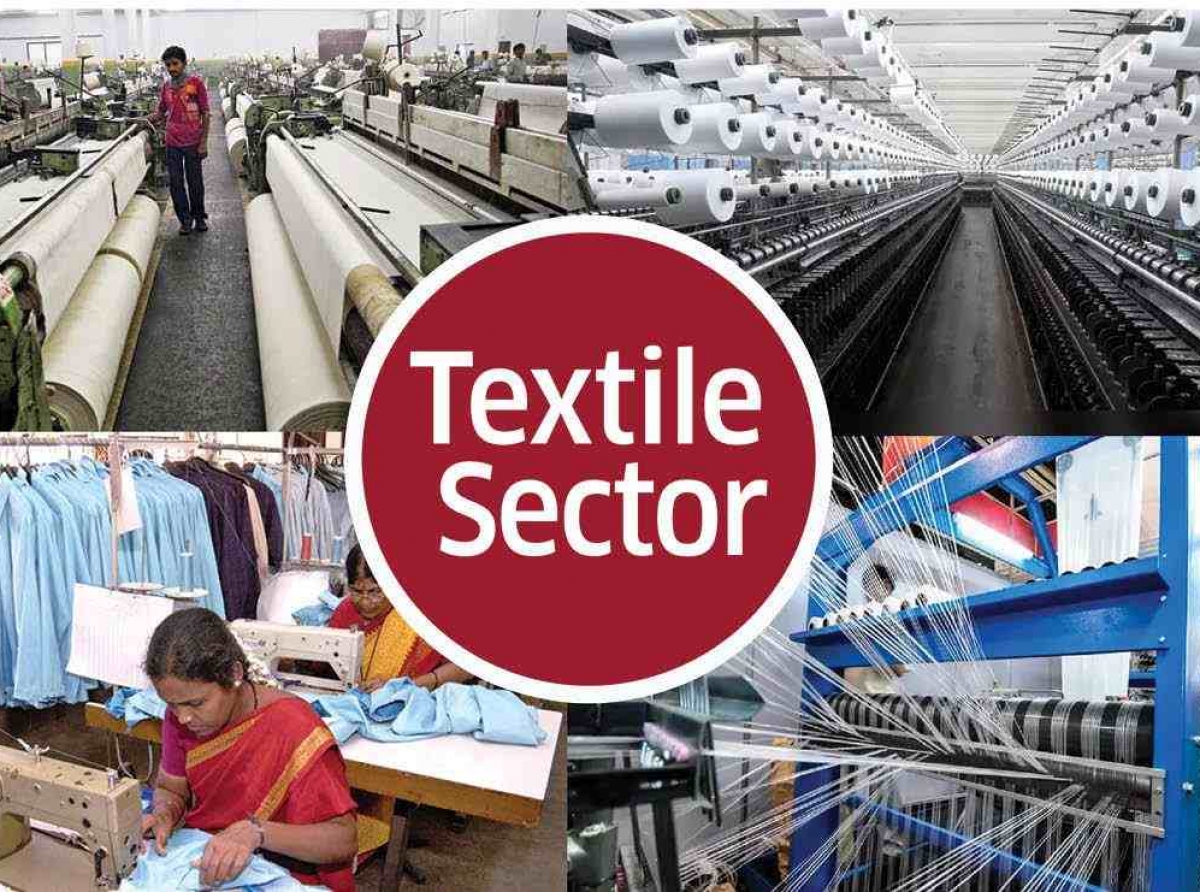
For much of the past decade, India's textile and apparel narrative has revolved around exports. Every industry target has largely been evaluated through the prism of overseas shipments, free trade agreements and access to global markets. Yet, as geopolitical uncertainty, supply-chain disruptions and fluctuating consumer demand continue to redefine international trade in 2026, an alternative strategy is steadily gaining traction: allowing India's domestic market to become the principal engine of industry expansion.
The proposition is difficult to ignore. According to the Ministry of Textiles' Annual Report 2025-26, India's textile and apparel ecosystem has already expanded into a $190 billion industry. More importantly, the domestic market alone now accounts for nearly $170 billion (Rs 16.66 lakh crore), having more than doubled over the past decade. These numbers suggest that India's largest opportunity may no longer lie outside its borders, but within them.
If fully leveraged, analysts believe the domestic market could substantially reduce the industry's dependence on volatile export cycles while making the government's long-term aspiration of building a $350 billion textile economy considerably more achievable.
Changing the growth equation
The government's original roadmap envisaged a $350 billion textile sector comprising a $250 billion domestic market and $100 billion in exports by 2030. While ambitious, the export target requires overseas shipments to rise from roughly $38.5 billion today to $100 billion within a few years, translating into a compound annual growth rate exceeding 21 per cent. Economists argue that such increases would be exceptionally difficult in the current global environment, where demand remains vulnerable to inflation, inventory corrections and recurring logistics disruptions.
|
Metric |
Traditional roadmap |
Domestic-first strategy |
|
Total Industry |
$350 bn |
$350 bn |
|
Domestic Market |
$250 bn (10% CAGR) |
$290 bn (11-12% CAGR) |
|
Exports |
$100 bn (21% CAGR) |
$60 bn (9% CAGR) |
By allowing the domestic market to shoulder a greater share of industry growth, export expectations become significantly more realistic. Instead of chasing unprecedented international expansion, exports would need to grow at a sustainable single-digit pace while continuing to complement domestic demand.
Why the domestic market looks more resilient
Export-led growth inevitably exposes manufacturers to variables beyond their control. Freight disruptions in West Asia, changing tariff structures, carbon-border regulations and slowing consumer spending across North America and Europe continue to create uncertainty for exporters. Domestic consumption, however, follows a different pattern. India's expanding middle class, rising disposable incomes, rapid urbanisation and deeper digital penetration are generating structural demand that is relatively insulated from international economic cycles. Unlike export markets that fluctuate with Western retail inventories, domestic purchasing is increasingly being driven by lifestyle upgrades, organised retail expansion and higher discretionary spending. For manufacturers, this creates a far more predictable demand environment.
Three factors driving internal consumption
The opportunity extends well beyond conventional apparel. One of the biggest shifts is unfolding within technical textiles. Supported by the National Technical Textiles Mission (NTTM), the segment has grown from a $6 billion industry to nearly $25 billion. Demand is being generated through government-led infrastructure and public procurement programmes, including geotextiles for highways, agro-textiles for agriculture and medical textiles for healthcare.
Unlike fashion retail, these applications create stable institutional demand that remains relatively immune to seasonal consumer cycles. Digital commerce is another major catalyst. Online fashion retail has crossed $14.8 billion and now accounts for roughly 22 per cent of India's apparel sales. Improved digital payment infrastructure has increased organised retail penetration across Tier-II and Tier-III cities, encouraging consumers to shift from unbranded fabrics towards branded garments and value-added apparel.
Simultaneously, changing consumption patterns are creating new opportunities beyond clothing. Urban households are allocating a larger share of monthly expenditure towards home furnishings, reflecting rising aspirations and increasing premiumisation across lifestyle categories.
A third growth driver is the rapid increase of organised retail. Global fashion retailers alongside domestic conglomerates continue investing aggressively across India, encouraged by the country's growing middle-income population. Industry estimates suggest nearly 60 million additional middle-class households could emerge by 2030, creating sustained demand for branded apparel and home textiles.
Manufacturing must catch up
While domestic demand appears robust, supply-side constraints remain a significant concern. One of the biggest mismatches lies in fibre composition.
|
Sourcing category |
Internal consumption trend (2026) |
India's manufacturing base |
|
Man-Made Fibers (MMF) & Synthetics |
Fast-growing demand for athleisure/blends |
High import duties & 45% price premium |
|
Natural Fibers (Cotton, Silk, Wool) |
Stable, traditional demand |
56% dominant market share |
Global fashion consumption is steadily shifting towards performance wear, activewear and blended fabrics. However, India's manufacturing sector continues to remain heavily concentrated around natural fibres, particularly cotton. Although approximately 30 manufacturing units have become operational under the Production Linked Incentive (PLI) scheme for MMFs, experts believe a much broader participation from mid-sized manufacturers will be necessary if domestic demand is to be fully met.
Clusters such as Surat and Coimbatore will need to increase investments in synthetic processing capacity to narrow the competitiveness gap with regional manufacturing hubs.
Scaling beyond fragmentation
The domestic supply chain also remains highly fragmented. India's textile sector is dominated by micro, small and medium enterprises (MSMEs), which provide flexibility but often struggle with inconsistent quality standards, limited automation and inadequate production scale. As organised retailers and e-commerce platforms demand shorter production cycles and higher consistency, fragmentation risks becoming a competitive disadvantage.
The government's PM MITRA Mega Textile Parks seek to address this weakness by integrating spinning, weaving, processing and garment manufacturing within large industrial clusters. Such integrated facilities are expected to reduce logistics costs by as much as 15-20 per cent, improve production efficiency and create globally competitive manufacturing ecosystems capable of servicing both domestic and export markets.
More balanced growth model
The domestic-first approach does not advocate abandoning exports. Instead, it proposes rebalancing the industry's growth architecture. A stronger domestic market provides manufacturers with stable capacity utilisation, allowing exports to evolve into higher-margin opportunities rather than acting as the industry's primary growth engine.
Many industry analysts therefore believe India's $350 billion textile ambition remains achievable but on a more realistic timeline extending towards 2031-33 rather than the original target year. If domestic demand continues expanding at an annual rate of around 11-12 per cent, supported by technical textiles, organised retail, digital commerce and rising middle-class consumption, India could substantially reduce its dependence on volatile international markets.
The country's textile transformation may ultimately be defined not by how much it exports, but by how effectively it unlocks the purchasing power of its own consumers. Building a resilient domestic ecosystem first could provide the scale, investment confidence and manufacturing strength required for India to compete more sustainably on the global stage.











 Get in Touch!
