
Luxury maisons deepen India play with localised festive collections
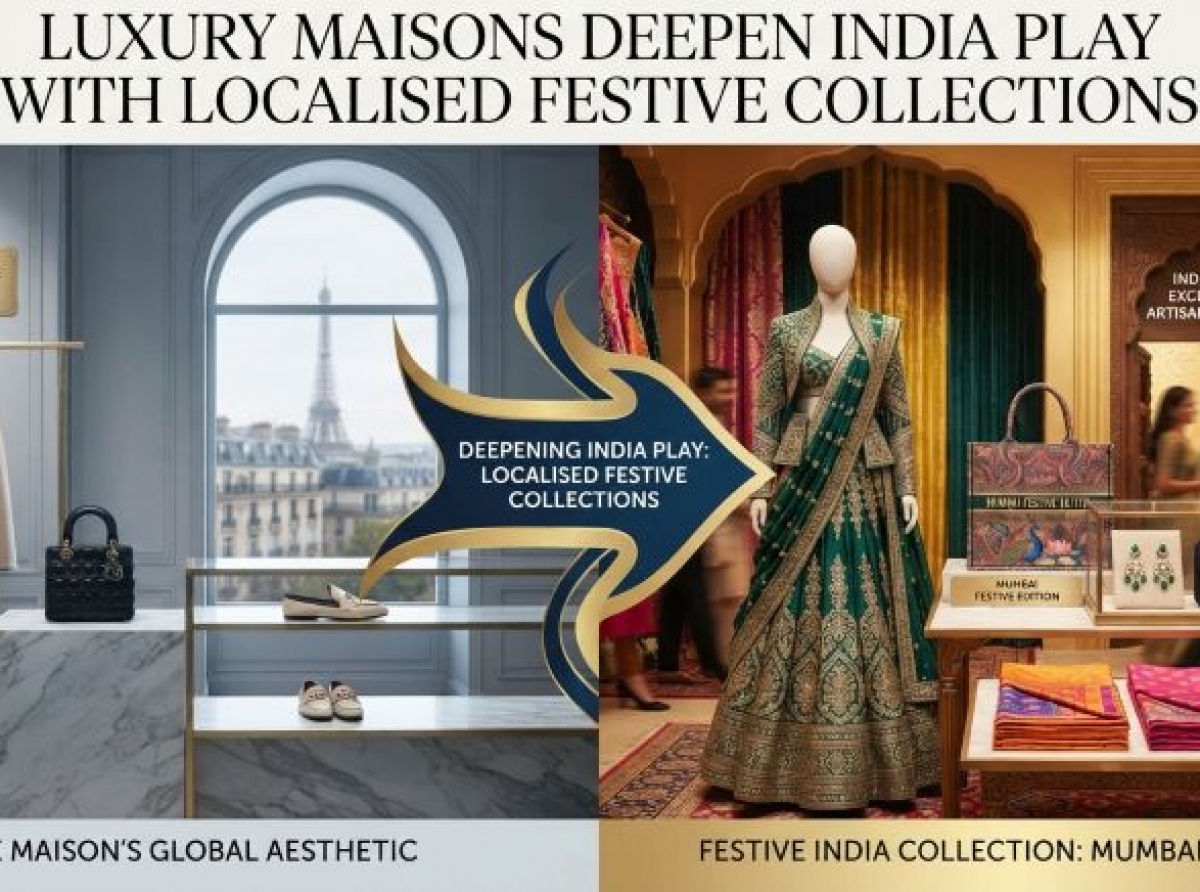
Global luxury houses are moving beyond symbolic Diwali celebrations to build commercially focused India strategies. Dedicated festive collections, regional artisan collaborations and India-specific retail campaigns are becoming central to their efforts to capture a personal luxury goods market valued at nearly $12 billion (Rs 1.14 lakh crore), with projections pointing to $30 billion by 2030.
The shift reflects India's growing importance as a luxury consumption market. Diwali accounts for a significant share of annual premium retail spending, traditionally concentrated in jewellery and bridal couture. International fashion, footwear, leather goods and beauty brands are increasingly competing for this seasonal spending.
Instead of relying on generic festive promotions, luxury maisons are introducing limited-edition products, localised designs and exclusive merchandise across Indian stores. Consumer preferences are also changing. A Kearney survey indicates that more than 70 per cent of affluent Indian consumers consider domestic craftsmanship, cultural relevance and product provenance important factors in high-value purchases. This is pushing international brands to invest in cultural integration rather than superficial festive branding.
Capsules drive sales
Burberry has developed an exclusive festive capsule in vineyard red and chocolate brown. The collection reworks its signature House Check in cashmere-silk blends with metallic fibres, alongside quilted velvet Vanity bags and embellished knitwear. The merchandise targets Indian flagships and select Middle Eastern markets, including the UAE and Qatar.
Christian Louboutin's limited-edition Rayon de Lumière collection comprises five women's footwear styles, three men's styles and two handbags. Drawing inspiration from Mumbai's Art Deco architecture, the collection combines Indian visual references with Parisian craftsmanship. Its launch included a showcase at Mumbai's Chatterjee & Lal gallery before reaching retail markets in Doha and Dubai. Jimmy Choo has introduced a 10-piece festive collection comprising five footwear silhouettes and five evening bags in gold and crimson. The focus is on occasion-led purchases and premium celebration wardrobes in key metropolitan markets.
These launches reflect a broader shift towards region-specific merchandising, allowing brands to create exclusivity while aligning inventory with local consumption patterns.
Craft becomes brand equity
Luxury houses are also using Indian craftsmanship to strengthen brand positioning and deepen engagement with affluent consumers. Hermès has extended its association with regional craft through festive window installations featuring Channapatna lacquered wooden bead sculptures. The Karnataka craft tradition, known for its turned wooden objects and vegetable-based lacquer, has been incorporated into illuminated retail displays across Mumbai and New Delhi.
Cartier has commissioned New Delhi-based miniature artist Sukanya Ayde to create hand-painted palace architecture for its boutique displays. The installations combine Indian architectural references with the brand's signature panther imagery. The jeweller has also extended its festive outreach to overseas markets, including its Manhattan flagship and Harrods in London, targeting affluent Indian customers abroad.
Bvlgari has taken this approach to a global level with ‘Passing the Light’, its first campaign dedicated entirely to Diwali. Unveiled at the Jaipur Centre for Art, the initiative brought together artist Doyel Joshi and hereditary Kumhar potters to create 4,500 hand-sculpted terracotta vessels. The collaboration combines the traditional Indian diya with Bvlgari's Serpenti imagery, linking regional craft with the Italian maison's luxury identity. Such partnerships allow brands to build cultural relevance while supporting differentiated retail experiences.
Table: How luxury maisons are localising
|
Brand |
Festive strategy |
Localisation |
Target market |
|
Bvlgari (LVMH) |
Global campaign, Passing the Light |
4,500 terracotta vessels made with Jaipur potters, combining diya and Serpenti motifs |
Indian boutiques, global digital platforms, and high-jewellery clients |
|
Hermès |
Permanent seasonal retail installations |
Channapatna lacquered wooden bead sculptures |
Mumbai and New Delhi flagships |
|
Burberry |
Region-exclusive apparel and leather capsule |
Metallic House Check, velvet bags, and festive colour palette |
India and Middle East |
|
Christian Louboutin |
Limited-edition footwear and accessories |
Mumbai Art Deco-inspired designs |
India, Doha, and Dubai |
|
Jimmy Choo |
Ten-piece festive collection |
Gold and crimson footwear and evening bags |
Indian luxury retail network |
|
Chanel |
Beauty and gifting campaign |
Sparkle This Diwali collection and festive N°5 packaging |
Beauty boutiques and luxury department stores |
|
Cartier (Richemont) |
Festive storytelling and retail displays |
Miniature palace architecture by Sukanya Ayde |
India, Manhattan, and Harrods, London |
Global markets follow Indian wealth
The commercial opportunity extends beyond domestic retail. Global department stores are aligning their merchandising with Indian festive and outbound travel calendars. London's Harrods has used festive installations and curated gifting across its Knightsbridge store to attract Indian luxury shoppers during the October-November travel season. The store reportedly recorded a 13 per cent year-on-year increase in visits by high-spending Indian passport holders during the period, accompanied by higher transaction values across jewellery, bespoke tailoring and prestige fragrances.
Private-client services, curated merchandise and multi-currency payment facilities help international retailers capture spending that might otherwise flow into India's domestic luxury market. This creates a cross-border retail opportunity, with Indian consumers influencing luxury sales across London, Dubai and other international shopping destinations.
Beauty opens the door
While leather goods, jewellery and premium footwear generate high-value transactions, beauty and fragrances offer luxury brands a more accessible entry point. Chanel has used its Sparkle This Diwali campaign to promote metallic eye palettes, Rouge Allure lipsticks and its N°5 fragrance range. The campaign, featuring Indian brand ambassador Ananya Panday, targets festive gifting and younger luxury consumers.
The commercial logic is significant. India's premium beauty and personal care segment is estimated to be growing at 18.2 per cent CAGR, creating opportunities to recruit aspirational buyers before they move towards higher-priced categories such as handbags, apparel and jewellery.
Retail infrastructure limits expansion
Despite rising demand, India's luxury retail infrastructure remains concentrated in a handful of premium developments, including Jio World Plaza and Palladium in Mumbai, DLF Emporio in New Delhi and UB City in Bengaluru.
Wealth creation is spreading into Hyderabad, Ahmedabad, Pune and Chandigarh, but the supply of luxury-compliant retail space has not kept pace. Brands are responding through private-client appointments, limited-edition allocations and multi-city trunk shows to improve sales productivity without committing to large store networks.
Import duties present another constraint. Tariffs on finished leather goods and premium apparel, estimated at 30-40 per cent, increase landed costs and can leave Indian retail prices substantially higher than those in Dubai and European markets. India's luxury opportunity is therefore tied to localisation, not simply store expansion. Brands that combine exclusive merchandise, Indian craftsmanship and targeted festive distribution are better positioned to build lasting consumer relationships. The shift marks a transition from treating Diwali as a marketing occasion to integrating India's festive calendar into global product and merchandising strategies.









 Get in Touch!

