
Red Carpets to Revenue Charts: The corporateisation of India’s heritage craft economy
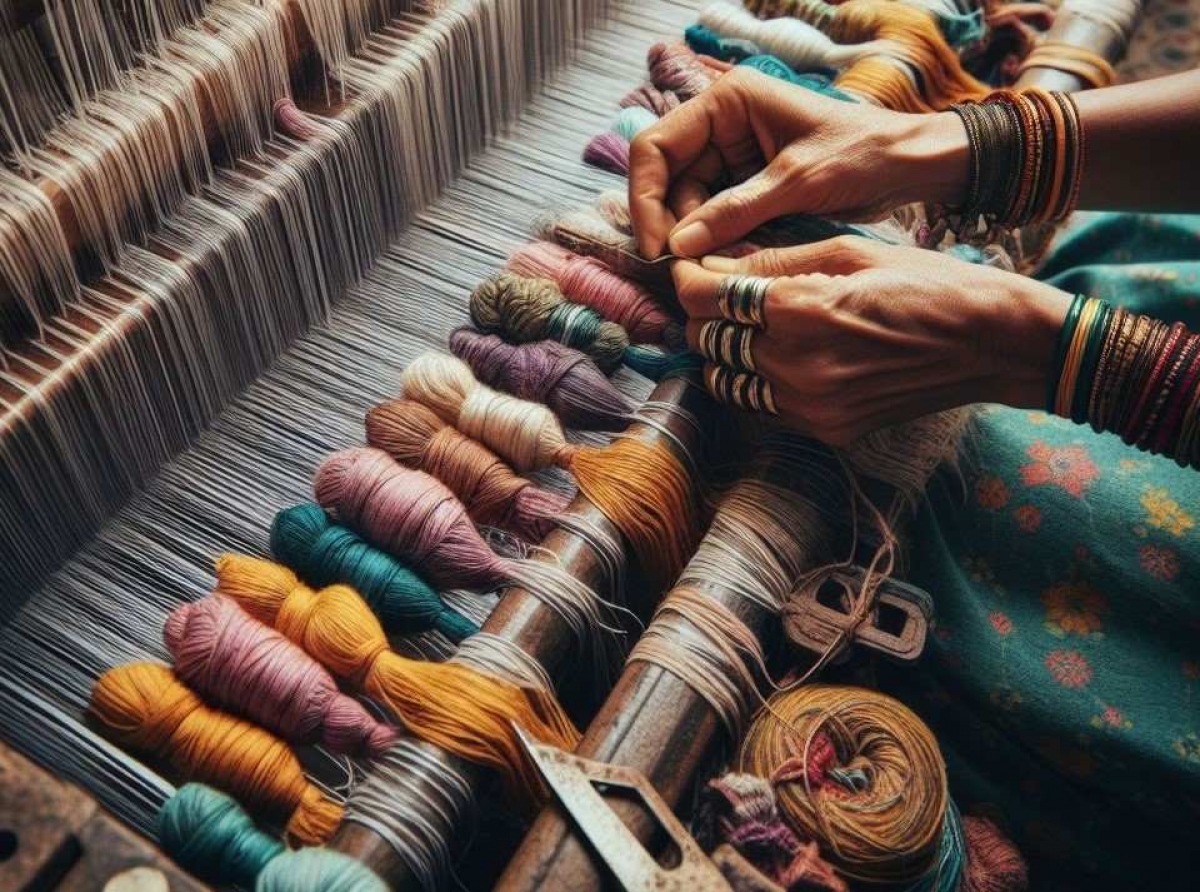
India’s luxury fashion once a fragmented, artisan-driven ecosystem is rapidly being reorganised into a corporate-backed, celebrity-boosted luxury industry. And what is helping this transformation is a new economic thesis: cultural heritage is no longer a legacy sector, it is an institutional investment class capable of competing with European haute couture.
For decades, global luxury narratives were defined by Paris, Milan and Zurich. Today, India’s ultra-high-net-worth individuals, corporate groups and designer-celebrities are repositioning indigenous craft traditions into scalable, high-margin luxury assets. The result is a rapidly consolidating market where textile heritage is being repackaged into global luxury IP. The domestic luxury apparel market, now valued at approximately $7.77 billion, is growing alongside a resilient ethnic wear economy driven by weddings, ceremonies and social status consumption.
Craft on the red carpet
A defining moment of this premiumisation strategy came when global cultural influencer Isha Ambani wore a couture garment integrating 26 Indian textile traditions, from Banarasi brocade and Kashmiri tilla to kantha embroidery crafted over 450 hours by designer Manish Malhotra in collaboration with the Swadesh artisan platform.
The garment’s global visibility at a Vogue event in New York was not merely a fashion statement but a calculated brand move. It showcased how hyper-local craft can be instantly elevated into global luxury with celebrity push and media choreography. This model reflects a larger shift: India’s luxury economy is now dependent on visibility arbitrage, where cultural capital is converted into pricing power. However, while couture garments now command premium valuations, the upstream ecosystem, spinners, weavers, dyeing clusters remains undercapitalised, limiting true scalability.
Corporate couture consolidation
The most visible change underway is corporate consolidation of India’s designer-led fashion houses. Retail and conglomerate capital is aggressively acquiring stakes in couture brands, formalising what was once a boutique-driven industry. Acquisitions include designer labels such as Sabyasachi, Shantnu & Nikhil, and Tarun Tahiliani, many now backed by large retail groups including Aditya Birla Fashion and Retail Ltd. This consolidation rides on India’s unique occasion economy. Unlike Western luxury markets, often driven by discretionary accessories Indian luxury apparel is embedded in mandatory social spending: weddings, festivals and lifecycle ceremonies.
As a result, demand is not aspirational but institutional. Brands such as Sabyasachi are now approaching the Rs 500 crore revenue mark, while Manish Malhotra has reported Rs 308.3 crore in revenue with 34.6 per cent growth, underscoring the strength of this consumption cycle.
Table: Luxury market performance
|
Luxury brand/ fashion house |
FY25-26 revenue (India operations) |
Year-on-year growth (in %) |
Strategy focus |
|
Sabyasachi (ABFRL Backed) |
Rs 500 cr |
Robust Double-Digit |
Jewelery & Global Flagships |
|
Hermès India |
Rs 428 cr |
35.40 |
Leather Goods & Accessories |
|
Manish Malhotra (RBL Backed) |
Rs 308.3 cr |
34.60 |
Bridal Couture & High-End Diffuse Lines |
|
Gucci India |
Rs 265.4 cr |
-17.30 |
Traditional Western Luxury RTW |
|
Christian Dior India |
Rs 257 cr |
-3.20 |
Traditional Western Luxury RTW |
The difference is clear: Indian designer-led houses are outperforming global luxury brands in local growth momentum, while Western labels face contraction in ready-to-wear categories.
ABFRL’s ethnic empire model
A key institutional accelerator has been Aditya Birla Fashion and Retail Ltd, which has built a diversified ethnic wear portfolio exceeding Rs 2,200 crore in annual revenue. The portfolio includes high-end designer labels such as Sabyasachi, Tarun Tahiliani, and Shantnu & Nikhil, alongside accessible premium platforms like Jaypore and Tasva. This dual-tier strategy stabilises demand across price segments while ensuring artisan absorption at scale. For instance, Tasva integrates semi-mechanised weaving systems for high-volume wedding wear, while couture labels absorb hand-embroidered, artisanal production. This hybridisation has reduced supply volatility while increasing throughput across craft clusters.
The Sabyasachi blueprint
The acquisition of a majority stake in Sabyasachi by ABFRL for Rs 398 crore marked a structural turning point. The transaction professionalised inventory systems, expanded retail real estate access, and enabled global scaling. Post-acquisition, the brand diversified into fine jewellery crossing Rs 100 crore in revenue and accessories nearing Rs 60 crore. More critically, it enabled international expansion, including flagship retail presence in New York and jewellery boutiques in Dubai. This model showcases how corporate capital can transform craft-based fashion into a global luxury platform without diluting cultural identity.
Bottlenecks in the value chain
Despite rapid scaling, India’s luxury craft market faces three constraints: fragmented production clusters, limited artisan financing, and inconsistent quality standardisation. Unlike vertically integrated European luxury groups, Indian brands still rely on decentralised weaving clusters. This creates scalability challenges during peak demand cycles, particularly wedding seasons.
Additionally, capital access remains concentrated at the design and retail layer, while primary producers, yarn spinners and handloom weavers remain financially excluded. This imbalance threatens long-term supply resilience unless corrected through institutional credit mechanisms and cluster-level investment.
Global demand & diaspora expansion
The international opportunity remains substantial. The South Asian diaspora across the US, UK and Middle East represents a high-income consumer base with strong affinity for ethnic luxury wear. E-commerce penetration and international flagship stores are enabling Indian brands to move beyond diaspora consumption into mainstream global luxury retail. Designer houses are now experimenting with AI-driven sizing systems, digital fittings, and cross-border logistics optimisation to support this expansion.
The Malhotra model
Manish Malhotra exemplifies the celebrity-led luxury scaling model. Backed by Reliance Brands Limited, the label has built flagship stores across Mumbai, Delhi and Hyderabad while expanding aggressively into international markets.
The brand’s Rs 308.3 crore revenue and 34.6 per cent growth reflect the commercial viability of blending Bollywood-driven cultural capital with institutional retail infrastructure. Founded in 2005, the label has transitioned from costume design into a full-scale luxury fashion house targeting high-net-worth consumers globally.
Thus India’s luxury fashion sector is no longer defined by artisanal fragmentation but by institutional consolidation. The intermixing of corporate capital, celebrity influence and heritage craft is transforming textiles into a structured asset class. The next phase of growth will depend on whether India can solve its supply chain fragmentation and extend institutional capital deeper into its artisan base. If achieved, the country’s craft ecosystem may not only rival European luxury houses but redefine what modern luxury itself means.









 Get in Touch!
