
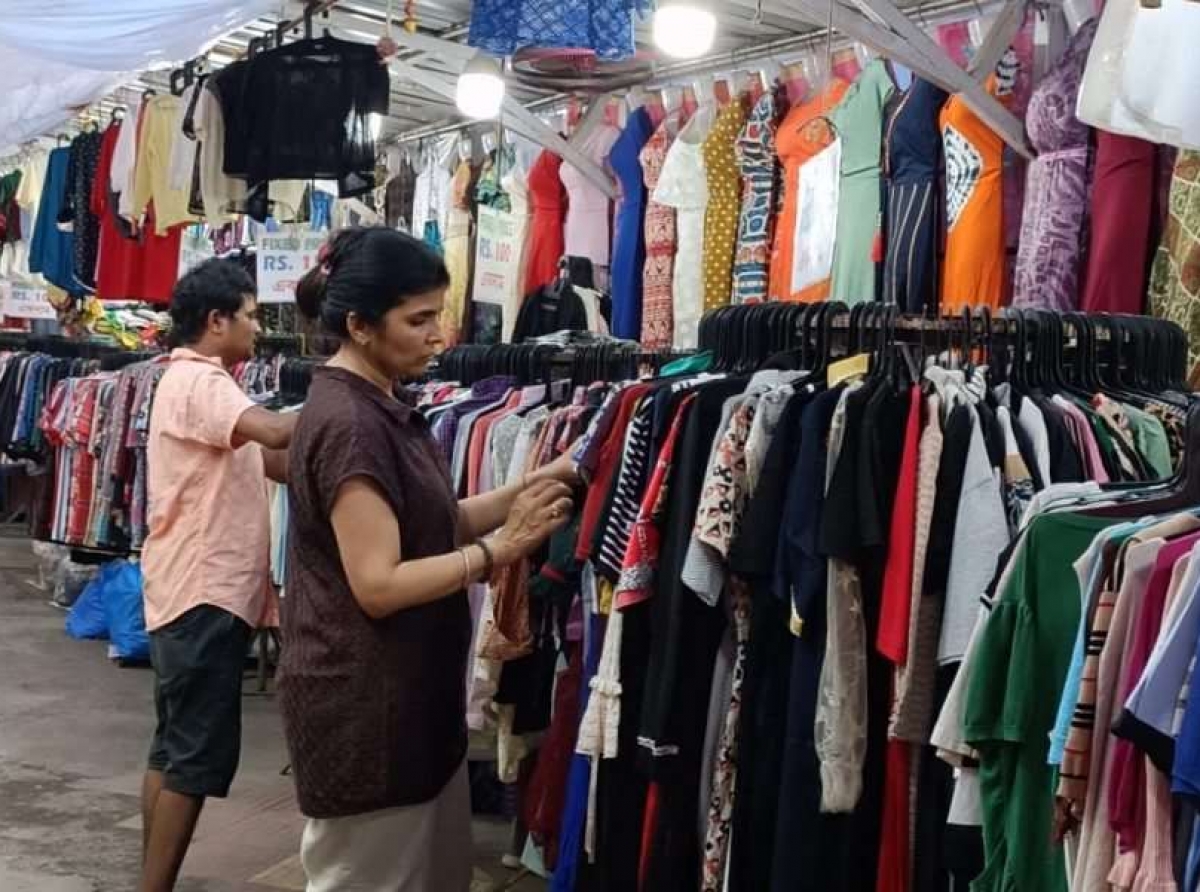
India’s severe summers are changing the economics of clothing. What was once a seasonal preference for lightweight cotton garments is rapidly becoming a necessity as prolonged heatwaves and rising humidity reshape consumer behaviour across the country. For the textile and apparel industry, breathable natural fabrics such as cotton and linen are evolving into climate-adaptation products rather than simple lifestyle choices.
Yet the shift is exposing a deeper imbalance within India’s retail market. While affluent consumers can afford premium natural-fibre apparel, millions of lower-income households remain dependent on inexpensive synthetic garments that retain heat but fit constrained budgets. As climate risks intensify, comfort is becoming closely linked to purchasing power, creating both a social challenge and a commercial opportunity for the textile industry.
A market split by price
The difference is most visible in India's value retail segment. Across urban markets, pure cotton and linen garments command a significant price premium over polyester alternatives. A basic cotton three-piece salwar suit typically retails for over Rs 1,000, while comparable synthetic versions are widely available for around Rs 300. For families earning between Rs 15,000 and Rs 40,000 a month and supporting multiple dependents, affordability outweighs thermal comfort.
Table: Price disconnect in value retail
|
Fabric category |
Retail Price (in Rs) |
Market share |
Consumer benefit |
|
Pure Cotton / Linen |
Rs 1,000 + |
38% Premium/Export |
High Breathability, Moisture Absorption |
|
Polyester / Synthetics |
Rs 300 |
62% Value Retail |
High Durability, Cost-Efficiency |
This pricing gap has helped polyester dominate India's apparel market. According to IMARC, synthetic garments account for nearly 62 per cent of domestic demand, due to their low production costs, durability and ease of maintenance. Cotton and linen continue to occupy premium retail shelves and export channels despite India being among the world's largest cotton producers.
Climate comfort has become an income issue
The commercial consequences of this imbalance become evident in neighbourhoods such as Shahbad Dairy in northwest Delhi, where dense housing, poor ventilation and metal roofing increase already extreme outdoor temperatures. Local retailers rarely stock pure cotton garments because they know demand is limited by household budgets rather than consumer preference. Families often reserve cotton clothing only for children while adults continue wearing cheaper synthetic alternatives despite the discomfort.
The result is an emerging form of climate inequality. Consumers who can afford natural fibres gain access to cooler, more comfortable clothing, while those with lower incomes remain exposed to garments that trap heat during increasingly severe summers. For retailers serving India's value segment, inventory decisions are therefore driven almost entirely by affordability, reinforcing the dominance of synthetic textiles in neighbourhood markets.
Industrial policy supports synthetic growth
The imbalance is also reflected on the manufacturing side. India has aggressively increased its man-made fibre ecosystem through production-linked incentive (PLI) schemes introduced in 2021. Over Rs 10,000 crore has been allocated to encourage investment in polyester, viscose, acrylic and other synthetic fibre manufacturing. The policy aims to strengthen India's competitiveness in technical textiles and global apparel exports while attracting fresh investment into domestic manufacturing.
Although the initiative has boosted industrial capacity, it has also reinforced the availability of inexpensive synthetic fabrics throughout domestic supply chains. As production expands and prices remain competitive, value retailers naturally continue sourcing polyester-based products for price-sensitive consumers. Meanwhile, premium cotton apparel serves export markets and higher-income domestic shoppers rather than India's mass-market consumer base.
Hidden cost for outdoor workers
The commercial debate extends beyond retail into occupational health. Millions of sanitation workers, delivery personnel, street vendors and municipal employees spend long hours outdoors during India's hottest months. Many continue wearing synthetic uniforms that provide durability but perform poorly under extreme temperatures. Extended exposure to heat while wearing low-breathable fabrics increases the likelihood of dehydration, fatigue and heat stress, particularly among workers engaged in physically demanding jobs.
The issue also highlights a broader design gap within India's apparel industry. While brands have invested heavily in performance sportswear and premium lifestyle collections, affordable climate-resilient workwear remains largely absent from the mass market. As employers place greater emphasis on worker safety and productivity during prolonged heatwaves, demand for functional uniforms made from breathable fabrics is likely to increase across both public and private sectors.
Commercial opportunity in fabric innovation
Rather than positioning cotton and polyester as competing materials, textile manufacturers increasingly see blended fabrics as the most commercially viable solution. Modern cotton-polyester blends combine the moisture management and comfort of natural fibres with the strength, durability and cost efficiency of synthetic yarns. Such blends allow manufacturers to reduce production costs while improving thermal performance compared with conventional polyester garments.
Developing affordable climate-responsive fabrics below the Rs 1,000 retail threshold could unlock a significant new market among India's value-conscious consumers. For apparel companies, this is more than a sustainability initiative. It is a scalable business opportunity that aligns affordability with climate adaptation while expanding addressable consumer demand.
Meanwhile India's textile sector is aiming for $350 billion by 2030 revenue, supported by growing domestic consumption, strong export demand and continued investment across spinning, weaving and chemical fibre production. Climate change is adding a new competitive dimension to that growth story. Consumers are no longer selecting fabrics purely on aesthetics or price; thermal comfort is becoming a defining purchase criterion.
Brands that successfully deliver affordable, breathable clothing for India's mass market will be better positioned to capture future demand than those relying solely on conventional product segmentation. The country's textile industry already possesses world-class capabilities across both cotton production and synthetic fibre manufacturing. The next phase of growth may depend less on producing more fabric than on engineering smarter fabrics that balance affordability, durability and climate resilience.
As India's summers grow hotter, clothing is evolving from a fashion purchase into an essential adaptation tool. For the apparel industry, the challenge is no longer simply manufacturing garments—it is ensuring that climate comfort does not remain a privilege reserved for those who can afford premium labels.











 Get in Touch!
