
Decathlon bets on KIPRUN as India’s running market races towards $5 bn
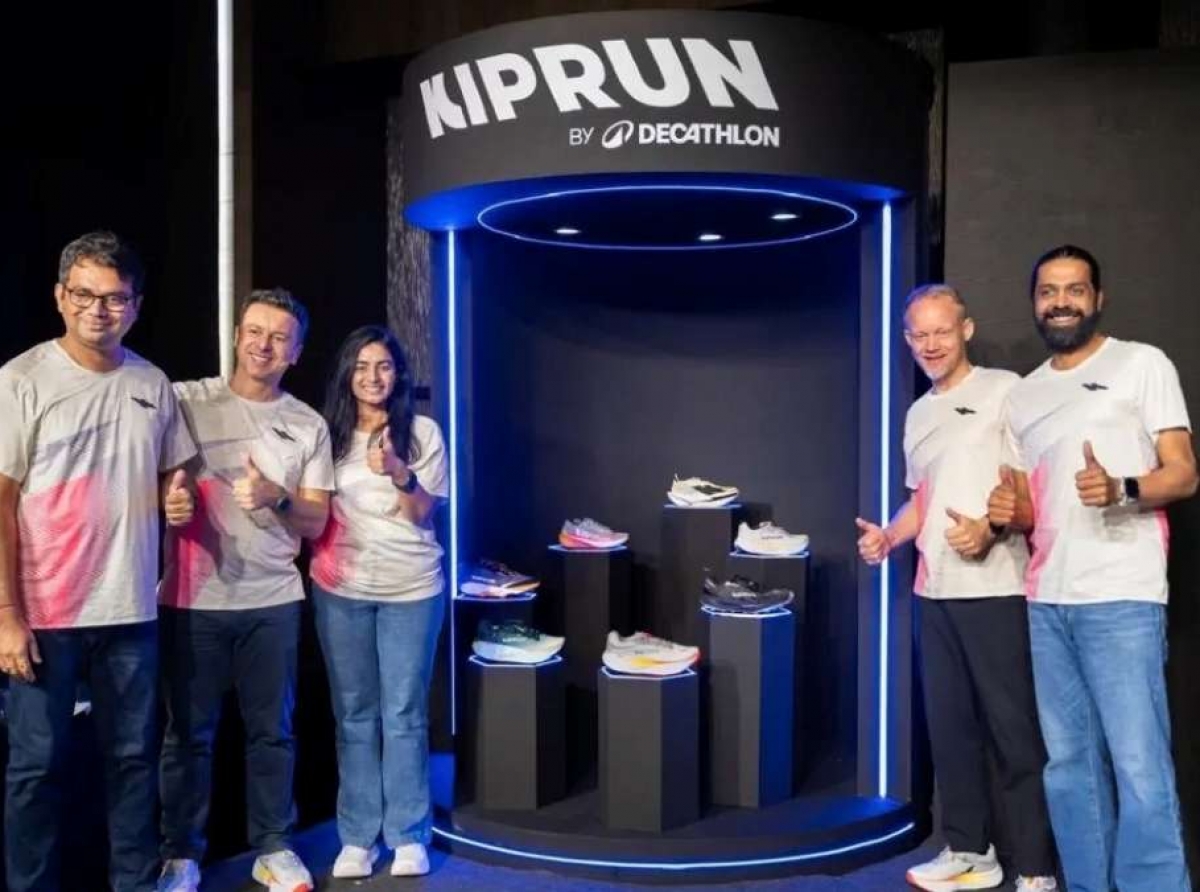
French sporting goods retailer Decathlon is sharpening its play in India’s fast-growing running market with the rollout of KIPRUN, its specialised endurance-running brand, as it seeks to more than double its running business to over Rs 1,000 crore by 2030. The move marks a shift from selling predominantly accessible, multi-purpose sportswear to capturing consumers as they graduate into higher-value technical running products.
Decathlon India’s running business currently generates close to Rs 500 crore annually, out of the company’s Rs 4,133.10 crore domestic revenue base. Its ambition is to take the category beyond Rs 1,000 crore over the next four years while building an ecosystem of over five million active runners.
The opportunity is growing rapidly. According to IMARC Group estimates, India’s running gear market is expected to grow from $2.5 billion in 2025 to $2.7 billion in 2026 and $4.9 billion by 2034. At the same time, organised running is becoming a mainstream consumer activity. India hosted around 2,000 organised running and endurance events in 2025, compared to roughly 500 in 2018. “India is at an inflection point in its sports journey; running is rapidly evolving from a niche fitness activity into a mainstream, community-led movement,” says Bruno Araujo, Country Sports Leader for Running at Decathlon Sports India.
From joggers to racers
KIPRUN gives Decathlon a way to address a familiar problem in sports retail: retaining consumers as their performance requirements and willingness to spend, increase. The typical customer may enter the category with basic Kalenji running products priced around Rs 1,500-2,500. But as weekly mileage increases and consumers move towards half-marathon and marathon training, demand shifts towards better cushioning, energy return, stability, lighter construction and specialised apparel.
This is where Decathlon has risked losing customers to Asics, Nike, Adidas and Puma, whose technical running shoes can command Rs 8,000-18,000 or more. KIPRUN is designed to close that gap with products incorporating carbon-composite plates, high-performance foams and technical constructions. Their portfolio also extends beyond footwear into compression apparel, hydration products and racing accessories, allowing Decathlon to capture a larger share of the runner’s training basket.
Table: Running shoe market entry-level to high-performance tiering
|
Brand/Tier |
Target consumer |
Indicative price |
Proposition |
|
Kalenji |
Beginners and recreational runners |
Rs 1,200-3,500 |
Accessible cushioning and durability |
|
KIPRUN |
High-mileage and marathon runners |
Rs 4,500-12,000 |
Technical foam, carbon plates and distance performance |
|
Asics, Nike, Puma |
Competitive/performance runners |
Rs 8,000-22,000 |
Premium race technology and athlete-led validation |
Launch of 35 shoes, wider basket
Decathlon is introducing 35 dedicated performance running shoes in India, including 17 higher-end technical road, trail and race models. These include the carbon-plated KIPSTORM ELITE 2, high-stack KIPRIDE MAX 3 with SOFTECH+ cushioning and the mixed-surface KIPRIDE GRAVEL. The commercial proposition, however, goes beyond footwear.
Distance runners replace shoes according to mileage and usage, creating a recurring purchase cycle. They also spend across technical tops, shorts, half-tights, hydration packs, socks and other accessories.
For Decathlon, that creates the potential to increase average basket size while improving customer retention. Instead of losing an entry-level runner when performance requirements rise, the retailer can move the consumer progressively through its own product ladder. Its PACER app and running clubs add another layer to the strategy by connecting products with training, community and performance.
Premiumisation meets big-box retail
The bigger challenge is positioning. Decathlon built its Indian reputation around accessible sporting goods and large-format stores. KIPRUN requires the retailer to persuade consumers that its higher-priced products can compete credibly with established specialist brands.
The company is therefore expanding experiential elements such as dedicated running zones, trial environments and gait-analysis services. Running communities and events can further turn stores into engagement points rather than simply transaction-led outlets. That matters because technical running is an advice-driven category. Consumers buying an Rs 8,000-plus performance shoe are more likely to seek guidance on cushioning, gait, mileage and terrain than shoppers buying a basic sneaker.
Local supply key to margins
The Rs 1,000 crore target will also test Decathlon’s supply-chain economics. Technical footwear involves more sophisticated uppers, foams, plates and construction techniques than conventional sports shoes. Increasing local sourcing and manufacturing can help Decathlon reduce exposure to import duties, freight costs and currency movements while improving responsiveness to Indian demand.
The company plans to expand its Indian retail footprint and increase domestic manufacturing to over 80 per cent of local sales. That could make India not only a major consumption market but also an important production and export base.
Decathlon, founded in France in 1976, operates around 1,900 stores globally with more than 100,000 employees. In India, it has more than 120 stores and an omnichannel network. For the retailer, KIPRUN is therefore more than a new product label. It is a bet that India’s running boom can push consumers up the sportswear value chain and allow Decathlon to retain them as they move from recreational jogging to serious endurance sport.











 Get in Touch!
