
Prada-Kolhapuri row puts India’s craft economy in the luxury spotlight
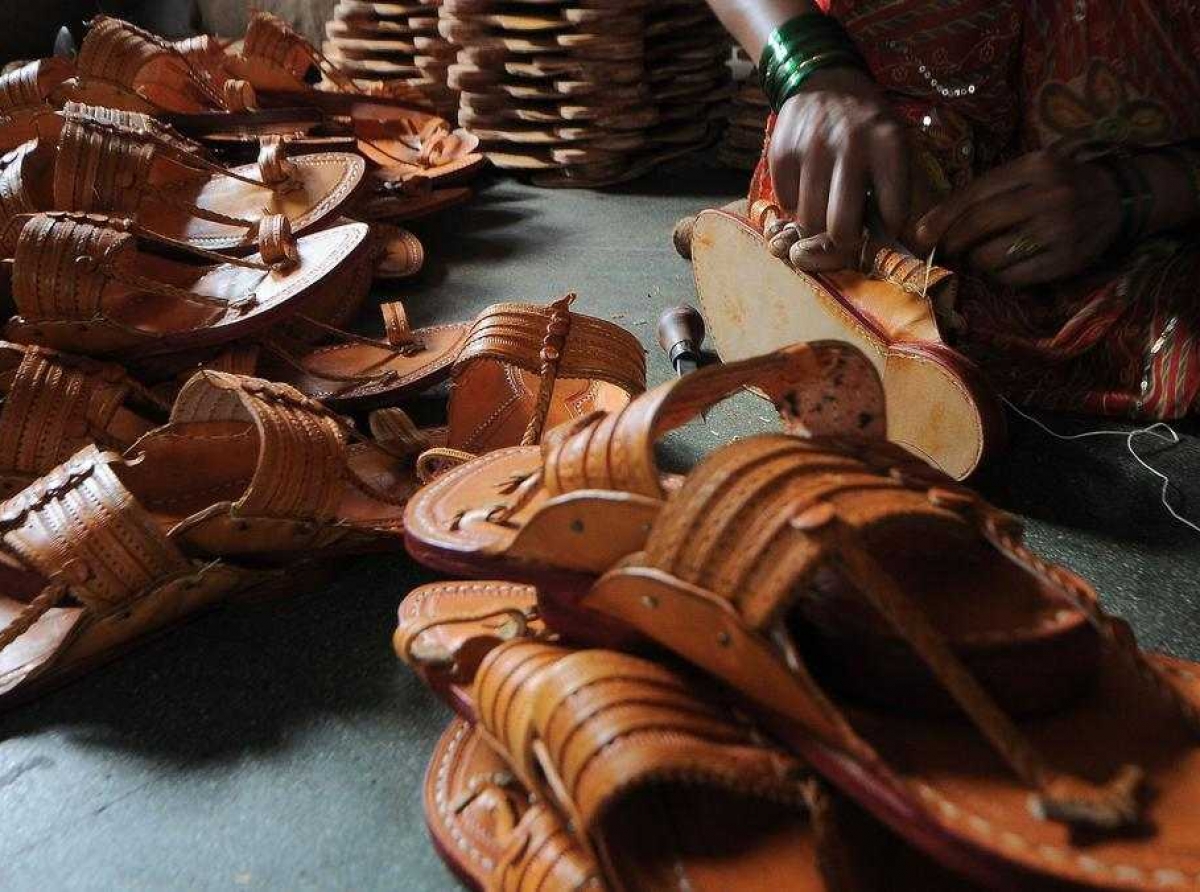
The controversy surrounding Prada’s Spring/Summer 2026 showcase in Milan, where handcrafted leather sandals closely resembled Maharashtra’s centuries-old Kolhapuri chappals, has opened a larger commercial question for India’s luxury and handicraft industries: can traditional craft move from cultural recognition to meaningful economic participation in global fashion?
The episode has shifted attention beyond runway attribution to the economics of heritage. For Indian artisans, the opportunity lies not merely in securing acknowledgement when global brands draw from indigenous techniques, but in building supply chains, brands and distribution systems that allow them to capture a greater share of the value created by their craft.
From GI tag to fair value
Kolhapuri chappals received a Geographical Indication (GI) tag in 2019, giving formal recognition of their regional identity. Yet GI protection alone has not resolved the commercial challenges confronting artisans. Craft clusters across Kolhapur and western Maharashtra remain fragmented, with multiple intermediaries between makers and consumers. This limits artisans' bargaining power and compresses their earnings, while unbranded and mass-market imitations compete on price.
Jewellyn Alvares, Head of Department, School of Fashion & Costume Design, Whistling Woods International, argues that the long-term sustainability of Maharashtra's crafts depends on economic viability alongside cultural preservation. Fair remuneration, co-design models and stronger enforcement of GI registrations are essential if artisans are to participate meaningfully in the value generated by their intellectual and traditional skills. The commercial gap is significant because the same techniques that struggle to command sustainable prices domestically can acquire premium positioning when incorporated into international luxury products.
Maharashtra's untapped advantage
The opportunity extends well beyond Kolhapuri footwear. Maharashtra's craft portfolio includes Warli paintings, Paithani textiles, Sawantwadi wooden toys and traditional leather products. Yet the state's craft economy remains comparatively fragmented and heavily dependent on regional, tourism and festival-led demand.
This contrasts with states such as Rajasthan, Uttar Pradesh and Gujarat, which have developed stronger handicraft export ecosystems around established clusters and processing centres. Together, these states account for a substantial share of India's $3.78 billion handicraft export trade.
Table: Scaling Maharashtra’s craft economy globally
|
Indicator |
Position/Opportunity |
|
Kolhapuri chappals |
GI-certified since 2019 |
|
India's handicraft exports |
$3.78 bn |
|
Maharashtra's merchandise export contribution |
About 16% of India's total |
|
Leading handicraft-export states |
Rajasthan, UP, Gujarat |
|
Maharashtra craft clusters |
Kolhapuri leather, Paithani, Warli, Sawantwadi |
|
Infrastructure advantage |
Mumbai luxury ecosystem and JNPA port |
|
Cross-border B2C logistics |
Growing at more than 20% annually |
Maharashtra, however, possesses a different set of advantages. Its approximately 16 per cent contribution to India's merchandise exports, proximity to Mumbai's design and luxury ecosystem, access to commercial capital and connectivity through the Jawaharlal Nehru Port Authority (JNPA) provide an infrastructure base that could support a larger craft-to-export pipeline. The missing link is organised commercialisation.
D2C changes the equation
Cross-border direct-to-consumer (D2C) commerce could offer that missing link. India's cross-border B2C e-commerce logistics market is growing at over 20 per cent annually, supported by postal export reforms and streamlined courier clearances. For artisan enterprises, this creates the possibility of reaching overseas consumers without depending entirely on layers of export intermediaries.
Nelson Jaffery, Head of Design at Liva, points to a broader change in consumer behaviour. Global buyers are increasingly interested in traceability, material circularity and verified artisanal provenance rather than relying exclusively on brand recognition. That creates an opportunity for Indian craft businesses to reposition provenance itself as a luxury asset.
Digital storefronts, global payment systems and parcel networks can enable artisan cooperatives and specialised craft brands to sell directly to consumers in premium markets. The challenge is to translate individual craftsmanship into consistent sizing, quality, packaging, fulfilment and digital storytelling without stripping away the authenticity that creates the product's value.
Luxury needs continuity
The opportunity also depends on demand within India. Fashion designer Ranjit Rodricks argues that closing the value gap requires sustained domestic retail demand alongside international expansion. Heritage products cannot become commercially viable if consumers and fashion businesses engage with them only during festivals or as occasional cultural purchases.
For luxury and fashion companies, collaborations with craft clusters could therefore evolve from one-off collections into longer-term sourcing and co-creation partnerships. Such models could give artisans visibility into product development while providing brands with differentiated materials, techniques and provenance.
The shift would also change the economics of the relationship: from artisans supplying low-value components to craft communities participating in higher-value product creation.
The Maharashtra State Handicrafts Development Corporation (MSHDC), established in 1971, gives an existing institutional platform for this transition. Through its 'Mahahandicrafts' retail brand, the state-run enterprise markets products including Paithani textiles, Kolhapuri footwear and Warli artefacts through retail outlets and is expanding e-commerce access.










 Get in Touch!
