
Non-metro apparel demand reshapes textile inventory and production planning
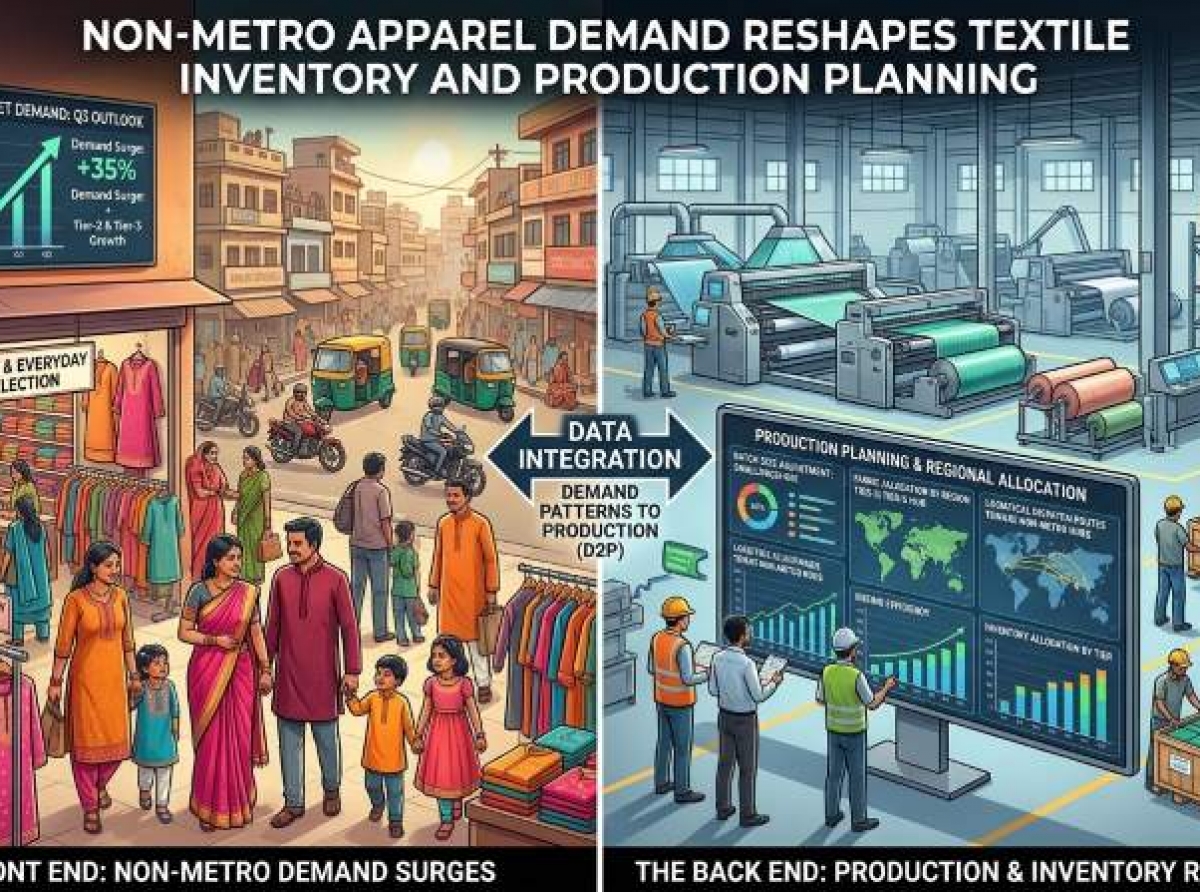
Accelerating garment purchases across smaller Indian towns are forcing domestic textile mills and apparel manufacturers to recalibrate seasonal production runs. Data from the November 2026 Diwali Special RAI–Innoviti Sanket report indicates, Fashion & Lifestyle retail posted 9.2 per cent Y-o-Y like-for-like growth across the 36-day festive period from October 11 to November 15, outpacing August’s 8.5 per cent and September’s 7.7 per cent expansion. Tier-III cities drove this trajectory with 15.6 per cent apparel growth, followed by 12.5 per cent in Tier 2 towns, compared with 6.9 per cent in metro centers.
Value-segment fabric mix and payment friction test margin discipline
For spinning and weaving units supplying domestic retail chains, rising demand from North India (15.7 per cent) and East India (13.9 per cent)- which had already registered a 28.3 per cent pre-Navratri spike - requires tighter inventory allocation toward affordable ethnicwear, synthetic blends, and daily basics. Managing working capital amid volatile yarn costs while avoiding post-festival markdowns remains a primary operational hurdle. Pairing real-time transaction analytics with regional assortment planning lets apparel brands protect margins rather than treating non-metro markets uniformly, observes Rajeev Agrawal, CEO, Innoviti Technologies. Notably, digital checkout infrastructure also supported conversion, as UPI-linked fashion payments grew 14.2 per cent against 6.4 per cent for cards.
RAI–Innoviti Sanket Retail Intelligence Initiative
Launched jointly by the Retailers Association of India (RAI) and payment-technology firm Innoviti Technologies, Sanket benchmarks same-store consumer spending across 2,800 towns and 10,000 PIN codes. Processing over ₹80,000 crore annually across 20,000 merchants, Innoviti—backed by Bessemer Venture Partners and Catamaran Ventures—provides apparel manufacturers and retailers with granular category and regional demand telemetry











 Get in Touch!

