
From ghost malls to fashion hubs, India’s next retail real estate reset
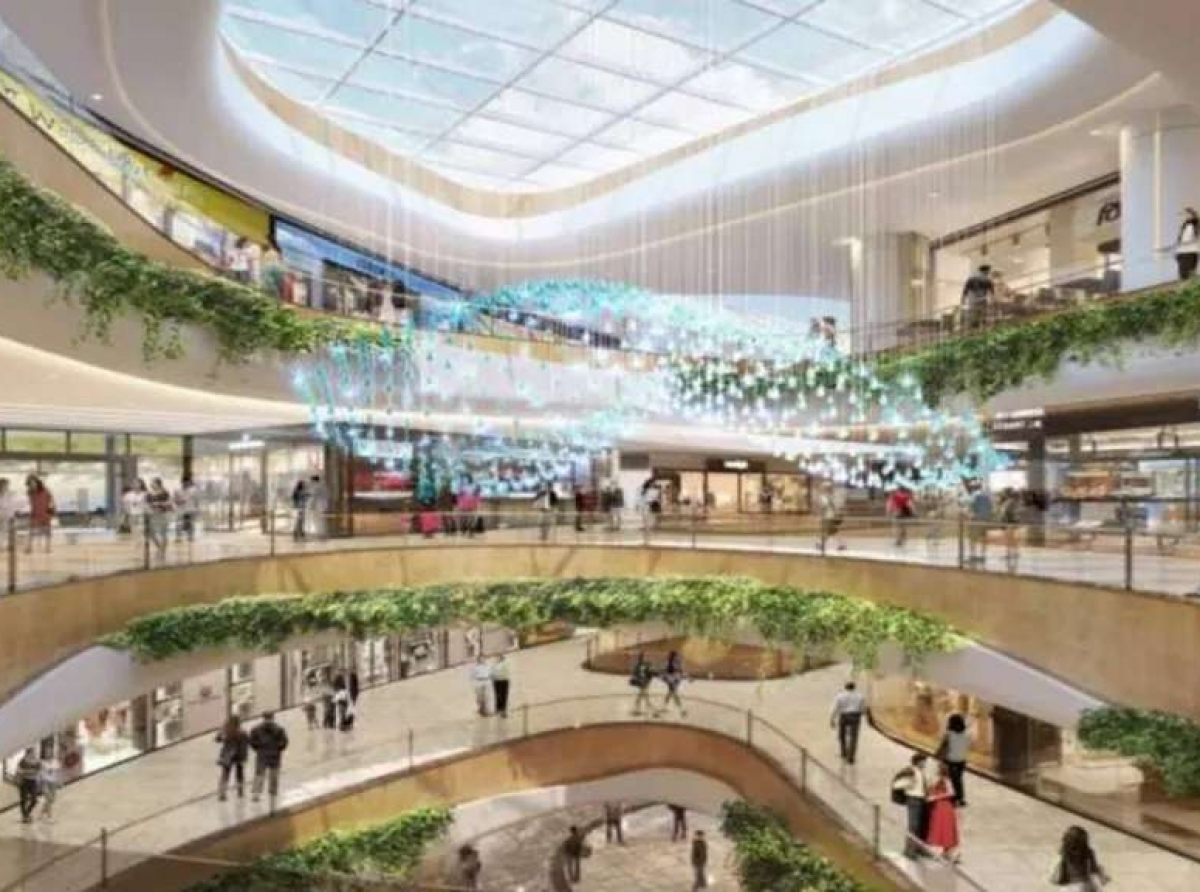
India’s retail real estate market is developing a sharp two-speed structure. While institutional Grade-A shopping centres are operating at high occupancy, a substantial stock of older malls is losing tenants, footfall and rental relevance. The opportunity emerging from this is not necessarily new construction, but the commercial reinvention of existing retail assets.
Knight Frank’s study ‘Think India Think Retail: Value Capture – Unlocking Potential’ covering 365 shopping centres across 32 cities and 134 million sq ft, identifies 74 developments as ‘ghost malls’ operational shopping centres with vacancy of 40 per cent or more. Together, these properties are around 15.5 million sq ft of underutilised retail space.
|
Retail asset parameter |
Sector nenchmark |
|
Total Shopping Centres Surveyed |
365 centres (134 million sq ft) |
|
Classified Ghost Malls (Vacancy ≥ 40%) |
74 properties (15.5 million sq ft) |
|
Prime Turnaround Candidates |
15 centres (4.8 million sq ft) |
|
Unlockable Annual Rental Value |
Rs 357 crore |
|
Projected Rental Yield on Reinvigoration |
5.86% |
|
Geographic Revenue Concentration |
West and South regions (77% of value) |
A split retail market
The presence of ghost malls does not point to weak consumer demand. Instead, it exposes a mismatch between legacy retail infrastructure and the requirements of today's fashion, lifestyle and beauty brands. Of the 74 distressed properties, Knight Frank identifies 15 centres spanning 4.8 million sq ft as high-potential turnaround candidates. Their reinvigoration could unlock Rs 357 crore in annual rental value. The opportunity is concentrated across both major metros and emerging urban markets. Tier-I cities account for Rs 236 crore of potential rental value across 2.9 million sq ft and Tier-II markets contribute another Rs 121 crore across 2 million sq ft.
For institutional landlords and retail operators, this creates an alternative to waiting for new development cycles. Repositioning an existing asset can provide access to established catchments while avoiding some of the time and land costs associated with greenfield projects.
When catchments shift
Many of the properties now classified as ghost malls were not inherently flawed when they opened. They were developed for the demographic, income profile and consumption patterns of their time. The problem emerged as cities expanded around them.
New residential catchments, rising disposable incomes and changing consumer expectations created demand for larger, better-curated and more experiential shopping destinations. When newer Grade-A malls entered the same markets, customers and anchor tenants migrated towards them. The departure of one major anchor can increase the decline. Secondary tenants follow, rental collections weaken and owners defer capital expenditure. The deterioration then becomes self-reinforcing.
For fashion and lifestyle brands, the consequences extend beyond sales. Store environment, adjacency and mall positioning influence brand perception and productivity. Today's international apparel, activewear and beauty retailers often require large contiguous stores, four-metre-plus ceiling heights, prominent frontages and sophisticated building services, requirements that many early-generation, fragmented or strata-owned malls cannot readily provide.
The current tenant mix underscores the importance of organised retail. Shopping centres have an average composition of 67 per cent domestic brands and 33 per cent international retailers.
|
City market category |
Retail vacancy rate |
Growth drivers |
|
Tier-I Metros (Ghost Stock) |
15.4% (Market Avg) / >40% (Ghost Stock) |
Catchment redevelopment, adaptive reuse, and luxury upgrades |
|
Mysuru (High-Performance Hub) |
2.00% |
Controlled retail supply, rising affluent catchments |
|
Vijayawada/Vadodara/Kochi |
Under 10.0% |
Demand-supply shortfall, strong domestic brand presence |
|
Over-Supplied Tier-II Hubs (e.g., Nagpur) |
Up to 49.0% |
Premature floor-space supply, fragmented mall ownership |
Engineering the turnaround
Turning around an operating mall is not simply a matter of filling vacant stores. The physical structure, merchandising strategy and customer profile has to be addressed simultaneously.
Institutional operators typically approach the process in three stages. The first is structural realignment. Developers audit circulation, dead-end corridors, infrastructure and fragmented ownership. HVAC, lighting and vertical transportation may require upgrades, while multiple strata-titled units can be consolidated into larger institutional leasing formats.
The second is phased remerchandising. Rather than filling empty space with short-term tenants, operators gradually replace low-productivity categories with brands aligned to the surrounding catchment. This process can extend over 24 to 36 months.
The third is experience-led anchoring. Dining, entertainment and leisure are used to rebuild dwell time before fashion becomes the principal traffic driver. Food and beverage clusters, upgraded cinemas and family entertainment can establish evening and weekend footfall, creating the conditions for apparel, footwear and lifestyle brands to commit to longer leases.
Lessons from turnarounds
Pacific Mall Tagore Garden in West Delhi exemplifies how such repositioning can work. The property shifted away from legacy hypermarkets and undifferentiated local apparel stores while expanding food and beverage, upgrading multiplex offerings and combining smaller units into larger flagship formats.The strategy used dining and leisure to rebuild baseline traffic before attracting international and organised retail brands including Zara, Uniqlo and Lifestyle. The result was a more differentiated destination capable of generating stronger sales productivity.
A similar repositioning model has been applied to a previously underperforming centre in Pune's Koregaon Park, where tenant restructuring and capital upgrades transformed underutilised floor plates into a fashion-oriented retail destination. The common factor in these examples is not simply refurbishment. It is a reset of the mall's commercial proposition around the catchment it serves.
Knight Frank Chairman and Managing Director Shishir Baijal describes the situation as a supply-quality problem rather than a consumer-demand problem, with Grade-A assets operating strongly while older Grade-C properties experience high vacancies. For viable assets in dense catchments, he argues, disciplined capital expenditure and remerchandising can offer a faster investment route than waiting through a five-year greenfield development cycle.
That proposition is becoming more relevant as urban land values rise and prime development parcels become increasingly scarce. For institutional developers and retail REITs, adaptive reuse offers an opportunity to extract more value from existing real estate. For fashion, beauty and lifestyle companies, it can create additional stores in established neighbourhoods without waiting for an entirely new retail ecosystem to emerge.
The Rs 357-crore rental opportunity therefore is more than distressed real estate being brought back to life. It signals a broader shift in India's retail expansion model from building more shopping centres to making existing ones commercially relevant again.











 Get in Touch!
