
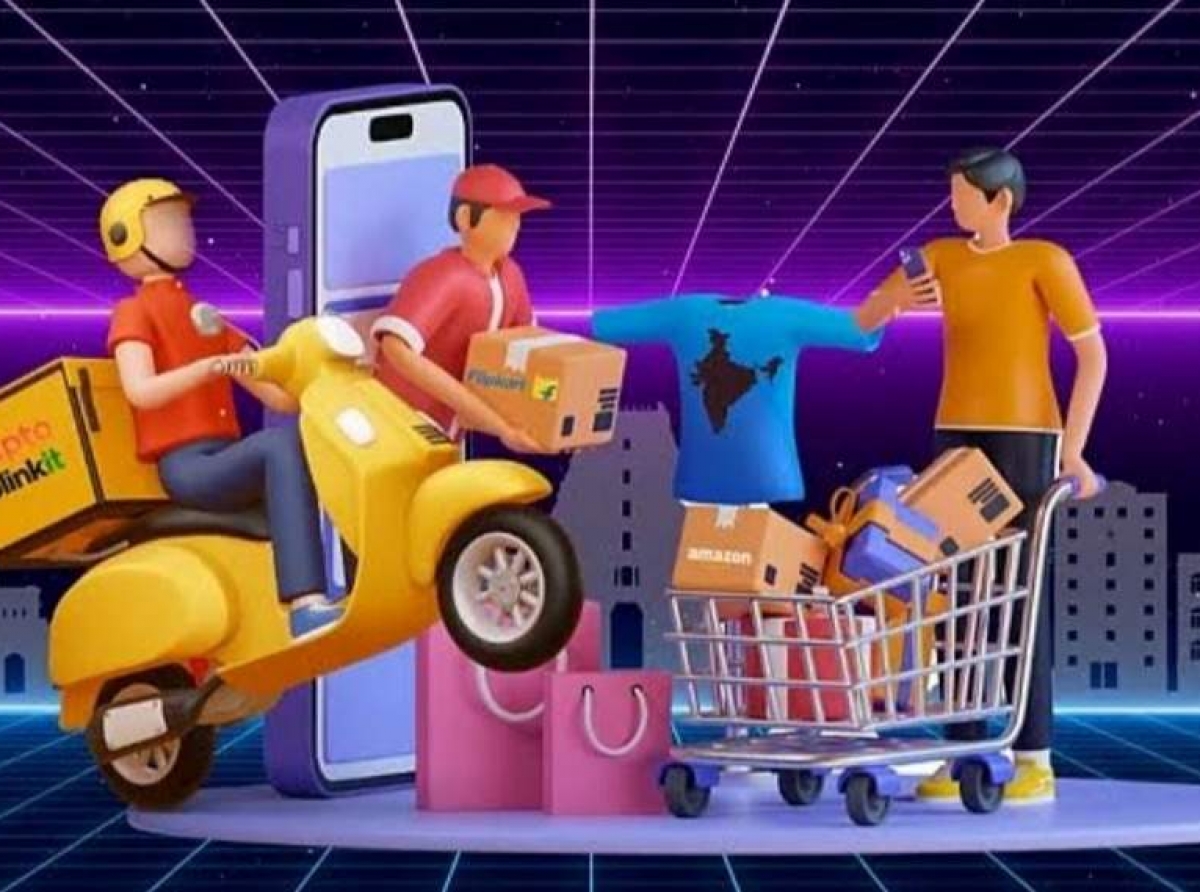
India’s retail economy is moving from scheduled online fulfilment to immediate consumption, forcing fashion and apparel companies to rethink how inventory is positioned, curated and replenished. As per consultancy Infisum’s Smart Growth in a Fast Market, India’s e-commerce market is projected to grow from $125 billion in 2024 to $345 billion by 2030, an 18.4 per cent CAGR. E-commerce could account for 10-12 per cent of total retail spending by the end of the decade, with an active consumer base of 420-440 million.
Quick commerce is expected to become a major engine of this growth. The segment is projected to reach $65-70 billion by 2030 and generate 45-50 per cent of incremental e-retail growth over the next five years. For fashion, a category traditionally built around multi-day courier fulfilment, this marks a shift towards treating selected apparel as immediately available inventory rather than merchandise sitting in a central warehouse.
Dark stores move closer
The biggest operational change will be physical. India’s dark-store network is projected to almost triple from 2,525 facilities in 2025 to around 7,500 by 2030.
Table: India e-commerce & quick commerce outlook
|
Indicators |
Current baseline |
Projection 2030 |
Fashion impact |
|
Indian e-commerce |
$125 bn (2024) |
$345 bn |
Apparel emerges as a major GMV contributor |
|
Quick commerce |
Emerging high-growth channel |
$65-70 bn |
45-50% of incremental digital growth |
|
Dark stores |
2,525 (2025) |
7,500 |
Localised inventory becomes critical |
|
Digital shoppers |
250-280 mn |
420-440 mn |
Wider non-metro penetration |
|
D2C regional orders |
66% from Tier-II/III |
Rising Bharat penetration |
More localised fashion demand |
|
AI productivity |
Early adoption |
35-37% operational lift |
Better forecasting, fit and replenishment |
The implications for apparel supply chains are significant. Centralised fulfilment centres in places like Bhiwandi, Bilaspur and Hoskote may remain important for bulk inventory, but they cannot by themselves support a 10-30-minute delivery promise. However, brands will need regional micro-warehouses and dark-store allocations, with selected high-velocity products positioned within a few kilometres of customers.
Small towns change the equation
The opportunity is also moving beyond metros. Infisum estimates that 66 per cent of new D2C orders originate from Tier-II and Tier-III cities. This expansion coincides with the growing influence of Gen Z, which already make up nearly one-third of active online shoppers and is projected to become the largest digital spending cohort by 2030.
For consumers in smaller cities, limited department-store availability can boost digital adoption. Quick commerce therefore has the potential to become a channel for more than urgent purchases, including last-minute socialwear, festive merchandise, loungewear and seasonal accessories.
The shift also means fashion merchandising has to become more granular. National demand patterns are no longer enough; brands need to understand what sells by neighbourhood, city, weather condition, festival calendar and even time of day.
Returns remain the hurdle
The business, however, is more complicated than simply putting apparel into a dark store. Grocery typically has return rates of 2-4 per cent, whereas apparel e-commerce can see returns and exchanges of 25-35 per cent, primarily because of fit, fabric expectations and impulse purchases. A delivery model built around 15-minute turnaround times is poorly suited to conventional try-and-buy and reverse-logistics cycles.
Dark stores themselves present another constraint. With typical space of only 3,000-4,500 sq ft, apparel competes with higher-turnover categories for limited shelf capacity. This makes broad fashion catalogues difficult to support. The likely result is a highly curated assortment. Innerwear, loungewear, oversized T-shirts, socks, basic knitwear, standard-fit shirts and seasonal accessories are better suited to the model than highly size-sensitive or occasion-led apparel.
Snitch tests the model
Menswear brand Snitch is an example of how the supply chain could be redesigned around this reality. The Bengaluru-based company has integrated selected merchandise with quick-commerce platforms across Bengaluru, Mumbai and the NCR, targeting sharp weekend demand for socialwear.
From a master catalogue of around 2,500 SKUs, it has reportedly narrowed the quick-commerce assortment to about 120 high-performing products per micro-hub, including standard-fit shirts, chinos, core T-shirts and perfumes.
Localised inventory planning allows deeper stocking of selected sizes rather than spreading inventory thinly across the full catalogue. Quick-commerce orders also operate under replacement-only rules for defective units, while sizing guidance and AI-powered fit recommendations are used to address return risks. As per to the company, this approach generated a 22 per cent increase in weekend evening conversions, highlighting the potential of quick commerce for time-sensitive fashion consumption.
AI becomes the margin lever
Technology will determine whether the model works economically. Infisum projects AI and machine learning could deliver a 35-37 per cent productivity lift in retail by 2030. For fashion, AI can connect demand forecasting with hyperlocal inventory. Algorithms can track stock velocity alongside weather, local events and festival calendars to determine when and where products should be replenished.
Virtual fitting and computer-vision tools can also reduce sizing uncertainty before dispatch. For manufacturers, the larger opportunity is to connect this demand data with shorter production cycles, replacing speculative bulk production with smaller, responsive batches.
India’s projected $345-billion e-commerce market therefore represents more than a digital sales opportunity for fashion. It is pushing the industry towards a distributed supply chain in which inventory location, assortment precision, returns management and demand intelligence become as important as design and brand appeal. For companies such as Snitch, the race is not just to sell fashion online, but to make the right fashion available nearby and almost immediately.










 Get in Touch!
