
AI shopping gains ground as India outpaces western markets
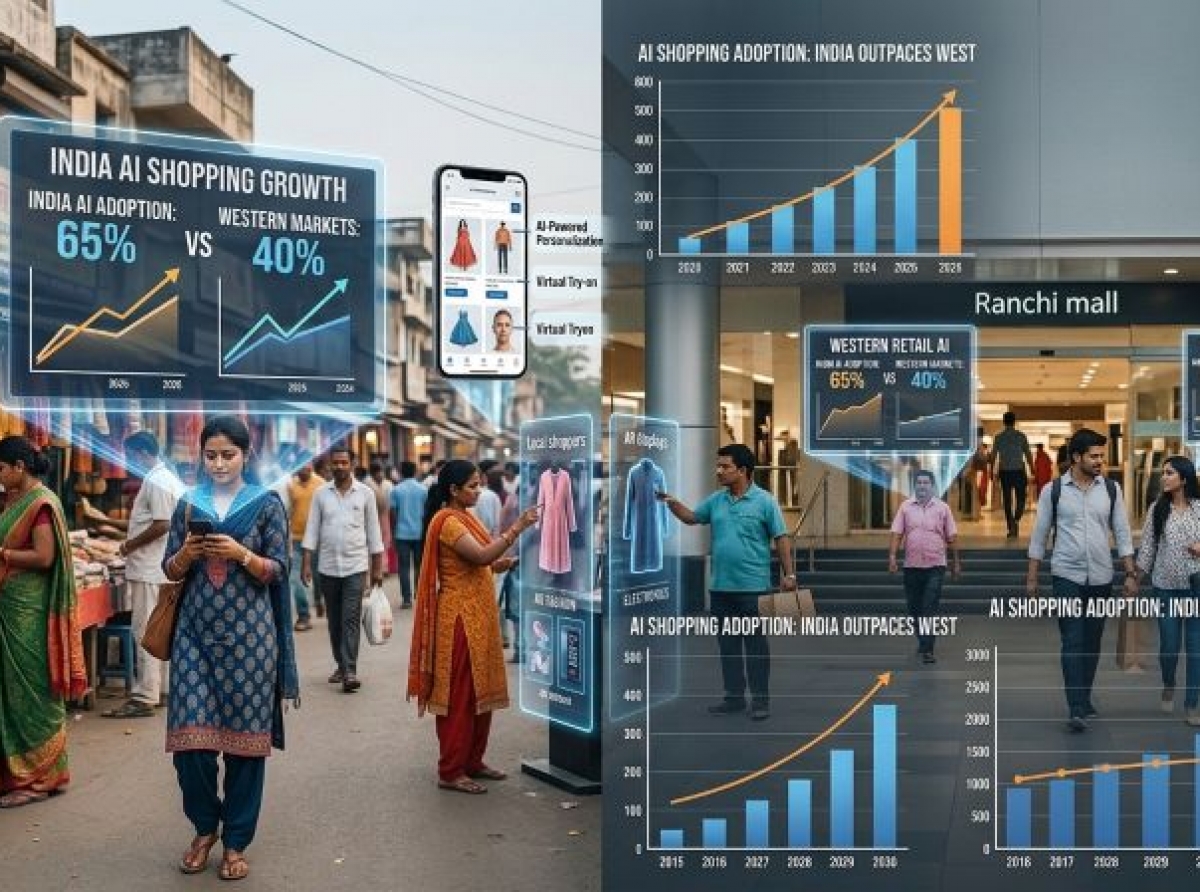
Global fashion retail is entering a new phase of digital commerce as artificial intelligence (AI) moves beyond product recommendations to autonomous shopping assistance. While younger consumers have traditionally driven digital adoption, millennials are emerging as an equally important commercial force, using AI tools to simplify product discovery, compare prices and make more informed purchasing decisions. McKinsey’s Agentic Commerce Consumer Survey, covering approximately 21,000 consumers across 11 global markets, including the US, UK, China and India, found that 53 per cent of consumers globally have adopted AI shopping tools. Millennials lead adoption at 63 per cent, marginally ahead of Gen Z at 62 per cent.
However, adoption does not automatically translate into trust. Only 67 per cent of Gen-Z AI users express confidence in automated shopping and chat tools, compared to 73 per cent globally. Millennials report trust levels of 73 per cent, indicating greater willingness to integrate AI into purchase decisions.
The Indian market has seen a more pronounced shift. AI shopping adoption stands at 76 per cent, against the global average of 53 per cent, while consumer trust reaches 87 per cent. Indian millennials lead domestic adoption at 84 per cent, compared with 74 per cent among Gen Z and Gen X consumers.
India leads adoption
The geographical divide reflects differences in digital infrastructure, consumer familiarity with technology and the maturity of online shopping ecosystems. China leads the surveyed markets with 80 per cent AI shopping adoption, followed by India at 76 per cent. The US, in comparison, records 48 per cent, below the global average.
|
Geographic/demographic segment |
AI shopping adoption rate (%) |
Consumer trust in AI shopping engines (%) |
|
China (National Aggregate) |
80 |
Not Disclosed |
|
India (National Aggregate) |
76 |
87 |
|
Global Baseline (11 Markets) |
53 |
73 |
|
US (National Aggregate) |
48 |
74 |
|
Global: Millennials |
63 |
73 |
|
Global: Gen Z |
62 |
67 |
|
India: Millennials |
84 |
87 |
|
India: Gen Z |
74 |
87 |
|
India: Gen X |
74 |
87 |
|
India: Baby Boomers (Indicative, n<100) |
56 |
87 |
*Indicative sample of fewer than 100 respondents. Source: McKinsey Agentic Commerce Consumer Survey, as cited in the supplied data.
For Indian fashion retailers, the findings point to an opportunity to integrate AI into mainstream shopping rather than position it exclusively as a technology for younger consumers. Millennials, with established purchasing power and more defined requirements around fit, quality and value, are increasingly using conversational tools to narrow choices.
Returns become a priority
The commercial case for agentic AI extends beyond faster discovery. For international apparel retailers, reducing product returns remains a major opportunity to protect margins. Online apparel return rates typically range between 20 per cent and 35 per cent, with incorrect sizing, fabric expectations and garment fit among the principal reasons. Conversational AI can address some of these issues by helping shoppers evaluate fabric composition, garment measurements, stretch percentages and cross-brand sizing before completing a purchase.
Instead of going through multiple product categories, consumers can use natural-language searches to specify requirements such as occasion, budget, climate, fabric and fit. This shifts AI from a promotional tool to a functional purchasing assistant. For retailers, more informed product selection could improve conversion quality, reduce avoidable returns and limit reverse-logistics costs. The opportunity is particularly relevant among millennial consumers, who are using AI to optimise shopping time and expenditure rather than simply browse visually curated content.
Brands increase deployment
Global fashion companies are integrating AI into both consumer-facing platforms and internal retail operations.
H&M and Inditex are deploying generative AI and data-led sizing capabilities across their technology ecosystems. Zalando has developed conversational fashion discovery tools, while Amazon is expanding its Rufus shopping assistant to help consumers navigate product information, customer reviews and purchasing decisions. In India, Myntra's Maya assistant reflects the growing application of conversational AI in fashion discovery. Alibaba's conversational commerce capabilities illustrate a similar shift in China.
These platforms are moving product discovery away from conventional search bars towards contextual shopping experiences. A shopper looking for formal clothing suitable for a humid climate within a specified budget can increasingly receive curated recommendations without navigating multiple catalogue pages.
Retail industry data indicate that shoppers engaging with intelligent conversational discovery can convert at up to three times the rate of passive storefront browsers. This points to the potential commercial value of AI-led engagement, although actual outcomes will depend on platform implementation and consumer behaviour.
Inventory gets smarter
The impact of agentic commerce is also extending into supply-chain management. Conversational search data can provide retailers with more detailed insights into regional demand, preferred fabrics, sizes and product attributes. Integrated with inventory and allocation systems, these insights can help brands improve stock distribution across warehouses and stores.
Better demand visibility could reduce regional stock imbalances, unnecessary inventory transfers and end-of-season markdowns. For fashion retailers operating across multiple countries, the ability to connect consumer intent with inventory planning could become an important competitive advantage.
Data remains the weak link
Despite its potential, agentic commerce faces significant operational challenges. Poor product information remains a fundamental obstacle. AI shopping engines depend on accurate catalogue metadata covering fibre composition, fabric weight, stretch, garment dimensions, care instructions and sizing standards. Incomplete or inconsistent product descriptions can generate misleading recommendations, undermining consumer confidence.
There is also a brand-positioning challenge. As AI agents compare products through specifications, price and functionality, premium fashion labels risk losing the emotional and aspirational context traditionally established through visual merchandising and brand storytelling.
Retailers will therefore need to balance automated discovery with differentiated brand experiences. Generative Engine Optimisation and direct conversational commerce are emerging as potential strategies to maintain visibility when consumers increasingly begin their shopping journeys through AI interfaces rather than conventional search engines.
For global apparel retail, the next phase of digital competition will not be determined by technology adoption alone. The ability to combine reliable product data, personalised discovery, inventory intelligence and brand differentiation will determine how effectively retailers convert agentic AI adoption into sustainable commercial returns.











 Get in Touch!

