
Tier-II, III cities drive fashion’s August recovery as festive demand builds: Study
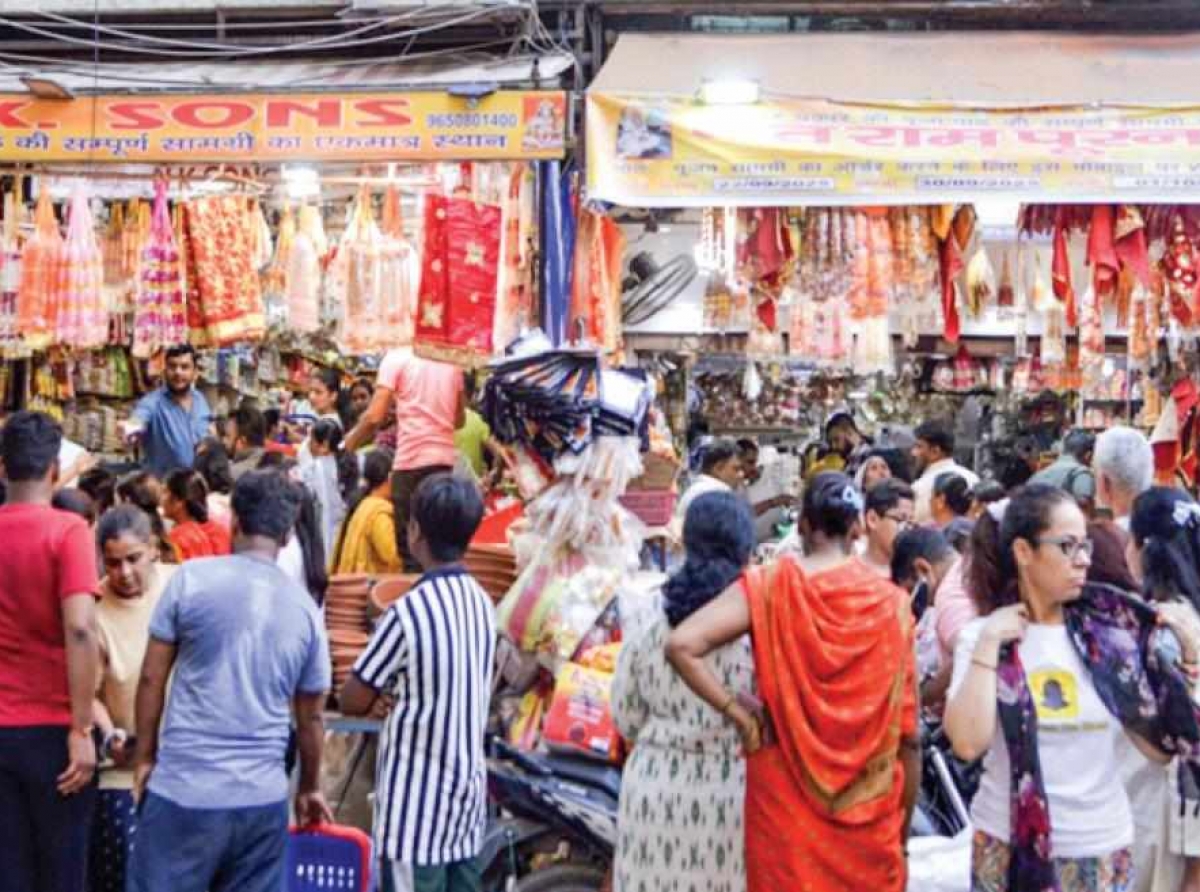
India’s retail consumption recovery strengthened in August, with smaller cities emerging as the principal growth drivers for fashion and lifestyle sector ahead of the festive quarter. The second edition of the Sanket (Spends & Key Emerging Trends) index, jointly published by the Retailers Association of India (RAI) and Innoviti Technologies revealed same-store consumer spending has gone up 9.6 per cent year-on-year in August, up from 7.1 per ent in July.
Based on over 70 million transactions across 100,000 checkout terminals in 2,800 towns the index indicates a broad-based improvement rather than a recovery restricted to metros.
Fashion regains momentum
Fashion & Lifestyle recorded one of the sharpest month-on-month improvements, with growth moving from 4.5 per cent in July to 8.5 per cent in August. Grocery & general retail grew at 9.9 per cent, while jewellery & accessories grew 8.4 per cent. Consumer Electronics remained at 5 per cent, reflecting continued pressure from import-linked costs.
Table: Categorywise retail growth July-August 2026
|
Retail category |
Growth July YoY |
Growth August YoY |
Monthly trend |
|
Grocery & General Retail |
7.50% |
9.90% |
Strong increase |
|
Fashion & Lifestyle |
4.50% |
8.50% |
Sharp Rebound (+4.0 pp) |
|
Jewellery & Accessories |
6.80% |
8.40% |
Post-Akshaya Tritiya High |
|
Consumer Electronics |
5.00% |
5.00% |
Flat/Import-Cost Drag |
As Kumar Rajagopalan, CEO, RAI points out the August numbers indicate breadth in the recovery and give an early signal for the holiday quarter. For retailers, the improvement creates greater confidence around festive inventory planning, although global macroeconomic pressures remain a consideration.
Smaller cities lead
The most significant shift is geographical. Tier III towns recorded 11.9 per cent same-store growth in August, compared to 7.6 per cent in Tier I cities. The 4.3-percentage-point gap suggests that consumption momentum is extending beyond established metros. Tier II markets were particularly strong for discretionary categories. Fashion and apparel spending rose 13 per cent while jewellery increased 11.6 per cent. Regionally, Western India led with 10.7 per cent growth, followed by the South at 9.7 per cent. Northern markets recorded the sharpest month-on-month improvement, gaining three percentage points as retailers and consumers moved towards the festive cycle.
Table: Region wise growth pattern
|
Market/City tier |
Same-store growth August YoY |
Primary commercial factor |
|
Tier III cities |
11.9% |
Higher throughput at existing stores |
|
Tier II cities |
13% (Fashion) / 11.6% (Jewellery) |
Discretionary demand |
|
Tier I metros |
7.6% |
Discretionary spending |
|
West Region |
10.7% |
Strong retail base |
|
South Region |
9.7% |
Early festive purchases (Onam) |
|
North Region |
Sharpest swing (+3.0 pp vs. July) |
Pre-festive inventory build-up |
Payment behaviour reinforces the shift. Innoviti founder as CEO Rajeev Agrawal explains UPI-linked same-store spending jumped 22.6 per cent year-on-year in August, while credit and debit card spending increased only 0.4 per cent. Outside jewellery, card spending fell across general apparel retail, indicating a growing role for digital payments in everyday discretionary purchases.
Value drives volume
The recovery, however, does not translate proportionately into revenue or margins. Crisil Ratings, which analysed 41 organised apparel retailers representing about 28 per cent of the organised industry, expects sector revenue growth to moderate to 12-13 per cent in FY27 from around 15 per cent in FY26.
The major reason is the increase of value fashion. Apparel priced below Rs 2,500 has grown at roughly twice the pace of premium merchandise over the past three years, increasing its share of organised retail revenue from 39 per cent to 46 per cent. This creates a volume-vs-value trade-off. Consumers are returning to stores, but their purchasing is more concentrated in affordable merchandise, limiting average selling prices and overall revenue realisation. Crisil’s senior director Anuj Sethi points out value fashion has become the principal volume driver, supported by aspirational demand and deeper penetration into smaller towns.
Margins under pressure
Input costs are complicating the recovery. Operating margins for organised apparel retailers are expected to fall by about 100 basis points to 14 per cent this fiscal as raw cotton costs and store overheads rise while pricing power remains constrained. CMAI trade surveys indicate that nearly 54 per cent of apparel manufacturers are absorbing raw-material cost increases rather than passing them through, while only 35 per cent are attempting price revisions.
Store productivity is another constraint. Revenue per square foot has remained broadly unchanged at around Rs 11,000 over the past three fiscal years, points out to Crisil director Poonam Upadhyay. This means expansion, rather than stronger productivity at mature stores, remains an important source of topline growth.
Festive bet
Retailers are therefore continuing to invest in physical expansion despite the margin pressure. Industry capital expenditure is estimated at about Rs 2,500 crore this fiscal, with a growing emphasis on Tier II, III markets. Gearing is expected at 1.3 times, while interest coverage remains around eight times. Physical stores still account for nearly 90 per cent of apparel revenue, underscoring why location-led expansion remains central to the sector's growth model.
The timing is critical. Fashion and apparel typically generate about 35 per cent of annual sales during the festive period, while CMAI trade-fair bookings show 52 per cent of manufacturers expecting higher turnover than last year. With overall consumer demand entering the festive season at a five-year high, retailers are preparing for a potentially stronger second half.
In fact, Trent's Zudio shows the merging of value pricing, smaller-city expansion and rapid inventory rotation. Its private-label merchandise, largely priced below Rs 1,500, has enabled the chain to expand into Tier II, III markets while keeping store costs relatively low. Their operating model emphasises rapid replenishment and localized inventory management rather than higher ticket prices. The strategy is particularly relevant as apparel companies confront cotton-cost volatility and consumers remain price sensitive.
The broader lesson for fashion retail is that India's next growth phase may depend less on extracting higher spends from metro consumers and more on widening the organised retail base across smaller cities. August's SANKET numbers suggest that this shift is already underway. The festive quarter will determine whether that momentum can translate into sustained revenue growth without corresponding margin erosion.










 Get in Touch!
