All Stories

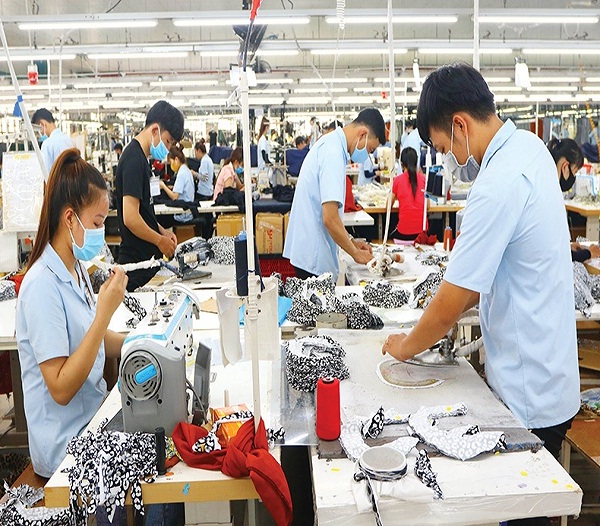
The Concept Of Garment Workers' Basic Living Wage In The Textile Industry

17 June 2022, Mumbai:

A living wage is explained by the International Labor Organization as the theoretical level of wage that one must earn to pay for necessities such as shelter, food, and water in the country where they live.

While the US has one of the highest levels of the minimum pay in the world for garment workers, that rate was just around 70% of the living wage in 2018-2019.

Garment workers in Indonesia, on the other hand, earned a far lower nominal minimum pay of USD 181 per month. However, such an income level was significantly more significant than the claimed USD 103/month living wage during the same period.


ALSO READ How Favourable Is Rupee's Precipitous Fall For Indian Textile Sector

A livable wage is an absolute minimum that employees need to live a decent life. The minimum legal salary in China remains significantly below a living wage, and many workers remain poor—despite the fact that many textile workers are paid more than a living wage.

In Bangladesh, Vietnam, and Indonesia, average salaries are just a quarter to half of what a person requires to live comfortably.

RELEVANT NEWS Apparel workforce awaiting for VDA (Variable Dearness Allowance)

When it became evident that many individuals staying in Baltimore's homeless shelters were employed full-time, the city implemented living wage rules in 1994, and the alive wage movement took off.

On the city's minimum wage, campaigners discovered that it was just not feasible to maintain a decent standard of living.


RELEVANT NEWS How Seriously Are International Brands Looking at Indian Apparel Sector

Where salaries rise, there's a risk that local service providers may raise the cost of rent and food. This means that a rise in income may not ultimately convert into a better quality of life unless executed effectively.

And if the rise isn't uniform, then increases at one facility might result in job losses as multinational companies shift their orders to cheaper competitors. Companies must collaborate with labor unions, governments, and others to solve the issue.

RELEVANT NEWS  What moves the needle on gender equality in the garment sector?

Additionally, it is critical to ensure that costs are not lowered elsewhere due to the salary increase if brands continue to pressure factory owners on price, and factory owners may balance wage increases with a reduction in workplace safety measures.

But one thing is sure: until wages are raised, the people who create our garments will be doomed to a life of poverty and peril.


RELEVANT NEWS ILO: labour market recovery forecast for 2022 downgraded

Effective government intervention is not always possible because of the unstable political situation in countries where labor rights are frequently a problem. 


Local industry players often wield excessive political clout, which they use to protect their short-term interests at the expense of their workers.

Brands should also commit to long-term relationships with suppliers who treat their employees fairly.

 Join our community on Linkedin

The Concept Of Garment Workers' Basic Living Wage In The Textile Industry

Anti-China Sentiments: Indian Textile Sector Is In A Sweet-spot

17 June 2022, Mumbai:

Current State Of Affairs

With anti-China sentiments on the increase in the United States and worldwide, the region's textile industry sees an opportunity to tap into the American garment market.

According to a Business Standard report," It is in a sweet spot, largely because of the China Plus One policy of European and US apparel brands, and the ban on Chinese cotton by the US. Industry players also indicate that following the China Plus One strategy, there is at least a 20 percent shift of exports from that country to India".

The Indian Texpreneurs Federation (ITF), located in Coimbatore, has urged textile businesses in the state to focus 'aggressively' on the US market right now. Right now, in regions like Tirupur, around 75% of units focus on European markets. Focus on the US is less. This combination of factors and the situations post the Covid-19 outbreak, could accelerate the trend of decline in Chinese apparel imports by global countries, Dhamodharan said.

A prominent German business that has been getting T-shirts from China for years contacted a supplier in Tirupur, Tamil Nadu's famed textile industry, a few months ago. After making inquiries and conducting due diligence.


ALSO READ  (China + 1) Strategy: Driving Global T&A Supply Chains

The firm offered Warsaw International a four-thousand-piece T-shirt purchase for this fiscal year. According to Raja Shanmugham, managing director of Warsaw, the brand stated it wished to relocate a portion of its business away from China but refused to specify why.

India should concentrate on reclaiming the markets that the Chinese are abandoning. Trends indicate that this is not the case. Even with free-trade agreements like Japan's, our garment exports have not increased significantly.

RELEVANT NEWS  Future outlook for wearables strong as demand from smaller cities grows

The export and import laws should be formulated so that the industry, particularly textiles, has a level playing field.

Imports of raw materials used to make synthetic textiles, for example, are subject to a higher tariff. Then anti-dumping duties on synthetic fabric raw materials were levied on select Indian manufacturers. They had complained about the impact of raw material imports.


RELEVANT NEWS How Seriously Are International Brands Looking at Indian Apparel Sector

According to a report released in October last year by the Confederation of Indian Industry (CII) and global management consulting firm Kearney, India's textile industry should aim for $65 billion in exports over the next five years, especially with China Plus One sentiments favouring India as global companies look for sourcing and manufacturing destinations outside of the factory of the world, China.

RELEVANT NEWS Someone's Loss Is Someone's Gain: Is the Chinese Textile Industry's Loss India's Gain? 

According to the Press Information Bureau, India's domestic textile and clothing manufacturing is valued at $140 billion, including $40 billion in textile and apparel exports. According to the commerce ministry, the government has set an export goal of $100 billion over the next five years, up from $34 billion in 2019-20.


RELEVANT NEWS China & Bangladesh 'Top importers of swimwear into the US, Jan'22'

According to experts, India, as a significant textile player, has the chance to expand its footprint in this market significantly.


Way Forward

The government's goal of $100 billion in textile exports over the next five years can only be met if a robust structure, longer-term policies, and more excellent planning by Indian enterprises are in place.

Aside from that, one needs to assist with ease of doing business to assure the seamless running of supply chains for brands and merchants wishing to de-risk operations.

Also, if India controls its cotton supply well enough, we will be able to add more value to raw cotton or yarn exports, allowing us to expand our operations and market share.

Here We will Like To Leave You With The Thoughts," There Is A Semblance Today Than Ever Before In The Optimism That Indian Textile Industry Seems To Be Poised To Wriggle Out Of Troubled Water To Cash In On Anti-Chinese Sentiments".

 Join our community on Linkedin

MadeInIndia

Indian Apparel Exports: An Overview

14 June 2022, Mumbai:

Bird's Eyeview

India is one of the world's leading apparel-producing nations. With a 5% contribution to the country's gross domestic product, the textile and garment sector is one of the most important contributors to the economy (GDP).

India's apparel and textile business is the second-largest employer, employing 45 million people directly and another 100 million indirectly.

India is one of the world's major jute and cotton producers.


ALSO READ How Favourable Is Rupee's Precipitous Fall For Indian Textile Sector

Trade Landscape

About 95% of the world's hand-woven cloth originates from India, the world's second-largest silk manufacturer. From 2019 to 2025, India's textile and apparel industry is predicted to develop at a CAGR of 10%, reaching US$4 190 billion.

We are witnessing high growth in the apparel sector, with more and more new brands sneaking in and making a mark in the apparel sector.

Additionally, with the international brands shutting down in the European market, the Indian market exports have grown magnanimously, leading to massive market growth.

RELEVANT NEWS  Future outlook for wearables strong as demand from smaller cities grows

The demand side of the global industry

In India, as we know that apparel diversity is enormous, and so is the cultural diversity, which is very much liked by the foreign population.

During the years 2021-22, India's exports increased dramatically. During the year, total services and merchandise exports hit an all-time high of US$ 669.65 billion, up 34.5 percent over the previous year.

Cotton yarns and handloom goods exports totaled US$ 1.34 billion in March 2022, a 22 percent increase over March 2021.


RELEVANT NEWS How Seriously Are International Brands Looking at Indian Apparel Sector

Competitive Landscape

In March 2022, the export of artificial textiles, yarn, and made-ups was US$ 0.53 billion, up 15% from March 2021.

India exports textiles and clothing to the United States, the United Arab Emirates, the United Kingdom, Bangladesh, Germany, China, Spain, France, Italy, the Netherlands, Saudi Arabia, and other countries.

The United States is the most significant buyer, accounting for almost one-fourth of India's total exports.


RELEVANT NEWS Someone's Loss Is Someone's Gain: Is the Chinese Textile Industry's Loss India's Gain? 

Optimistic Outlook

For this fiscal year, the Centre set a target of $44 billion in exports for the sector, which has been met to 67 percent.

The industry is optimistic that the export goal will be attained. India's exports hit a new high of $37.29 billion in December, up 37 percent yearly.

This is the highest monthly export achievement to date. In December 2020, exports totaled more than $27.22 billion. Last month's export growth was also a 37.55 percent increase over December 2019, which was $27.11 billion.


RELEVANT NEWS RBI Governor Shaktikanta Das: There's no need to fear, even though India's inflation is expected to rise in JanuaryRBI Governor Shaktikanta Das: There's no need to fear, even though India's inflation is expected to rise in January

The worldwide market for artificial fiber apparel and made-ups is about $200 billion.

Still, India's contribution is a pitiful $1.6 billion, accounting for less than 0.8 percent of the global market. Trade agreements with the United Arab Emirates and Australia, as well as those in the works with the United Kingdom, Canada, Japan, and Korea, are expected to enhance garment exports.


Favorable Trade Dynamics

Apparel enquiries diverted from China to India are for real now than ever before. As a result of the Sri Lankan economic crisis, major businesses have begun to transfer their orders from Sri Lanka to India, boosting apparel shipments.

Sri Lanka exports over $5.5 billion worth of clothing each year to international markets.

"With a series of lockdowns in China in recent months, the price of man-made fibre (MMF) imports is expected to rise significantly, resulting in a higher price for some goods in the near future.

China's vacating space in certain categories/loosening grip on the global textile trade has opened a door. Indian firms lack scale and scope to make best out of the emerging opportunities global supply chains are presenting".

Will Indian manufacturers finally step up?

 Join our community on Linkedin

ApparelExports

How Much Is Depreciated Currency Supporting the Indian Textiles Sector

08 June 2022, Mumbai:

As the rupee plummeted to a new low of 77.47 per dollar on Monday, exporters expected the weakening domestic currency to help a wide range of industries, particularly labor-intensive ones like textiles and apparel, agriculture, footwear, and handicrafts — where margins are typically tight and services industries like IT.

The aim is a $4 billion increase in fabrics by placing India as a regional fabric hub, starting with cotton wovens and extending to other subcategories. “The three-month range of USD/INR is 75.50-77.50 and the six-month range is 74 - 80,” said IFA Global in its latest report.


The general trade belief in the textile sector is that the falling rupee will help enhance India’s competitiveness @ the global marketplace leading to increasing the export of textiles.

The devaluation will also help mitigate the impact of higher transportation costs and supply chain interruptions resulting from the Russia-Ukraine dispute.

However, for the gains to materialize, the rupee must stabilize at a depreciated level in the coming weeks and remain there for an extended time.


ALSO READ Piyush Goyal: To Hold Textile Industry Multi-Stakeholders' Meeting Today

Capital products, which are primarily imported, will also rise in price when the government is focusing more on capital investment to boost economic development. In the first ten months of this fiscal year, India imported machinery worth about $40 billion and transportation equipment worth another $13 billion, including car components. 

These two groups combined accounted for 11% of the country's goods imports.


RELEVANT NEWS  Consolidation Is In The Air: How Is It Affecting Textiles & Apparel Industry

The rupee was overvalued by 2.66 percent in March, compared to 4.31 percent in January, according to the RBI's real effective exchange rate (If the devaluation continues, recognized textiles expert DK Nair believes it would benefit exporters, particularly in textiles and apparel, where reliance on imported raw materials is low.

Despite slower growth in outbound shipments, the currency devaluation will help India meet its $400 billion product export objective in FY22. Almost 60% of our products commerce is conducted in dollars.


RELEVANT NEWS Vietnam To India: How Can the Indian Textile Sector Benefit

The devaluation would assist boost exports, particularly of labor-intensive commodities like sports goods, textiles, and leather, while also protecting local industry, Ajay Sahai, director-general of the Federation of Indian Export Organizations, stated.

According to a textile exporter, currency devaluation would benefit in the near term. Still, growing input costs due to inflation and energy expenses will negate these gains over time.


However, for the gains to materialize, the rupee must stabilize at a depreciated level in the international market. 

However, the genuine concern is that country could lose the currency edge as the peer currencies are also under constant pressure i.e. currencies of its competitors devaluate proportionately.

By economists' estimates In the last 10 months, the rupee's exchange rate with the dollar has fallen 8.7%, from 73.6 to 80, and sectors like textiles as per insiders operate at a wafer-thin ballpark margin of 2-3%, therefore depreciation in the rupee makes a real difference.

Join our community on Linkedin

SpiinningMill

The Role Of Textile Ministry In Promoting the Textile Sector

14 June 2022, Mumbai:

The Indian textile industry plays a significant role in the country's economy. Apart from providing one of life's most basic requirements, the textiles sector also plays a vital role in the country's industrial production, employment generation, and export revenues.

It accounts for around 14% of the industrial output, 4% of GDP, and 17% of the country's export revenues. Over 35 million people are directly employed as a result of it. After agriculture, the textiles industry is the second largest employer. As a result, the expansion and overall development of this business directly impact the nation's economy.


ALSO READ  PM Mitra Scheme & Its Impact On Textile Sector

The Indian textile industry's distinctive structure stems from a heritage of tax, labor, and other regulatory laws that supported small-scale, labor-intensive businesses while discriminating against larger-scale, capital-intensive companies.

The structure is also attributable to India's historical focus on fulfilling the requirements of its native consumers, mostly low-income, rather than the global market.

Significant gains in technical efficiency and international competitiveness have resulted from policy reforms that began in the 1980s and continued into the 1990s, particularly in the spinning sector.

However, more reforms are still needed to improve India's weaving, fabric finishing, and clothing industries' efficiency and competitiveness.

RELEVANT NEWS  Future outlook for wearables strong as demand from smaller cities grows

The textile ministry holds a very systematic website wherein all the details about the Indian textile are published as well as reported, and along with that, several grievances are addressed, and several important steps are undertaken.

Day-to-day activities and news are regularly updated on the website.

The ministry also closely monitors all the things that are happening at several textile outlets. Increases or decreases in price, changes in production units, the introduction of new raw materials, withdrawal of any material, or addition and subtraction of any information are actively posted on the website.


RELEVANT NEWS   CEPA between India & UAE to incentavise Textile sector

The Ministry of Textiles actively connects throughout the world. Anyone in and across the country can get any information that they require by just clicking on the website. The ministry has tried to make the process as transparent as possible so as to promote the textile industry in and across the world, at large.

The colossal event, according to Textiles Minister Smriti Zubin Irani, would span the full value chain. The event is expected to attract between 800 and 1,000 Indian exhibitors, as well as 2,500 international buyers and 1,000 Indian high-volume retail buyers.

RELEVANT NEWS  Vietnam To India: How Can the Indian Textile Sector Benefit 

International exhibitors will be welcome to participate in the exhibition.

The Common Umbrella Brand would be created for the Indian textiles industry by showcasing products from fiber to fashion at the Indian Pavilion, holding roadshows in conjunction with the event, and hosting 'India Eve' (B2B Meetings) after the event's business hours.


RELEVANT NEWS How Much Is Depreciated Currency Supporting the Indian TextileSector

The show will also feature a Technical Conference titled Advantage India, Sourcing Destination for the World, which will bring together renowned national and international speakers and delegates to establish India's relevance in global textile sourcing, discuss key issues, and chart a course for high growth. 


The conference will also cover topics such as skilling, branding, fundraising, and technological advancement.

 Join our community on Linkedin

 The Role Of Textile Ministry In Promoting the Textile Sector

How Will The Future Smart Apparel Factories Look!

14 June 2022, Mumbai:

Except for one, the usage of digital technology, no prediction could have worked for long in the past in terms of shifting the business environment throughout the supply chain for an industry as fragmented as fashion.

However, it required a pandemic like COVID-19 for the industry to see the need for technological innovation, especially in the garment industries, which desperately need quick transformation.


ALSO READ  Smart Garments for Smarter Living

The truth is that no customer will pay more for factory-sourced items tomorrow than they did yesterday.

Furthermore, purchasers always look for improved efficiency and productivity at the plant level, failing which the firm would most likely lose business in this competitive era.

Product cycles have also decreased dramatically, from months to days, owing to increased consumption from more digitally-savvy customers across various channels, including online, offline, and omnichannel retailers.

Unlike in the past, when orders for fewer SKUs were made in large quantities in factories, today's end-consumer wants more design options and customized clothes, which means an order for a single SKU is not as large as it once was.

RELEVANT NEWS  Future outlook for wearables strong as demand from smaller cities grows

This tendency must be considered when the term 'Future Smart Apparel Factory' is used. So, what effect will this tendency have on the supply chain?

More designs and fewer numbers of an SKU imply a more complicated supply chain and more challenging shopfloor procedures.

In such a scenario, there would be a more critical requirement for gathering information at the right moment and analyzing that information for future decision-making, Carlos Conde Bande, GM (Innovation and Experimentation, Li & Fung), explained.


RELEVANT NEWS  The emergence of industry 4.0 technologies in 'Textiles & Apparels'

Rather than incorporating electronic gadgets into accessories such as watches or spectacles, the next step is to incorporate them into the clothing itself. As a result, the user will not need to carry an additional accessory and will be able to wear smart device features right on their clothing.

Designers and manufacturers have been attempting to affix these gadgets to the cloth directly. Despite the fact that the clothing-attached gadgets are sleek and smart, they nonetheless offer a number of issues.

RELEVANT NEWS India’s RMG Exports: 22.08% growth during April-May’22-23

Intelligent solutions are those advances that a factory needs to keep up with standards and make it cost-competitive in the genuine sense, not those technologies that require significant investments and may not be factory-friendly (depending on the scale of the facility).


RELEVANT NEWS  FICCI Industry 4.0 awards & national conference on 5th May

Some factory owners fail to recognize that their plant's digital twin or digital component needs the same attention and care as the physical twin, despite an incredible span of various periods of industrialization and technological adaption.


Intelligent solutions and technology will be beneficial in these endeavors, and one must have a holistic perspective from the beginning of the supply chain to the finish. Wearable technology is one step ahead of smart fabrics.

With so many benefits, it's logical that people are interested in learning more about how these smart fabrics are manufactured. This is when things start to get a bit tricky. The early attempts to create smart fabrics were similar to how wearable technology is made.

 Join our community on Linkedin

Digitisation

How Much Is Depreciated Currency Supporting Indian Apparel Exports

08 June 2022, Mumbai:

Experts predict that a falling rupee will improve India's competitiveness in the global market, resulting in increased exports of agricultural items, textiles, gems, and jewelry.

The rupee has lost 6% in the first half of this calendar year, trading at 75.51 dollars, down from 71.38 on January 1. In truth, the rupee had fallen to 76.21 on June 16 but has since rebounded thanks to intervention by the Reserve Bank of India.


ALSO READ RBI Governor Shaktikanta Das: There's no need to fear, even though India's inflation is expected to rise in January

According to analysts, the rupee might fall to as low as 80 pence per dollar this year since the Indian economy is expected to decline. India operates on a small 2-3% margin for specific items, such as textiles.

Therefore a 6% devaluation of the rupee makes a significant impact. The USD/INR three-month range is 75.50-77.50, while the six-month content is 74-80, according to IFA Global's latest analysis. This implies that the rupee can fall another 6% in the second part of the calendar year.


RELEVANT NEWS  Someone's Loss Is Someone's Gain: Is the Chinese Textile Industry's Loss India's Gain? 

India's agriculture, allied, and processed food exports were $35.1 billion in FY20, down from $38.5 billion the previous year, according to the Agricultural and Processed Food Product Export Development Authority (Apeda). In FY14, India's farm exports reached a new high of $42.8 billion.

Apeda-registered items account for over half of India's agricultural exports. "We profit from rupee devaluation in basmati rice exports. It increases receivables for exported and pending items," said Gurnam Arora, joint managing director of Kohinoor Foods, which produces the Kohinoor brand basmati rice.


RELEVANT NEWS How Seriously Are International Brands Looking at Indian Apparel Sector

The currency devaluation, according to Ujjwal Lahoti, chairman of Lahoti Overseas, a Mumbai-based producer and exporter of children's clothing, will assist India's competitiveness in the global market and increase textile exports. Another problem may need to be considered in the context of rupee depreciation.

Due to poor market circumstances in the European Union and a slow market in the United States, the previously struggling garment export sector saw shipments fall throughout 2011. Exports, on the other hand, aided its passage. According to Sakthivel, apparel exports surpassed $12 billion in February 2012, up 18.9% over the same month.


RELEVANT NEWS  How Favourable Is Rupee's Precipitous Fall For Indian Textile Sector

More than 80% of India's clothing is exported to the United States and Europe. Apparel exporters searched for alternate destinations throughout the time, anticipating yet another recession in the EU and weak demand from those countries. “ During the year, Indian exporters visited Latin America, southern and western Africa, Japan, Russia, Israel, and Australia. Apparel exports account for 45 percent of all textile and garment exports.

According to DK Nair of the Confederation of Indian Textile Industry, India's exports in 2011-12 were $30 billion, up from $27 billion in 2010-11. According to the business, the increase is due to the devaluation of the Indian currency during that period.

The rupee declined against the dollar from roughly Rs 45 in April 2011 to more than Rs 50 in March 2012.


The business had a more complex problem in 2012-13 after being caught on the wrong foot for using underage labor and forced labor. Apart from competing with other low-cost manufacturing sites in Southeast Asia, the sector would have to be strict with regulations.

Many strong & progressive groups/units are working hard to promote AEPC's Driving Industry Towards Sustainable Human Capital Advancement (DISHA) initiative. The initiative promises to propel Indian apparel and champions to boost textile and apparel exports.

The US has chastised the most unorganized and fragmented industry for involving children.

The general trade belief is in labour-intensive sectors the falling rupee helps enhance India’s competitiveness @ the global marketplace leading to increasing exports as the textile is certainly one sector where the depreciating rupee is positive.

Albeit there is a greater need to pay the attention to the context against the movement in the currency of the country we are competing with for a realistic understanding. 

Join our community on Linkedin 

Forex

Best 10 Apparel Factories In India

14 June 2022, Mumbai:

The apparel sector in India, often known as the ready-made garment business, has shown consistent expansion in recent decades.

Many of India's top garment manufacturers have also become some of the world's leading clothing suppliers, achieving great success in critical areas of clothing manufacturing, exports, sales, and employment for India's textiles sector in recent years, as well as contributing significantly to the country's GDP growth.


ALSO READ  Smart Garments for Smarter Living

According to McKinsey's FashionScope, India's apparel and garment market will be valued at more than $59.3 billion in 2022, maintaining its position as the world's sixth-largest clothing manufacturer. The expanding population of people with higher incomes and significant government backing is driving market expansion. According to reports, the targeted population's aggregate income is predicted to treble by 2025, resulting in substantially more robust demand in India's garment manufacturing business.

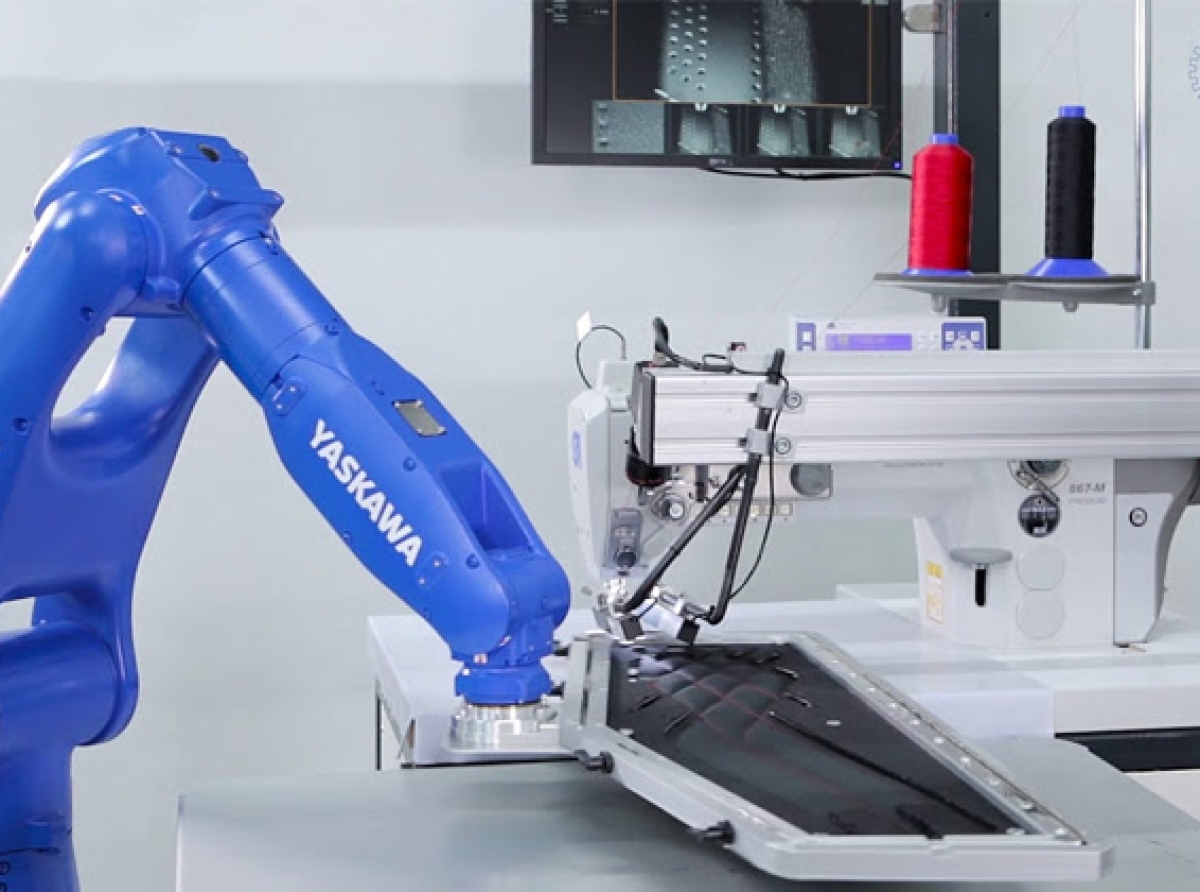
The garment sector in India today employs over 13 million people, making it the country's largest employer. In recent decades, many of India's largest apparel factories have also become essential providers of ready-made garment items for the worldwide market. Adopting new technologies such as machine learning and cut and sew robots will likely significantly influence the global garment manufacturing industry through 2025. 

RELEVANT NEWS  Indian Apparel Sector: Top 10 Valued Brands 

Clothing producers are constantly seeking for natural ingredients to lower their carbon footprint. Therefore the growth of sustainable dyeing will have a growing influence.

1. KPR Mill -

KPR Mill Limited produces yarn, knitted grey, colored fabric, and readymade garments and is one of India's largest vertically integrated clothing manufacturing enterprises.

With an annual capacity of 95 million pieces, the firm boasts one of India's largest garment manufacturing plants. It has also erected windmills in Tamil Nadu to create green electricity for captive use, which would fulfill 75 percent of the state's power needs. KPR Mill stock prices will be a constant topic of conversation in 2018, with windmill growth at the forefront.


RELEVANT NEWS  Apparel brands owe $22 billion to supplier factories

2. Bombay Rayon Fashion Ltd -

Bombay Rayon Fashions Ltd is a vertically integrated textile and apparel firm that produces various textiles and garments in state-of-the-art manufacturing facilities. Besides being India's largest shirt maker, Bombay Rayon Fashions Ltd now employs over 38,000 people and produces over 90 million garments annually. Its high employment has been a continuous contributor to India's GDP.

3. Raymond Ltd -

Raymond is one of the top fabric producers and largest garment manufacturers in India, and a capacity of 38 million meters in wool-blend textiles and a market share of over 60%, ranking among the first three fully integrated makers of worsted suiting in the world. Raymond may be the only firm in the world with a broad product selection of approximately 20,000 designs and colors of suiting fabric to fit any age, event, and style. Raymond produces high-value pure wool. Raymond's products are exported to more than 55 nations, including the United States, Canada, Europe, Japan, and the Middle East.

RELEVANT NEWS India’s RMG Exports: 22.08% growth during April-May’22-23

4. Vardhman Textiles -

Vardhman Textile is an Indian textile manufacturer based in Vardhman. This Vardhman Group subsidiary was created in 1965 and has grown into India's largest textile manufacturer, with annual sales reaching $1 billion. Vardhman is an Indian yarn, greige/processed fabric, acrylic fiber, and other product maker and trader.

In India, the firm has 22 production units spread over five states. Since its establishment, Vardhman Group has evolved into a worldwide business powerhouse with operations in India and 75 other countries. It is engaged in the production of yarn, cloth, and acrylic fiber. Vardhman has a sound business plan and a significant market share as India's second-largest textiles firm by sales.


RELEVANT NEWS  How Will The Future Smart Apparel Factories Look!

5. Trident -

Trident Group has become one of the world's largest integrated home textile firms, with goods sold in over 100 countries. The firm is a prominent yarn spinner in India and a world-class terry towel maker. As a result, Trident is India's leading manufacturer and exporter of cotton terry towels and other domestic textiles, chemicals, and captive power.


6. Page Industries -

Page Industries Limited (PIL), situated in Bangalore, is a subsidiary of JOCKEY International Inc. (JIC). In India, Sri Lanka, Bangladesh, Nepal, and the United Arab Emirates, it is the only licensee of the JOCKEY® brand.

Page Industries has been awarded the exclusive license to manufacture, sell, and distribute Speedo items in India by Speedo International Ltd. JOCKEY is the company's flagship brand and a market leader in the innerwear area. Page Industries and JOCKEY's unique work has resulted in several firsts in the innerwear industry.

RELEVANT NEWS  Jockey India expands 'offline footprint' despite 3X growth in online sales

7. The SEL group -

SEL, an Indian textile company, is one of the largest vertically integrated textile companies in the country and the globe. From spinning and knitting to generating value-added goods like terry towels and ready-made clothing, the company's facilities in Punjab, Haryana, Himachal Pradesh, and Madhya Pradesh serve a diverse spectrum of customers.

SEL is a significant yarn and thread supplier to the European and American markets.

Arvind Ltd - Arvind Ltd was established in 1931. Ahmedabad is the company's headquarters. Knits, retail, woven, telecom, advanced material, agri-business, and other items are available from the corporation. Through its statewide retail network, the firm owns brands such as Flying Machine, Newport, and Excalibur, as well as licensing foreign names such as Arrow and Tommy Hilfiger. It is one of India's top ten garment and textile companies.

9. Dollar Industries Ltd -

Dollar Industries Ltd was established in 1972. The business creates and sells clothing. Men's and boys' innerwear, nightwear, winter care, trousers, socks, and other relevant accessories are available from the company.

Dollar Industries Limited has established itself as one of the major brands in the hosiery industry, with a 15 percent market share and a large proportion of textile exports in the Indian hosiery market. It is one of India's top ten garment and textile companies. Subscribe to Fundoodata subscription plans to acquire additional information about the organization, such as critical executive details, turnover, and personnel count.

10. Nahar Industrial Enterprises Ltd -

In 1983, Nahar Industrial Enterprises Ltd was established. It's a firm that makes textiles. Sugar and Textile are the two segments in which the company works. Yarn and cloth are available under the Textile section.

Yarns include 100% cotton yarns, 100% cotton colored yarns, compact spun yarns, 100% blended yarns, 100% polyester yarn, industrial yarns, open-end yarns, open-end slub yarns, specialty yarns, Eli twist yarns, core-spun yarn, and vortex yarns, as well as textiles such piece-dyed yarn-dyed and prints. A variety of mixes are also available from the company.

 Join our community on Linkedin

Best 10 Apparel Factories In India

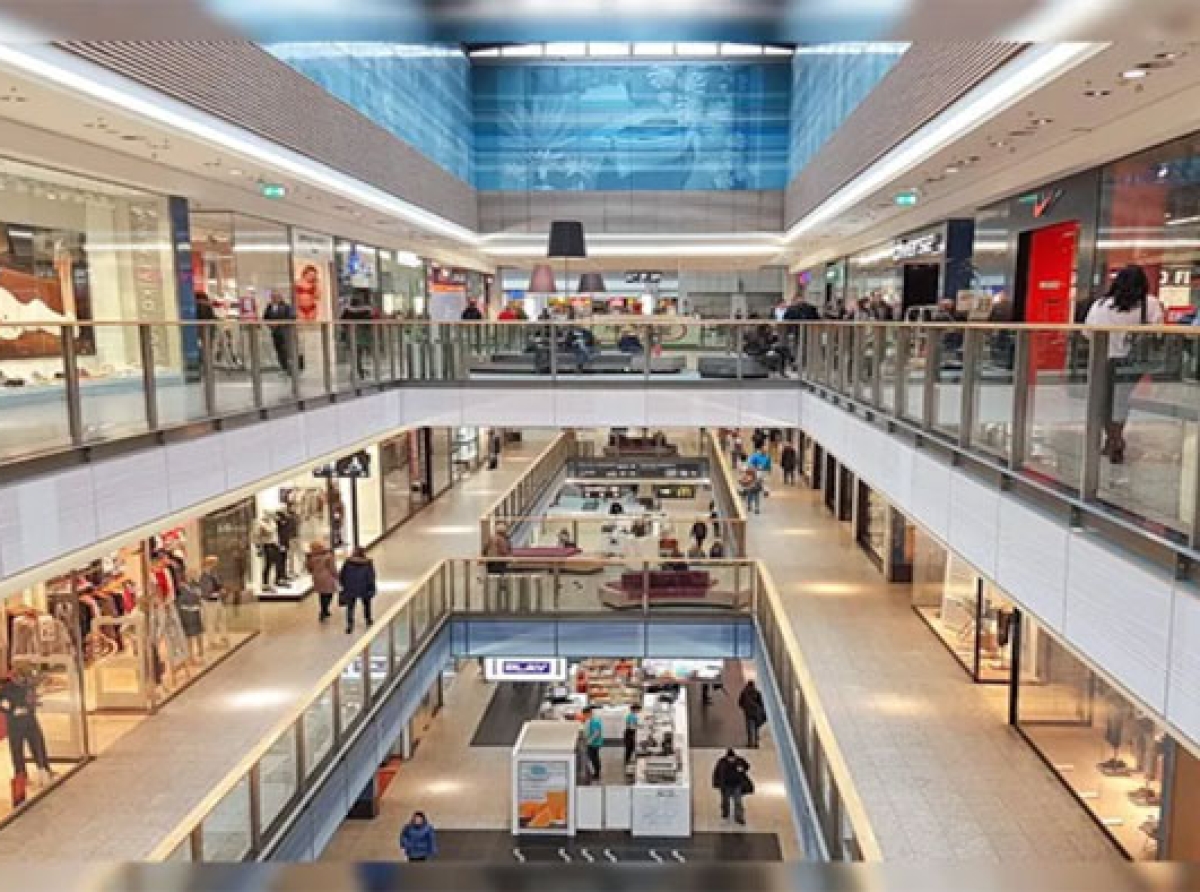
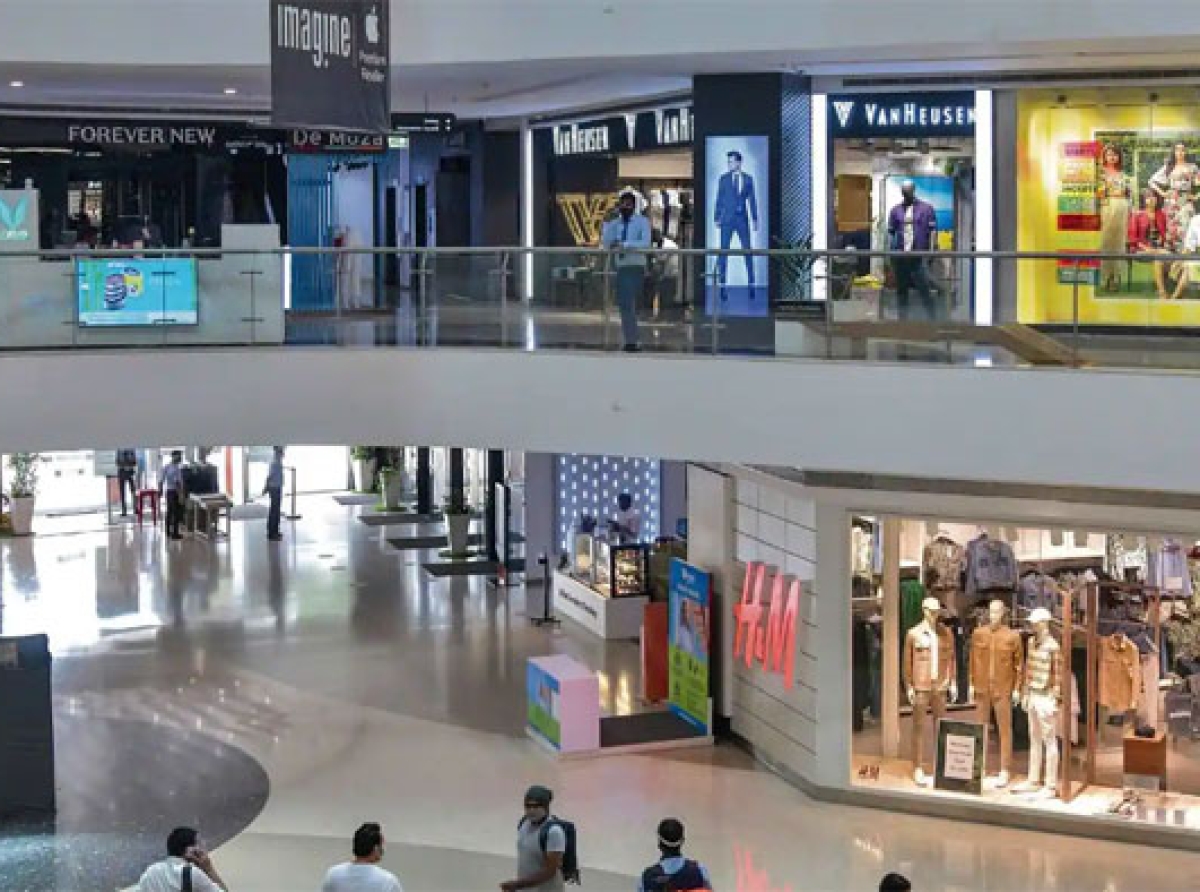
Malls v/s High street

10 June 2022, Mumbai:

Malls have opened in locations like Bangalore and Chennai, and the reception has been tepid, as predicted.

To make matters worse, a rent dispute between mall owners and tenants during the lockout has caused several merchants to reassess their decision to maintain a presence in malls. Retail has been a silent tug of war to attract people between the high street and the malls.


ALSO READ  Malls rents increase 15% as retail sales surge across categories 

It's been a roller-coaster ride. Some argue that the high street is dead, while others say shopping malls are in a coma. Brands are moving their stores from high streets to malls in certain regions, while significant businesses ignore mall culture to stand out from the crowd in others.

In certain cities, mall rents outnumber high-street rentals, while the opposite is true in others.


RELEVANT NEWS  Post Covid World: Malls Rent Hike Is A Reality 

High street landlords have been significantly more tolerant than mall landlords, says Impressario Entertainment & Hospitality CEO Riyaz Amlani. According to Amlani, the high street also gives him more significant returns than malls.

Although most merchants' first reaction is that mall owners and brand owners must find fair ways to coexist, virtually all of them concede that the high street would be their preferred option in the new normal.


RELEVANT NEWS As retail limitations reappear, retailers are resuming rent negotiations with malls

High streets will fare better in the next 6-12 months, says Siddharth Bindra, MD of Biba India. Biba already has over 60% of its businesses on the high street.

Even though merchants favor the high street, the most significant difficulty they face is expensive rents and a shortage of good high street retail space, particularly in urban areas. Rentals at Khan Market in Delhi are as costly as Times Square in New York, but consumers' willingness to pay is not as high, Amlani argues.


ALSO READ According to an Ericsson trend research, consumers demand hybrid 'phygital' malls

In reality, most retail firms lose money with rents as high as Rs 600-800 per sq. ft. in high-traffic areas like Mumbai's Linking Road. Retail companies are choosing high street outlets, but it will be in smaller towns where the leases are lower, says Anshuman Magazine, Chairman and CEO of CBRE in India, Southeast Asia, the Middle East, and Africa.


Join our community on Linkedin

Malls v/s High street

Reliance Brands & ABFRL Emerging Top Brands Houses

03 June 2022, Mumbai:

Manish Malhotra, Sabyasachi, Tahiliani, and many more such brands are among the designers that have worked with Manish Malhotra.

These are a handful of the many designer brands in which Aditya Birla and Reliance Industries, two of India's most powerful economic conglomerates, have invested.


ALSO READ Reliance Brands: 6th ‘Designer Brand’ acquisition & counting 

For the past 24 months or more, the retail and fashion arms of the corporate groups, Reliance Retail Ltd, and Aditya Birla Fashion and Retail Ltd, have been on a shopping spree.

Even though both big players (Aditya Birla and Reliance) are more interested in luxury brands, they have purchased all or the majority of luxury and premium brands in India.


RELEVANT NEWS ABFRL to create platform for Direct to Consumer (D2C) business 

Even though the pandemic temporarily halted some events, like weddings, the country's clothes and fashion industries have continued to flourish. Indians spend the most significant money on clothing and fashion.

According to Euromonitor International's market research firm, India's apparel and fashion industry was worth INR335,117 million in December 2021.

The sector is predicted to develop at a CAGR of 15% between 2021 and 2026.

Both ABFRL and RRL are vying for a piece of this pie.


RELEVANT NEWS Reliance Brands bags up Anamika Khanna label by picking majority stake

TMRW will, according to the company, build India's most extensive portfolio of disruptor brands in the fashion and lifestyle space, enabling the country's next phase of direct-to-consumer (D2C) growth, which is expected to reach $100 billion by 2025.

"Over the upcoming three years, TMRW will acquire and incubate over 30 innovative, customer-focused brands," says the company.


The venture will also enable multiple founders to operate within a synergistic 'house of brands' platform that shared a common vision and capabilities," the group said. Prashanth Aluru, a former Facebook and Bain executive, has been named CEO and co-founder of the new company.


Join our community on Linkedin 

Reliance Brands & ABFRL Emerging Top Brands Houses

Latest Publications

Image

Join Our Group

Join Our Group